Diagnosis &Elimination &Environment &Health Information &Health Systems &History &Invest in Malaria Control &Microscopy &Surveillance &Trachoma Bill Brieger | 10 Sep 2020
Malaria News Today 2020-09-10
These malaria and related news and abstracts stress the importance of sentinel surveillance systems, strong political and systems commitment to disease elimination, malachite green loop-mediated isothermal amplification for better malaria detection, and the threat of neglected fungal infections. An article from The Lancet shows that it is not just money that is needed to eliminate malaria, but better management and systems. Finally a bit of history from 18th Century North Carolina is shared. Click the links in each section to learn more about each topic.
Implementation of a malaria sentinel surveillance system in Togo: a pilot study
Since July 2017, 16 health facilities called sentinel sites, 4 hospitals and 12 peripheral care units located in 2 epidemiologically different health regions of Togo, have provided weekly data on malaria morbidity and mortality for the following 3 target groups:?<?5-years-old children,???5-years-old children and adults, and pregnant women. Data from week 29 in 2017 to week 13 in 2019 were analysed.
Each sentinel site provided complete data and the median time to data entry was 4 days. The number of confirmed malaria cases increased during the rainy seasons both in children under 5 years old and in children over 5 years old and adults. Malaria-related deaths occurred mainly in children under 5 years old and increased during the rainy seasons. The mean percentage of tested cases for malaria among suspected malaria cases was 99.0%. The mean percentage of uncomplicated malaria cases handled in accordance with national guidelines was 99.4%. The mean percentage of severe malaria cases detected in peripheral care units that were referred to a hospital was 100.0%. Rapid diagnostic tests and artemisinin-based combination therapies were out of stock several times, mainly at the beginning and end of the year. No hospital was out of stock of injectable artesunate or injectable artemether.
These indicators showed good management of malaria cases in the sentinel sites. Real-time availability of data requires a good follow-up of data entry on the online platform. The management of input stocks and the promptness of data need to be improved to meet the objectives of this malaria sentinel surveillance system.
Evaluation of the colorimetric malachite green loop-mediated isothermal amplification (MG-LAMP) assay …
… for the detection of malaria species at two different health facilities in a malaria endemic area of western Kenya. Prompt diagnosis and effective malaria treatment is a key strategy in malaria control. However, the recommended diagnostic methods, microscopy and rapid diagnostic tests (RDTs), are not supported by robust quality assurance systems in endemic areas. This study compared the performance of routine RDTs and smear microscopy with a simple molecular-based colorimetric loop-mediated isothermal amplification (LAMP) at two different levels of the health care system in a malaria-endemic area of western Kenya.
Patients presenting with clinical symptoms of malaria at Rota Dispensary (level 2) and Siaya County Referral Hospital (level 4) were enrolled into the study after obtaining written informed consent. Capillary blood was collected to test for malaria by RDT and microscopy at the dispensary and county hospital, and for preparation of blood smears and dried blood spots (DBS) for expert microscopy and real-time polymerase chain reaction (RT-PCR).
Results of the routine diagnostic tests were compared with those of malachite green loop-mediated isothermal amplification (MG-LAMP) performed at the two facilities.
A total of 264 participants were enrolled into the study. At the dispensary level, the positivity rate by RDT, expert microscopy, MG-LAMP and RT-PCR was 37%, 30%, 44% and 42%, respectively, and 42%, 43%, 57% and 43% at the county hospital. Using RT-PCR as the reference test, the sensitivity of RDT and MG-LAMP was 78.1% (CI 67.5–86.4) and 82.9% (CI 73.0–90.3) at Rota dispensary.
At Siaya hospital the sensitivity of routine microscopy and MG-LAMP was 83.3% (CI 65.3–94.4) and 93.3% (CI 77.9–99.2), respectively. Compared to MG-LAMP, there were 14 false positives and 29 false negatives by RDT at Rota dispensary and 3 false positives and 13 false negatives by routine microscopy at Siaya Hospital. MG-LAMP is more sensitive than RDTs and microscopy in the detection of malaria parasites at public health facilities and might be a useful quality control tool in resource-limited settings.
Terminating Trachoma. How Myanmar eliminated blinding trachoma.
 Download the book from WHO New Delhi: World Health Organization, Regional Office for South-East Asia; 2020. Licence: CC BY-NC-SA 3.0 IGO. Myanmar’s three-phase approach to eliminating trachoma has been a great success, which will certainly continue. The country’s visionary National Eye Health Plan 2017-2021, which is closely aligned with international policies for prevention of blindness, gives confidence that Myanmar will maintain its elimination status. This book chronicles how a combination of good leadership, effective partnerships, health-care facilities and hardworking health-care personnel helped Myanmar eliminate trachoma as a public health problem.
Health sector spending and spending on HIV/AIDS, tuberculosis, and malaria, and development assistance for health, SDG Progress
Although the progress towards Sustainable Development Goal (SDG) 3, which aims to “ensure healthy lives and promote well-being for all at all ages”, has been assessed in various works, there is less research focusing on tracking spending towards this goal. In this study, spending estimates were used to determine progress in financing the priority areas of SDG3, examine the correlation between outcomes and financing, and identify where resource gains are most required to attain the SDG3 indicators for which data are available.
 From 1995 to 2017, domestic health spending was determined, disaggregated by source (government, out-of-pocket, and prepaid private) for 195 countries and territories. Outcomes suggest a global rise in total health spending since the state of the SDGs in 2015, reaching $7·9 trillion (7·8–8·0) in 2017, and is estimated to rise to $11·0 trillion (10·7–11·2) by 2030, although with substantial disparity across countries. Per estimates, low-income and middle-income countries, in 2017, had an estimated spending of $20·2 billion on HIV/AIDS, $10·9 billion on tuberculosis, and $5·1 billion on malaria in endemic countries.
Although there is an increase in both domestic government and DAH spending, across these three diseases, variation in the accompanied changes in outcomes was observed. Malaria was noted to have the most consistent reductions in outcomes across countries as spending has raised. Findings thereby suggest mixed progress towards meeting the SDG3 targets; the progress varied by country and by target. The evidence on the scale-up of spending and improvements in health outcomes suggest a nuanced relationship, such that outcomes do not always improve with increases in spending.
Although more resources may be required by the countries to achieve SDG3, there will also be a necessity for addressing other constraints in the broader health system such as inefficient allocation of resources across interventions and populations, weak governance systems, human resource shortages, and drug shortages.
Ignored fungal infections kill more people annually than HIV and malaria combined
Carolina Pohl-Albertyn says that, “You may also know that there are other infections causing great concern, such as HIV (690 000 deaths/year), tuberculosis (1.5-million deaths/year), and malaria (405,000 deaths/year). But what would be your reaction if you knew that fungal infections (ranging from skin and mucosal infections (e.g. vaginal or oral thrush) to deadly systemic and organ infections (e.g. candidiasis, cryptococcal meningitis, and bronchopulmonary aspergillosis]) affect more than one-billion people each year, of which more than 150-million cases are severe and life-threatening and cause 1.7 million deaths per year?”
Malaria was once scourge in Chowan County, North Carolina
Nicole Bowman-Layton (Editor) provides some history of malaria. It’s fascinating to think that less than 100 years ago this disease was still a major scourge in Chowan County. I’ve wanted to write about this topic for a long time since the coronavirus popped up but was a bit concerned about writing about a somewhat depressing topic.
According to NCPedia malaria came to North Carolina in the 1500s from some of the first European explorers who were bitten by our friendly Anopheles mosquitoes and then transmitted to the native population. And as we well know, we live in a very damp environment surrounded by sitting water which certainly increases the harvest of mosquitos. Some of the most prominent Revolutionary Edentonians suffered from the “Ague” during their lives. Declaration signer Joseph Hewes suffered from “intermittent fever and ague” throughout his life which were certainly symptoms of malaria.
The German traveler Dr. Johan Schoepf wrote in his book Travels in the Confederation, 1783-1784, of “…the sickliness of the inhabitants, especially prevalent in the low, overflowed, and swampy parts of this country, and giving the people a pale, decayed, and prematurely old look. This is the case not only about Edenton, but along the entire low-lying coast, which this fall, from Virginia to South Carolina, was visited with numerous fevers.
Community &COVID-19 &Dracunculiasis Guinea Worm &Elimination &Integration &NTDs &Snakebite &Surveillance Bill Brieger | 19 May 2020
Tropical Diseases and the World Health Assembly 73rd Meeting
If it were not difficult enough to guide global health during a pandemic, some world leaders are trying to deflect attention from the real dangers at hand to score on their petty political concerns. In the meantime, we need to focus on what tropical health and disease issues may actually be coming under consideration at the virtual WHA 73.
 Agenda item 3 (A73/CONF./1 Rev.1) or “COVID-19 response Draft resolution” directly addresses the concerns of many that other major deadly diseases and essential services should not be further neglected. The large group of resolution proponents urge countries and organizations to,
“Maintain the continued functioning of the health system in all relevant aspects, in accordance with national context and priorities, necessary for an effective public health response to the COVID-19 pandemic and other ongoing epidemics, and the uninterrupted and safe provision of population and individual level services, for, among others, communicable diseases, including by undisrupted vaccination programmes, neglected tropical diseases, noncommunicable diseases, mental health, mother and child health and sexual and reproductive health and promote improved nutrition for women and children, recognizing in this regard the importance of increased domestic financing and development assistance where needed in the context of achieving UHC.”
In Provisional agenda item 23 (A73/32) “Progress reports by the Director-General” we find updates on guinea worm eradication and the burden of snakebite envenoming. The report notes the situation in 2019, which is a far cry from the millions of cases in the 1980d when the dracunculiasis eradication effort was launched. “In 2019, three countries reported a total of 53 human indigenous cases of dracunculiasis (guinea-worm disease), namely, Angola (one case), Chad (48 cases) and South Sudan (four cases), from a total of 28 villages. Cameroon reported one human case, probably imported from Chad.”
It is important to note that, “The global dracunculiasis eradication campaign is based on both community and country-focused interventions,” where community members play an important role in surveillance and notification. This includes at-risk and border areas, as is being done in Cameroon. The challenge of human Dracunculus medinensis infection in dogs continues and points to the importance of One Health in the control and elimination of NTDs. Surveillance is not cheap, and the report stresses that funds are still needed so that international partners can continue to ensure that the last case of guinea worm is detected and contained.
Moving from the smaller serpent to the larger variety, the report recalls the May 2018 World Health Assembly resolution WHA71.5 on addressing the burden of snakebite envenoming. A global strategy, “Snakebite envenoming: a strategy for prevention and control” was launched in in May 2019. The WHO Secretariat has “fostered international efforts to improve the availability, accessibility and affordability of safe and effective antivenoms for all, through assessments of antivenom manufacturing, training programs and stockpile procedures.
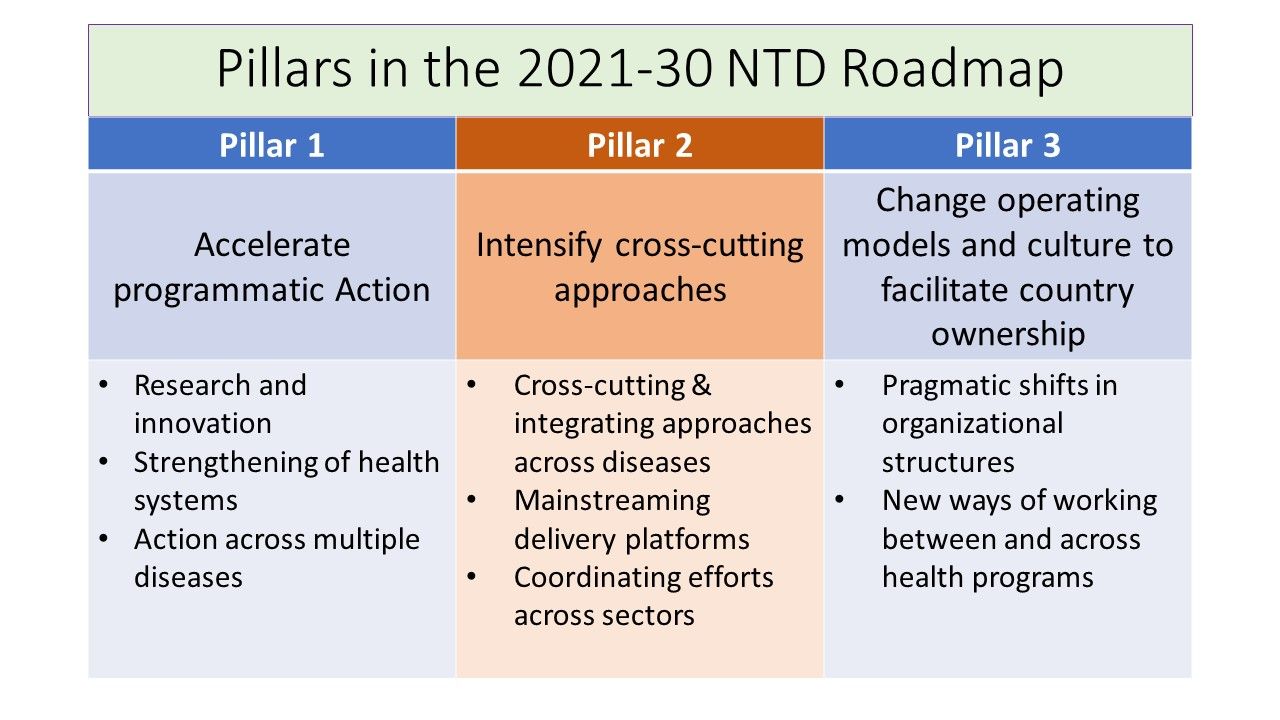 Finally, provisional agenda item 11.8 (A73/8) addresses a “Draft road map for neglected tropical diseases 2021–2030.” This builds on resolution WHA66.12 (2013) on WHO’s earlier road map for accelerating work to overcome the global impact of neglected tropical diseases (2012–2020). The proposed interventions build on important principles including:
- Tackling neglected tropical diseases through support of the vision of universal health coverage
- Adopting grassroots approaches that enable access to some of the world’s poorest, hard-to reach communities and people affected by complex emergencies
- Monitoring progress against neglected tropical diseases as a litmus test of progress towards the achievement of universal health coverage
The report notes that “40 countries, territories and areas have eliminated at least one neglected tropical disease,” most notably dracunculiasis (as mentioned above, lymphatic filariasis and trachoma. Although “substantive progress has been made since 2012, it is evident that not all of the 2020 targets will be met.” Hence, a new draft road map for neglected tropical diseases for 2021–2030 is required. The three pillars supporting the new roadmap are outlined in the attached figure.
It is good to know that the 73rd World Health Assembly will not be completely overshadowed by COVID-19 and politics. Efforts to sustain and improve NTD control and elimination must not be jeopardized.
Children &Measles &Mortality &Surveillance Bill Brieger | 30 Apr 2020
African Children and COVID-19
Until recently it was thought that the novel coronavirus, COVID-19, was less severe in children. Now as more cases can be studied, that prognosis is less likely to be true. The number of cases overall in Africa is still lower than the rest of the world, with 36,857 cases reported by the Africa CDC as of 29 April 2020, compared to over 3 million globally. One assumes out of this that the number of child cases would also be lower, but there is worry about other indirect effects of the pandemic on children.
 Initial beliefs that the young would be less impacted by COVID-19 may have led to complacency. For example, the Atlantic reports that, “Africa will enjoy the advantage of youth. COVID-19 kills mostly the old, and Africans are relatively young, with a median age of 18.9. (The median age in the United States and China is 38.) That means, in effect, that about half of Africans who get COVID-19 will have a low risk of death.” The reality is turning out much different.
First from the medical standpoint, VOA reports that, “Doctors in Britain, Italy, Portugal and Spain are exploring a possible link between a severe inflammatory disease in children and the coronavirus. A growing number of children of various ages in several European countries have been admitted to hospitals with high fever and heart issues. Some also have suffered from gastrointestinal problems, such as vomiting and diarrhea.” There is not enough information disaggregated by age to tell us how coronavirus is affecting children in Africa.
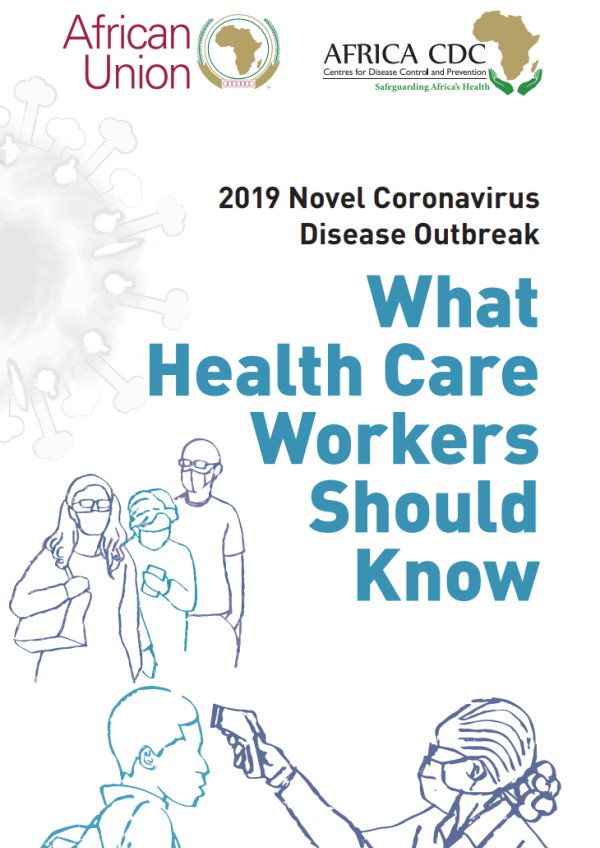 Secondly, UNICEF tells us that, “in any crisis, the young and the most vulnerable suffer disproportionately,” as children suffer from “collateral damage.” Lockdowns reduce access to essential services such as routine immunization, nutritional supplementation and malaria treatment and prevention programs and thus increase morbidity and mortality among children.
Nature published on 7th April that measles has currently, “killed more than 6,500 children in the Democratic Republic of the Congo (DRC) and is still spreading through the country.” Unfortunately “23 countries have suspended measles vaccination campaigns as they cope with SARS-CoV-2.”
There are groups of children that are especially vulnerable. In Kenya. “Street children are having a rough time during the curfew. Food and water are a real problem as hotels and eating places where they would normally get food have closed down. Movement is restricted,” according to the Guardian. The article goes further to share the concern that, “the virus could drive homeless children back to families where they are at risk of abuse.” 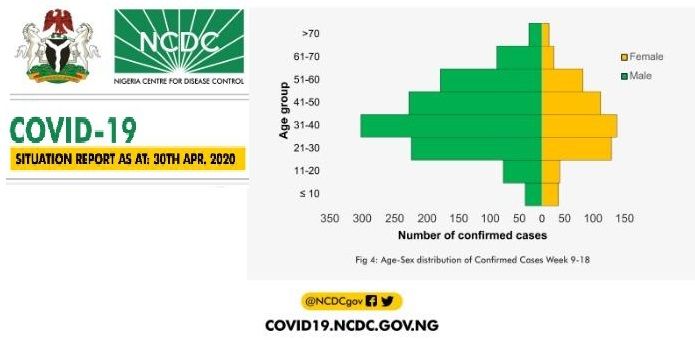 Abuse of children during stressful times goes affects many confined to homes with out-of-work parents, not just street children.
We cannot afford to lose more children to direct and collateral mortality from the COVID-19 pandemic as it spreads in Africa. We need to begin with better data to tell us about infection and effects on children. Nigeria has done some reporting on age. We need to ensure that all countries collect data on children and COVID-19 and also maintain routine child survival services.
Elimination &Surveillance &Vector Control Bill Brieger | 17 Apr 2020
A look at Botswana from WHO’s E-2020 country brief
 Botswana is one of a handful of countries in Southern Africa that are nearing malaria elimination targets. The information below is extracted from WHO’s Elimination 2020 program site and shared verbatim.
“Botswana has made impressive progress in reducing indigenous malaria transmission, from a reported 71 000 cases in 2000 to 533 in 2018. Despite significant variation from year to year – with a higher number of malaria cases in 2014, 2016 and 2017 – the country has continued to report an overall decline in both cases and deaths since 2000.
“Challenges faced by Botswana’s national malaria control programme include the perception, in some communities, that malaria is a low priority disease, which can lead to people not protecting themselves with insecticide-treated nets and other WHO-recommended prevention measures. Added to this, some residents do not accept vector control activities such as insecticide spraying inside homes. However, the government’s commitment to eliminate malaria remains strong.
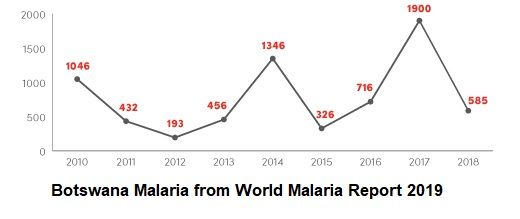 “WHO lists the following Successes in Botswana and the accompanying graph confirms the overall drop, despite some increases:
- 69% decrease in number of reported malaria cases following outbreaks in 2014, 2016 and 2017;
- all districts using District Health Information Software 2 (DHIS2) for real-time malaria reporting
 mapping of all malaria cases at household level and stratification at village level
- adoption of the Community Acting Together to Eliminate Malaria (CATTEM) approach
enhanced community monitoring in malarious districts by malaria surveillance agents”
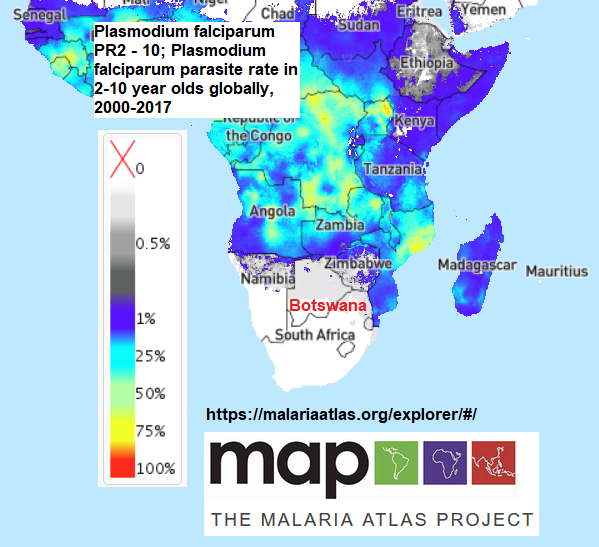
Hopefully with geographical and epidemiological targeting and attention to early warnings about climate change, Botswana can be among the next group of countries achieving malaria elimination.
Borders &Diagnosis &Ebola &Elimination &Eradication &Health Systems &Measles &Surveillance &Vaccine &Yaws Bill Brieger | 22 Jun 2019
The Weekly Tropical Health News Update 2019-06-22
For almost 20 years we have been maintaining an email list where current news and articles have been shared with those interested in tropical health and malaria. The listserve host we have been using is changing to a paid model. While there are still some free listserve options, these are cumbersome to produce. Since we are already maintaining this blog, we thought it best to provide a weekly summary of key news events through this medium.
Mapping Plasmodium Vivax
The Malaria Atlas Project has published in The Lancet a global burden of Plasmodium Vivax mapping study. The authors describe the contribution of this study as: “Our study highlights important spatial and temporal patterns in the clinical burden and prevalence of P vivax. Amid substantial progress worldwide, plateauing gains and areas of increased burden signal the potential for challenges that are greater than expected on the road to malaria elimination. These results support global monitoring systems and can inform the optimisation of diagnosis and treatment where P vivax has most impact.”
Ebola Spread from DRC to Uganda
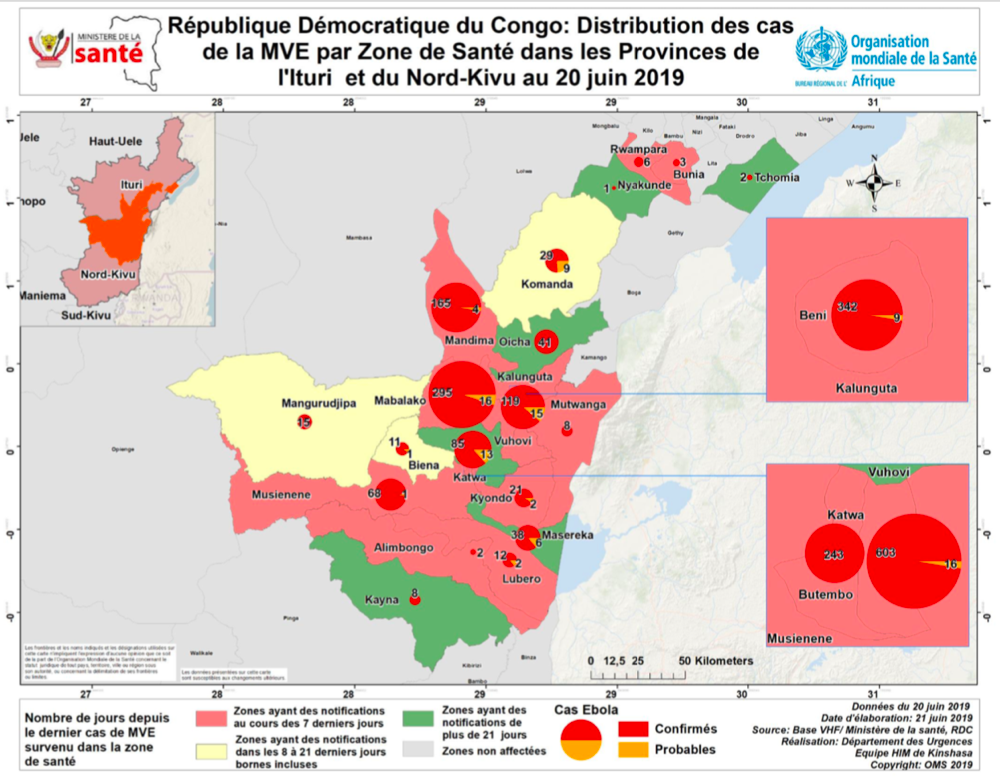 Since the major ongoing outbreak of Ebola Virus Disease in North Kivu and Ituri Provinces of the Democratic Republic of Congo (DRC) started nearly a year ago, there has been concern that the disease might spread to neighboring countries like Uganda, Rwanda, South Sudan and the Central African Republic. This fear same true recently when a family affected by Ebola crossed from DRC into Uganda to connect with relatives in Kasese District Uganda. Uganda has had many years’ experience dealing with Ebola and was able to contain the situation.
A press release this week noted that, “As of today (21 June 2019), Uganda has not registered any new confirmed Ebola Virus Disease (EVD) case in Kasese District or any other part of Uganda since the last registered case one week ago. There are no new suspect cases under admission. Currently, 110 contacts to the confirmed Ebola cases in Kagando and Bwera are being followed up daily. A total of 456 individuals have been vaccinated against EVD using the Ebola-rVSV vaccine in Kasese District, Western Uganda.”
Although many people expected that the meeting of the “International Health Regulations (2005) Emergency Committee} for Ebola virus disease in the Democratic Republic of the Congo would finally declare the current outbreak a Public Health Emergency of International Concern (PHEIC) because it crossed a border, the result was noting that the challenge was still an emergency only for DRC. WHO did note that there were serious funding gaps and support from other countries for the DRC’s predicament. Ironically, such gaps make it more likely that Ebola can spread more widely.
As of 21 June 2019, the DRC reported a total of 2,211 cases since the start of the epidemic last year, of which 2,117 have been confirmed and 94 are probable. There have been 1,489 deaths. To date 139,027 persons have been vaccine with the Merck rVSV-ZEBOV vaccine.
Progress toward Eliminating Malaria – the E-2020 Countries
 The process of eliminating malaria from the world needs to start in a step-by-step fashion. WHO explained that, “Creating a malaria-free world is a bold and important public health and sustainable development goal. It is also the vision of the Global technical strategy for malaria 2016-2030, which calls for the elimination of malaria in at least 10 countries by the year 2020.”
Actually, WHO identified 21 countries, spanning 5 regions, that could defeat malaria by 2020. The progress report charts the effort. During the recent World Health Assembly two countries received recognition for being certified malaria-free, Argentina and Algeria. This week WHO also announced that 5 more countries have not had malaria cases in the past year. There was also release of a downloadable report on progress toward the 2020 target for selected countries.
Reconsidering Yaws Eradication
In the 1950s and 1960s the world focused on the possibility of eradicating Yaws through screening and treatment interventions. Like the early malaria eradication programs from the same period, the Yaws effort slowed, stopped and experienced a resurgence. The Telegraph reported that, “Between 1952 and 1964, Unicef and the WHO screened some 300 million people for the illness, in a coordinated programme which treated more than 50 million cases. Yaws was on the brink of being wiped out and reports of the disease dropped by 95 per cent.” WHO continues to work on treatment strategies with azithromycin and for resistant cases, benzathine benzylpenicillin injection.
WHO noted that there were 80,472 cases reported in 2018, although this figure is likely to be much higher in actuality. The challenge of case detection exists but may be overcome, according to the Telegraph with a new molecular rapid diagnostic test which detects yaws within 30 minutes, and thus could allow on-the-spot diagnosis in remote regions.
Measles Cases Continue to Increase
The problem of measles in the DRC may not be receiving much attention because of the Ebola epidemic. Ironically, Outbreak News Today reports that, “In a follow-up on the measles outbreak in the Democratic Republic of the Congo (DRC), UN health officials report an additional 7500 suspect cases in the past 2 weeks, bringing the total cases since the beginning of the year to 106,870. The death toll due to the measles outbreak has reached 1815 deaths (case fatality ratio 1.7%).”
Vaccine coverage challenges in the DRC result from health systems weaknesses. Unfortunately, a global study has shown that increasing cases in the Global North are not due to weak systems, but ‘vaccine hesitancy.’ The Guardian reports that a global survey has revealed the scale of the crisis of confidence in vaccines in Europe, “showing that only 59% of people in western Europe and 50% in the east think vaccines are safe, compared with 79% worldwide.” The Guardian observes that, “In spite of good healthcare and education systems, in parts of Europe there is low trust in vaccines. France has the highest levels of distrust, at 33%.”
For more news and daily updates check our other services, a closed/private Facebook Group and a Twitter feed. For those who do not use social media, please check here each weekend to find a summary of some of the stories we have shared during the week.
Asymptomatic &Case Management &Diagnosis &Elimination &Ivermectin &Surveillance &Uncategorized Bill Brieger | 30 Jan 2019
Asymptomatic Malaria – we need to eliminate what we can’t see
After the World’s first attempt at eradicating the complicated disease malaria mainly through a single tool, a period of control set in where the aim was to reduce mortality through prompt and presumptive treatment of fevers with anti-malarials, particularly in young children. During this period in the 1980s and 1990s it was recognized that parasite-based diagnostic capabilities in the form of microscopy were limited, so in malaria endemic areas, it was worth providing inexpensive medicines like chloroquine (CQ) and sulfadoxine-pyrimethamine (SP) to febrile children in order to save lives. When the fevers did not resolve, other illnesses explored.
The difficulty arose in identifying cases that did not offer clinical clues that they might be malaria. Today countries approaching malaria elimination face challenges, such as seen in Zanzibar where, “outdoor transmission, a large asymptomatic parasite reservoir and imported infections, require novel tools and reoriented strategies to prevent a rebound effect and achieve elimination.”[i] Here we examine the challenge of asymptomatic malaria infections.

Background
By 1998 when the Roll Back Malaria partnership formed, there had been enough research done so that the malaria community had a better arsenal of interventions including insecticide-treated bed nets, artemisinin-based combination therapy (ACT) and intermittent preventive treatment with SP during pregnancy. The Abuja Declaration of 2000 set a target of 80% coverage of these interventions by the year 2010.
While ACTs overcame the challenges of parasite resistance that had developed for the single drugs, CQ and SP, it cost several times more than those medicines. The need for easy-to-use, inexpensive, point-of-care diagnostics was recognized so that not only would ACTs be targeted only to parasitologically confirmed malaria cases, but also in the process, overuse and misuse would not contribute to parasite resistance of these new drugs.[ii] Unfortunately, the development and dissemination of antigen-based rapid diagnostic tests (RDTs), lagged behind the availability of ACTs meaning that health workers unfortunately continued their business as usual with presumptive treatment using ACTs.
The benefits of RDTs were generally two-fold. First, they could be used by front-line, auxiliary and community-based health workers. Secondly, they tended to identify more cases than microscopy. The big challenge was convincing health workers to use them and trust the results, because the era of presumptive treatment had given these staff a false sense of confidence in their own clinical diagnostic abilities.

Although reaching the 2010 coverage targets has remained illusive for most endemic countries, there has been enough progress for major reductions in incidence (despite a recent upsurge).[iii] As the proportion of actual malaria cases among febrile illness patients declines, concern has risen that transmission might continue among people with subclinical or asymptomatic malaria. Here we explore the extent of this problem and new directions in parasitological testing needed to ensure continued progress toward elimination in each endemic country.
Understanding the Risk of Asymptomatic Malaria
Risk can relate to geographical, epidemiological, and socio-demographic factors as well as history of malaria interventions. Kenya has stratified the country by higher and lower malaria transmission areas. Even the higher areas are comparatively low compared to its higher transmission neighbors. Studying the prevalence of asymptomatic malaria in some of these higher transmission areas in the west of the country was seen as a way to better identify people at risk and learn about intervention effectiveness. An examination of apparently healthy children (no symptoms) revealed a Plasmodium falciparum malaria prevalence 36.0% (27.5%, 44.5%) by RDT and 22.3% (16.0%, 28.6%) by thick film microscopy.[iv] Living in a household with electricity was protective but the adjusted odds ratio of prevalence comparing households with and without indoor residual spray showed only borderline benefit. Unfortunately, in Zanzibar, asymptomatic malaria infection was not associated “with use of any vector control.”1
A major challenge in detecting cases through routine health care systems is care seeking patterns of care seeking for fever. The 2018 World Malaria Report acknowledges that there are major equity challenges in care seeking wherein families with higher incomes, better education and living in urban areas are more likely to seek help for their febrile children that rural, poor and less educated families who would be more at risk. Care seeking without the signs of fever is more challenging. A dual strategy of enabling better service utilization as well as outreach to detect cases will be necessary to detect asymptomatic cases.3
In Burkina Faso, the prevalence of asymptomatic malaria infection in children under 5 years of age was estimated at 38.2% in 24 of its 70 health districts. Those at most risk for asymptomatic malaria infection included the following:[v]
- older children (48–59 vs < 6 months: OR: 6.79 [5.62, 8.22])
- children from very poor households (Richest vs poorest: OR: 0.85 [0.74–0.96])
- households located more than 5 km from a health facility (< 5 km vs ? 5 km: OR: 1.14 [1.04–1.25])
- localities with inadequate number of nurses (< 3 vs ? 3: 0.72 [0.62, 0.82]
- rural areas (OR: 1.67 [1.39–2.01])
Nine districts reported significantly higher risks (Batié, Boromo, Dano, Diébougou, Gaoua, Ouahigouya, Ouargaye, Sapouy and Toma. The researchers concluded that, “Such national spatial analysis should help to prioritize areas for increased malaria control activities.”
A study in Ghana found that, “children and pregnant women had higher prevalence of submicroscopic gametocytes (39.5% and 29.7%, respectively) compared to adults
(17.4%).”[vi]

An additional concern is emerging in terms of sharing of malaria parasite species between humans and primates, especially as urbanization and deforestation push these two populations into closer contact. For example Mapua and colleagues working in Central Africa Republic, “found the human malaria parasite P. ovale wallikeri in both asymptomatic humans and western lowland gorillas in Dzanga Sangha Protected Areas. Molecular analysis revealed that the genotype of the P. ovale wallikeri DNA found in a gorilla was genetically identical to that of a human isolate within the mt cytb and mt cox 1 genes, indicating potential human–ape transmission.”[vii] They noted similar sharing of parasites in the region between humans and chimpanzees.
Detecting and Responding to Asymptomatic Cases
WHO’s Framework for Malaria Elimination[viii] recognizes the important role of case detection and subsequent treatment as well as broader community level preventive responses around detected cases. In the context of elimination WHO notes that case detection “requires use of a diagnostic test to identify asymptomatic malaria infections.” WHO stresses that a case is a case, regardless of whether it is symptomatic or asymptomatic, as long as the diagnostic process confirms presence of malaria infection.
It is important to monitor Plasmodium parasitemia in areas where malaria transmission has declined and efforts to achieve malaria elimination are underway, such as Zambia, where 3,863 household members were tested.[ix] Only 2.6% were positive by either microscopy, RDT, or PCR. Of these, 48 (47%) had subpatent parasitemia, and 85% of those with subpatent parasitemia were asymptomatic. “Compared with individuals without parasitemia, individuals with subpatent parasitemia were significantly more likely to be aged 5–25 years.” The authors suggested that their findings pointed to the need for active or reactive case detection to identify asymptomatic individuals and thus better target individuals with subpatent parasitemia with appropriate malaria interventions.
WHO explains that active case detection (ACD) takes place in areas of limited or under-utilization of health care services.4 It may start with initial screening for symptoms, followed by appropriate parasitological laboratory confirmation. In low-transmission settings or as part of a focus investigation, “ACD may consist of testing of a defined population group without prior symptom screening (population-wide or mass testing) in order to identify asymptomatic infections.” Elimination cannot be achieved until even asymptomatic infections have stopped. The challenge is the expense of community-wide screening.
Reactive Case Detection (RCD), according to WHO, takes place in settings low transmission intensity where the few “occurring malaria cases are highly aggregated.”4 When a case is identified, usually through identification of an actual infected patient at a local clinic, the community where the patient comes from is visited and a “net is cast around the index case” where household members and neighbors within a selected radius are tested. In this process asymptomatic cases are also identified.

Our existing diagnostic tools may be inadequate. McCreesh and colleagues reported on subpatent malaria in Namibia that, “fever history and standard RDTs are not useful to address this burden. Achievement of malaria elimination may require active case detection using more sensitive point-of-care diagnostics or presumptive treatment and targeted to high-risk groups.” This includes loop-mediated isothermal amplification (LAMP) using dried blood spots, which they tested.[x] Likewise from experience in a Zambian study, Kobayashi and co-researchers suggest, “more sensitive diagnostic tests or focal drug administration may be necessary to target individuals with subpatent parasitemia to achieve malaria elimination.”[xi]
Responses to detecting asymptomatic cases start at the individual level with prompt treatment of those found through RCD to be infected. Then focused preventive interventions such as distribution of insecticide treated bednets can be provided to those in the cluster or village. Follow-up would be needed for such ‘hot spots.’

On a broader basis we have Seasonal Malaria Chemoprevention (SMC) as practiced in Sahelian countries where during the peak transmission (rainy) season intermittent preventive treatment is given to children monthly by community health workers and volunteers. Of course, many of these children would be asymptomatic carriers and SMC could benefit the reduction of parasites in circulation. At present SMC focuses on pre-school aged children, but Thera and co-researchers stress the importance of reaching school aged children who are also often asymptomatic carriers.[xii]
Another intervention being tested for mass drug administration (MDA) use providing the community with ivermectin, a drug that has been highly effective in controlling filarial diseases and also found to kill mosquitoes who take a blood meal from a person who has recently taken it.[xiii] This strategy is still being tested, but again MDA means all community members, especially those with asymptomatic infection, would be reached.
A major question requires further research. To what extent
do asymptomatic, submicroscopic and subpatent parasitemia contribute to
continued malaria transmission? Another question is how can we address malaria
infection in other primates? We know that scientists recommend targeting of
malaria elimination interventions based on mapping of these infections.5
We therefore need to study the actual transmission potential of this
phenomenon.
[i] Björkman A, Shakely D, Ali AS, Morris U, Mkali H, Abbas AK, Al-Mafazy A-W, Haji KA, Mcha J, Omar R, Cook J, Elfving K, Petzold M, Sachs MC, Aydin-Schmidt B, Drakeley V, Msellem M and Mårtensson A. From high to low malaria transmission in Zanzibar—challenges and opportunities to achieve elimination. BMC Medicine (2019) 17:14, https://doi.org/10.1186/s12916-018-1243-z
[ii] Global Malaria Programme. Universal access to malaria diagnostic testing – An operational manual. World Health Organization. November 2011 (rev. February 2013). https://www.who.int/malaria/publications/atoz/9789241502092/en/
[iii] Global Malaria Programme. World malaria report 2018. World Health Organization. 19 November 2018. https://www.who.int/malaria/publications/world-malaria-report-2018/en/
[iv] Peprah S, Tenge C, Genga IO, Mumia M, Were PA, Kuremu RT, Wekes WN, Sumba PO, Kinyera T, Otim T, Legason ID, Biddle J, Reynolds SJ, Talisuna AO, Biggar1 RJ, Bhatia K, Goedert JJ, Pfeiffer RM, Mbulaiteye SM. A Cross-Sectional Population Study of Geographic, Age-Specific, and Household Risk Factors for Asymptomatic Plasmodium falciparum Malaria Infection in Western Kenya. The American Journal of Tropical Medicine and Hygiene, Volume 100, Issue 1, Jan 2019, p.54-65. DOI: https://doi.org/10.4269/ajtmh.18-0481.
[v] Ouédraogo M, Samadoulougou S, Rouamba T, Hien H, Sawadogo JEM Tinto H, Alegana VA, Speybroeck N and Kirakoya?Samadoulougou F. Spatial distribution and determinants of asymptomatic malaria risk among children under 5 years in 24 districts in Burkina Faso. Malaria Journal 2018; 17:460 https://doi.org/10.1186/s12936-018-2606-9
[vi] Lamptey H, Ofori MF, Kusi KA, Adu B, Owusu-Yeboa E, Kyei-Baafour E, Arku AT, Bosomprah S, Alifrangis M, Quakyi IA. The prevalence of submicroscopic Plasmodium falciparum gametocyte carriage and multiplicity of infection in children, pregnant women and adults in a low malaria transmission area in Southern Ghana. Malar J. 2018 Sep 17;17(1):331. doi: 10.1186/s12936-018-2479-y.
[vii] Mapua MI, Hans-Peter Fuehrer HP, Petrželková KJ, Todd A, Noedl H, Qablan MA, and Modrý D. Plasmodium ovale wallikeri in Western Lowland Gorillas and Humans Central African Republic. Emerging Infectious Disease journal. Volume 24, Number 8—August 2018. https://wwwnc.cdc.gov/eid/article/24/8/18-0010_article
[viii] Global Malaria Programme. A framework for malaria elimination. ISBN 978-92-4-151198-8. World Health Organization 2017, http://www.who.int/malaria/publications/atoz/9789241511988/en/
[ix] Kobayashi T, Kanyangarara M, Laban NM, Phiri M, Hamapumbu H, Searle KM, Stevenson JC, Thuma PE, Moss WJ and the Southern Africa International Centers of Excellence for Malaria Research. Characteristics of Subpatent Malaria in a Pre-Elimination Setting in Southern Zambia. The American Journal of Tropical Medicine and Hygiene, 10 December 2018, DOI: https://doi.org/10.4269/ajtmh.18-0399
[x] McCreesh P, Mumbengegwi D, Roberts K, Tambo M, Smith J, Whittemore B, Kelly G, Moe C, Murphy M, Chisenga M, Greenhouse B, Ntuku H, Kleinschmidt I, Sturrock H, Uusiku P, Gosling R, Bennett A, Hsiang MS. Subpatent malaria in a low transmission African setting: a cross-sectional study using rapid diagnostic testing (RDT) and loop-mediated isothermal amplification (LAMP) from Zambezi region, Namibia. Malar J. 2018 Dec 19;17(1):480. doi: 10.1186/s12936-018-2626-5.
[xi] Kobayashi T, Kanyangarara M, Laban NM, Phiri M, Hamapumbu H, Searle KM, Stevenson JC, Thuma PE, Moss WJ, For The Southern Africa International Centers Of Excellence For Malaria Research.Characteristics of Subpatent Malaria in a Pre-Elimination Setting in Southern Zambia. Am J Trop Med Hyg. 2018 Dec 10. doi: 10.4269/ajtmh.18-0399. [Epub ahead of print]
[xii] Thera MA, Konea AK, Tangaraa B, Diarraa E, Niarea A, Dembeleb A, Sissokoa MS, Doumboa OK. School-aged children based seasonal malaria chemoprevention using artesunate-amodiaquine in Mali. Parasite Epidemiology and Control 3 (2018) 96–105. https://doi.org/10.1016/j.parepi.2018.02.001
[xiii] Smit MR, Ochomo EO, Aljayyoussi G, Kwambai TK, Abong’o BO, Chen T, Bousema T, Slater HC, Waterhouse D, Bayoh NM, Gimnig JE, Samuels AM, Desai MR, Phillips-Howard PA, Kariuki SK, Wang D, Ward SA, ter Kuile FO. Safety and mosquitocidal efficacy of high-dose ivermectin when co-administered with dihydroartemisinin-piperaquine. www.thelancet.com/infection Published online March 27, 2018 http://dx.doi.org/10.1016/S1473-3099(18)30163-4
Borders &CHW &Climate &Elimination &IPTi &Sahel &Surveillance &Vector Control Bill Brieger | 26 Sep 2018
Hopefully Malaria Elimination will not be the SaME
The Sahel Malaria Elimination Initiative (SaME) has been launched, but builds on a long history of cooperation in the region. Efforts by eight Sahelian countries to share lessons and strategies mirrors the Elimination Eight group on the opposite end of the continent.
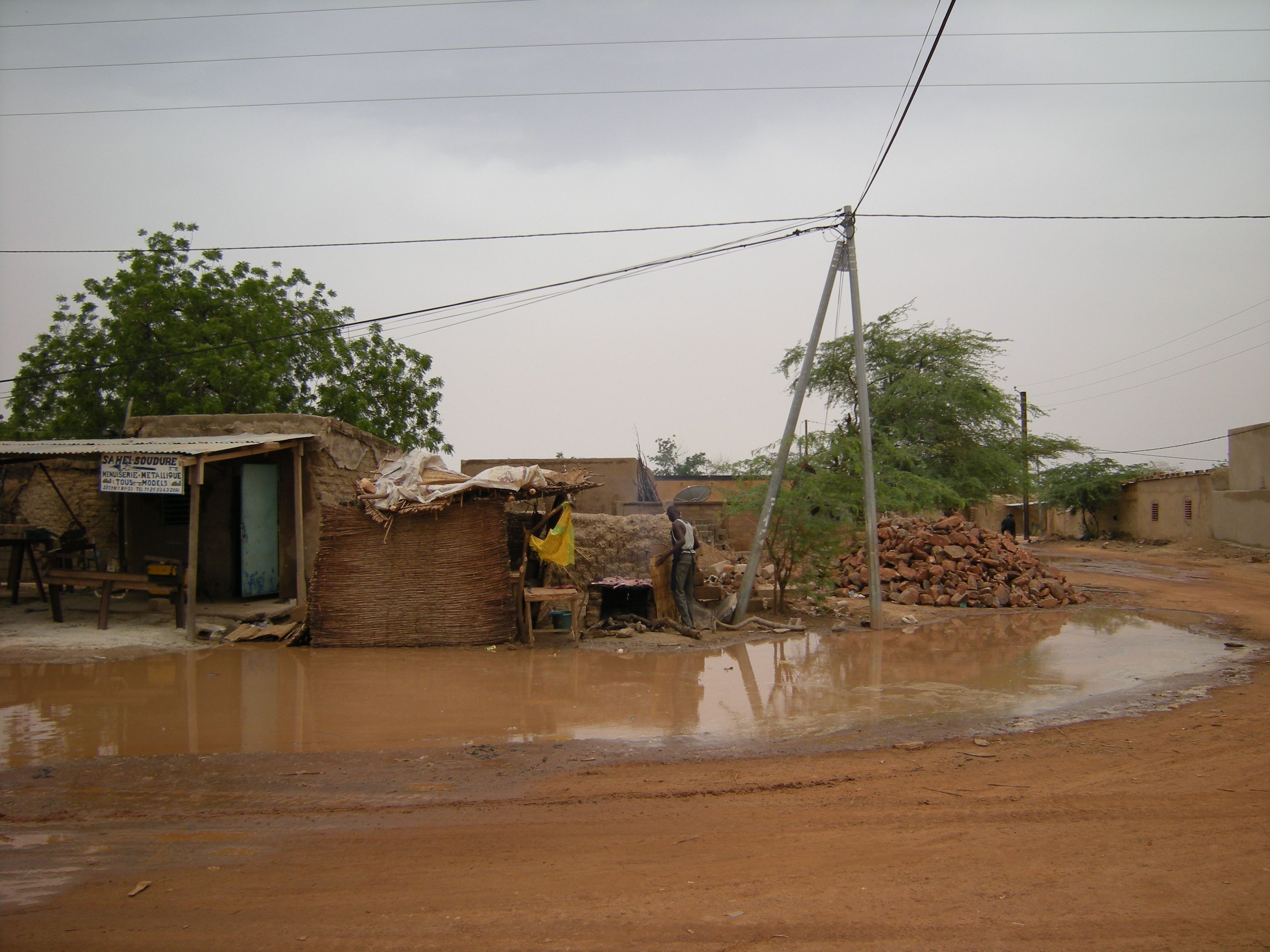
The few rainy season months in the Sahel offer optimum malaria transmission, which SaME is tackling
The Roll Back Malaria (RBM) Partnership to End Malaria announced that in Dakar on 31st August 2018, the health “ministers from Burkina Faso, Cabo Verde, Chad, Mali, Mauritania, Niger, Senegal and The Gambia established a new regional platform to combine efforts on scaling up and sustaining universal coverage of anti-malarials and mobilizing financing for elimination.” The group plans a fast-track introduction of “innovative technologies to combat malaria and develop a sub-regional scorecard that will track progress towards the goal of eliminating malaria by 2030.” This will build on the existing country scorecard that has been developed and implemented by AMLA2030 for all countries in the region and tracks roll out of key malaria and health interventions. The Sahel Malaria Elimination Initiative will be hosted by the West African Health Organization, a specialised agency of the Economic Community of West African States (ECOWAS).
RBM explains that while the eight countries will work together, they do not have a homogenous epidemiological picture or experience with malaria programming. The Sahel experiences 20 million annual malaria cases, according to RBM, and “the Sahel region has seen both achievements and setbacks in the fight against the disease in recent years.” These eight have a highly variable malaria experience. Burkina Faso and Niger continue to be among the countries with high malaria burdens. Cabo Verde is on target for malaria free status by 2020. The Gambia, Mauritania and Senegal are reorienting their national malaria program towards malaria elimination. A benefit of this epidemiological and programmatic diversity is that countries can learn important lessons from each other.
The SaME Initiative will use the following main approaches to accelerate the combined efforts towards the attainment of malaria elimination in the sub-region:3
- Regional coordination
- Advocacy to keep malaria elimination high on the development and political agenda
- Sustainable financing mechanisms
- Cross-border collaboration and ensuring accountability
- Fast-track the introduction of innovative and progressive technologies
- Re-enforcing the Regional regulatory mechanism for quality of malaria commodities and introduction of new tools.
- Establish malaria observatory, regional surveillance, and best practice sharing
Collaboration across borders on vector control is an example of needed regional coordination. According to Thomson et al., climate variations have the potential to significantly impact vector-borne disease dynamics at multiple space and time scales. Another challenge to vector control in the region is the issue of how mosquitoes repopulate areas after an extended dry season. Huestis et al. examined the response of Anopheles coluzzii and Anopheles gambiae to environmental cues in season change in the Sahel.

Seasonal Malaria Chemoprevention Round 3 of 2018 in Burkina Faso
In addition to a history of cooperation, Sahelian countries share a unique malaria intervention, Seasonal Malaria Chemoprevention (SMC) that as the name implies, built on the reality of highly seasonal transmission in the region. SMC grew out of over five years of research in several African settings to test the effect of what was originally termed Intermittent Preventive Treatment for Infants (and later children) or IPTi.
Like IPT for pregnant women, SMC would be given monthly for at least 3-4 months, but unlike IPTp, SMC would consist of a combination two medicines, amodiaquine plus sulfadoxine-pyrimethamine (AQ+SP), which required a three daily doses (SP alone as used in IPTp consists on one dose). SMC could not therefore, be delivered effectively as a clinic-based intervention, but “should be integrated into existing programmes, such as Community Case Management and other Community Health Workers schemes.” Access to SMC by pre-school aged children as delivered by CHWs was found to be more equitable than sleeping under an LLIN. SMC has been recommended for school-age children, a neglected group that bears a substantial burden of malaria.
Closely linked to surveillance is modeling the spatial and temporal variability of climate parameters, which is crucial to tackling malaria in the Sahel. This requires reliable observations of malaria outbreaks over a long time period. To date efforts are mainly linked to climate variables such as rainfall and temperature as well as specific landscape characteristics. Other environmental and socio-economic factors that are not included in this mechanistic malaria model.
The Sahel Malaria Elimination initiative offers a unique collaborative opportunity for countries to improve on the quality of proven interventions like SMC and test and take to scale new strategies like school-based malaria programs. Regional coordination can produce better, timelier and longer-term surveillance and better understanding of and actions against malaria vectors. Readers will surely be anticipating the publishing of the regular progress malaria elimination scorecards as promised by SaME leadership.
Case Management &Elimination &Epidemiology &Health Information &ITNs &Migration &Surveillance Bill Brieger | 20 Jul 2018
Establishing Mobile Outreach Teams (MOTs) for strengthening Active Case Detection with Mobile Populations in Vietnam 2016-2020
 Mobile migrant populations present a special challenge for malaria control and elimination efforts. Nguyen Ha Nam and colleagues* (Nguyen Xuan Thang, Gary Dahl, James O’Donnell, Vashti Irani, Sara Canavati, Jack Richards, Ngo Duc Thang, and Tran Thanh Duong) presented their study of this group at the recent Malaria World Congress. They are also sharing what they learned below.
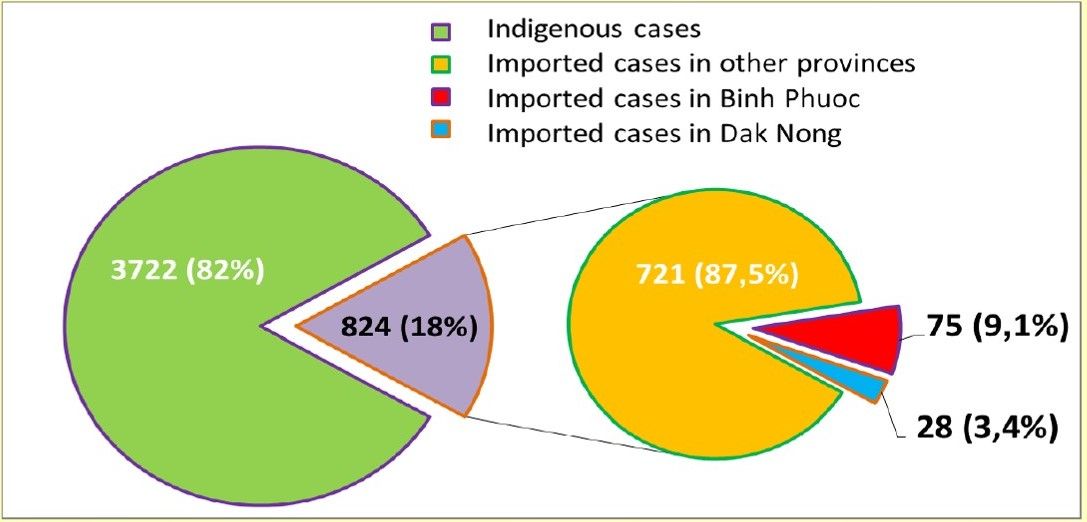
 Mobile Migrant Populations (MMPs) are a key population for containing the spread of malaria in the border areas between Cambodia and Vietnam. The number of imported cases in Viet Nam in 2017. 12,5% of such cases caught in Binh Phuoc and Dak Nong provinces and all of them came from Cambodia. The provinces bordering Cambodia and Vietnam have been had the highest malaria transmission intensity. This borders are frequented by MMPs who have proven difficult to target for surveillance and malaria control activities.
 Mobile Outreach Teams (MOTs) provide a potential approach to target malaria elimination activities for MMPs who may not be strongly supported by the regular village-based and clinic-based health services. This work describes the implementation of MOTs in Binh Phuoc and Dak Nong Provinces, which are high-risk regions along the Viet Nam-Cambodia border. These activities were conducted as part of the Regional Artemisinin-resistance Initiative (RAI) in 2017. Each MOT was comprised of 2 Commune Health Staff and 1 Village Health Worker (VHW) from the village nearest to the outreach area.
In the first phase of the pilot, 3 communes of 2 districts in Binh Phuoc and 2 communes of 1 district in Dak Nong with highest malaria cases reported from NIMPE are selected as targeted areas. The Objectives were to …
- Design/tailor Mobile Outreach Information Education and Communication/Behaviour change communication (BCC/ IEC) Toolkit
- Intensify case detection and quality management by increasing the coverage of diagnostics and treatment for hard to reach populations
- Strengthen outreach to high-risk and under-served populations through MOT scouting activities to locate unreached Mobile Communities and map their locations
- Link MMPs with health facilities and Village Health Workers
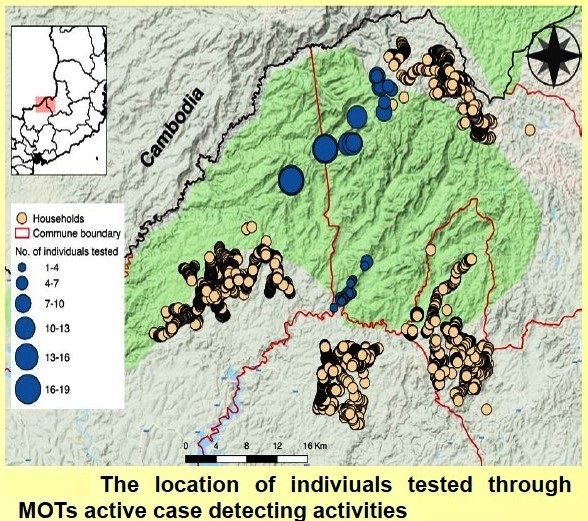 All MOT members were provided with smartphones and were trained on how to use the EpiCollect5 app to track malaria cases, record mapping information and upload real-time reports of these malaria cases. MOTs conducted 5-day outreach activities every month. These activities began with scouting out locations of the MMP communities.
Once located, the MOTs geo-tagged the location of the community, conducted a short epidemiological survey on the community and screened for malaria using Rapid Diagnostic Tests and blood smear microscopy. Active malaria cases were provided with treatment according to the National guidelines, and Long Lasting Insecticidal Nets were distributed based on results of diagnosis and the survey.
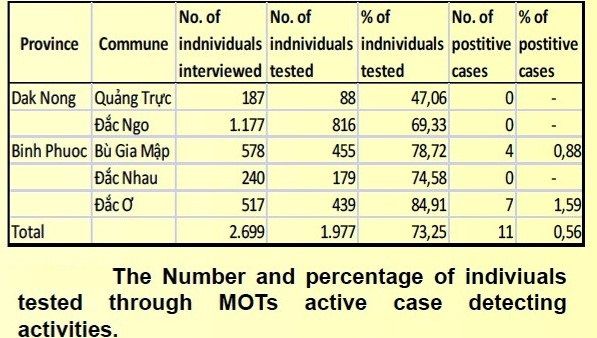 This action has led to increased diagnosis and treatment of hard to reach MMPs with increased access by those communities to malaria services. Improved understanding and increased use of malaria prevention practices hard to reach MMP communities/households. Mapped of previously unreached MMP Communities and unofficial border crossing points with malaria transmission hotspots and highly frequented crossing identified. The number of MMPs were monitored by MOTs were 2,699 accounting for 5.18% of the population in the project sites (2,699/52,095).
These screened MMPs were almost located along the border among project communes in Bu Gia Map National Forest where have a lot of unofficial border crossers, timber camp communities, and other revolving communities. 1,977 targeted people were tested for malaria. This number was achieved 73.25% of mobile migrant people (1,977/2,699). This work highlights how MOTs can target the previously unreached populations of MMPs to strengthen malaria surveillance and active case responses to reduce malaria transmission in Viet Nam.
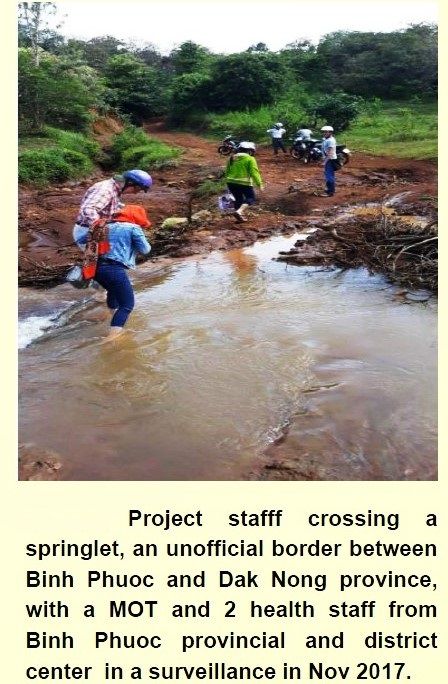 A system of real-time data collection of malaria cases from VHWs and MOTs using mobile phone uploads was established. Border screening and tracking hard to reach communities is a useful approach to implement to identify imported cases; however, it is labor-intensive, and misses subjects crossing at unofficial borders due to limited working time of MOTs (5 days a month).
Positive cases in Binh Phuoc province are maintained for keeping track after receiving treatment due to no confirmed cases detected in targeted communes in Dak Ngo province, though these communes mainly have numerous transient timber camps moving in deep forests, and highly mobile border-crossers moving between regions and countries frequently. Future work will combine routine support from District health staff and expand the role of VHWs with motorbike provision for each MOT in order to not only to improve their quality outreach activities but also develop stronger Active Case Detection in the next phase of the project.
*Team members represent the National Institute of Malariology, Parasitology and Entomology, Hanoi, Viet Nam; Health Poverty Action, London, UK; and the Burnet Institute, Melbourne, Australia.
References
- Kheang ST, Lin MA, et al. Malaria Case Detection Among Mobile Populations and Migrant Workers in Myanmar: Comparison of 3 Service Delivery Approaches. 2018
- Shannon Takala-Harrison,a Christopher G. Jacob, et al. Independent Emergence of Artemisinin Resistance Mutations Among Plasmodium falciparum in Southeast Asia. 2014.
- Imwong M, Hien TT, et al. Spread of a single multidrug resistant malaria parasite lineage (PfPailin) to Vietnam. 2017.
- Richard J Maude,corresponding author Chea Nguon, et al. Spatial and temporal epidemiology of clinical malaria in Cambodia 2004–2013. 2014.
- Imwong M, Nguyen TN, et al.The epidemiology of subclinical malaria infections in South-East Asia: findings from cross-sectional surveys in Thailand–Myanmar border areas, Cambodia, and Vietnam. 2015.
- Hannah Edwards, Sara E. Canavati, et al. Novel Cross-Border Approaches to Optimise Identification of Asymptomatic and Artemisinin-Resistant Plasmodium Infection in Mobile Populations Crossing Cambodian Borders. 2015.
Asia &Elimination &Epidemiology &Mapping &Surveillance Bill Brieger | 19 Jul 2018
Pilot Mapping, Real Time Reporting and Responding in High Risk Malaria Areas of Viet Nam
 Viet Nam is among the Asia-Pacific countries focusing on eliminating malaria. Mapping helps target malaria interventions. Nguyen Xuan Thang and colleagues (James O’Donnell, Vashti Irani, Leanna Surrao, Ricardo Ataide, Josh Tram, An Le, Sara Canavati, Tran Thanh Duong, Tran Quoc Tuy, Gary Dahl, Gerard Kelly, Jack Richards, Ngo Duc Thang) presented their pilot mapping efforts at the Malaria World Congress in Melbourne recently and below share their experiences with us.
Viet Nam is focused on eliminating malaria by 2030. Viet Nam saw a 73% reduction in cases between 2013 and 2017 (NIMPE data), yet border provinces still have a high burden of malaria. However, some provinces still have a high burden of malaria. To achieve malaria elimination, it is essential to deploy targeted interventions in these locations.
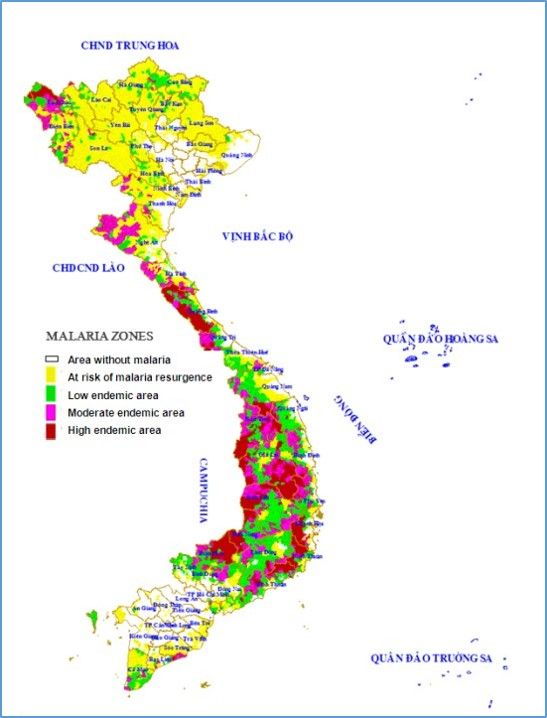 Spatial Decision Support Systems (SDSS) can be used by National Malaria programs to integrate geographic elements in the management of malaria cases and facilitate targeted malaria interventions in these high-risk settings.
The objective of this work was to pilot a SDSS system for Binh Phuoc and Dak Nong Provinces in Viet Nam to facilitate ongoing surveillance and targeted malaria, as part of the Regional Artemisinin-resistance Initiative (RAI). This objective was achieved by:
-

Collecting data with cell phones
Collecting baseline GIS data at household level and environmental characteristics associated with the area;
- Establishing a routine data collection system that will be reported by mobile medical staff by mobile phone;
- Integrating this data to form a spatial decision support system (SDSS);
- Using the SDSS system for direct reporting to malaria control programs that provided strategic solutions for the prevention of disease spread and the elimination of malaria


Sample cell phone data screens
In Phase 1, a household and mapping survey was conducted in collaboration with commune, district and village health workers. Epicollect5 software was used on smartphones with GPS functionality to record mapping information (latitude and longitude) and general information on household members. During Phase 1, 10,506 households were surveyed and data was aggregated in a custom Geographic Information System (GIS) database.
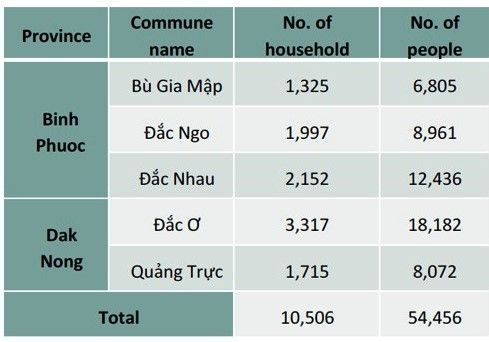 The majority of the surveyed individuals were of the Kinh ethnicity (19,282; 35.4%), followed by M’Nong (4,669; 8.6%) and Mong (3,359; 6.2%). Data related to malaria among mobile populations were included in the GIS as a means to identify and describe groups at high risk for malaria e.g. forest-goers. The survey data were reviewed, cleaned and matched using the ID numbers, then aggregated with relevant administrative boundary data and linked on ArcGIS 10.2 software. This database is located in a custom GIS system and can be visualized as a spatial transmission model to support appropriate decision-making

Dots representing households
Phase 2 focused on ongoing surveillance with rapid case reporting and responses. Malaria cases diagnosed at public and local health facilities were entered into the system by Commune Health Officials. Village Health Workers were immediately notified and went to the patient’s home to undertake case investigation including further household mapping and active case detection activities. The Viet Nam National Institute of Malariology was also notified, and organized local officials to carry out an investigation into the sources of transmission (i.e. ‘hotspots’) and to implement timely interventions.
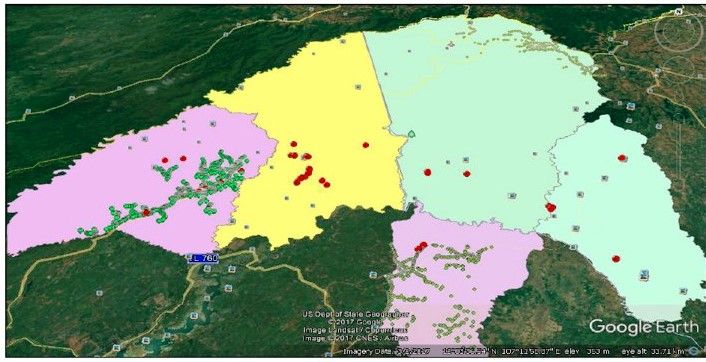
Dots representing cases
When the cases were identified, Village Health Workers went to the patient’s home to undertake operational procedures including geographic exploration, household mapping to identify the location and to identify the list of affected households. They also collected this data on EpiCollect5. Collated information on cases, transmission point, zoning of the target villages allowed for early detection of malaria outbreaks. The National Institute of Malariology can also issue guidelines when the hotspots are identified and when disease outbreaks occur
 These activities are ongoing. In conclusion, a custom GIS database was developed using a household survey in Binh Phuoc and Dak Nong province of Viet Nam. Malaria cases were mapped to identify hotspots of malaria transmission and enable further active case detection and targeted interventions. This established GIS database aims to support routine case notification and to enhance the role of surveillance for active case detection and responses to achieve malaria elimination.
The authors are affiliated with the National Institute of Malariology, Parasitology, Entomology (NIMPE), Viet Nam; Burnet Institute, Australia; and Health Poverty Action, UK. Contact: xuanthang.nimpe@gmail.com
Advocacy &Community &Leadership &Surveillance &Women Bill Brieger | 05 Jul 2018
Global Civil Society for Malaria Elimination (CS4ME)
 CS4ME was created during the Global Malaria Civil Society Strategising and Advocacy Pre-Meeting jointly convened by the Global Fund Advocates Network Asia-Pacific (GFAN AP) and APCASO held on 29th and 30th June 2018, prior to the First Malaria Wor1d Congress in Melbourne, Australia, with the support of the Malaria World
 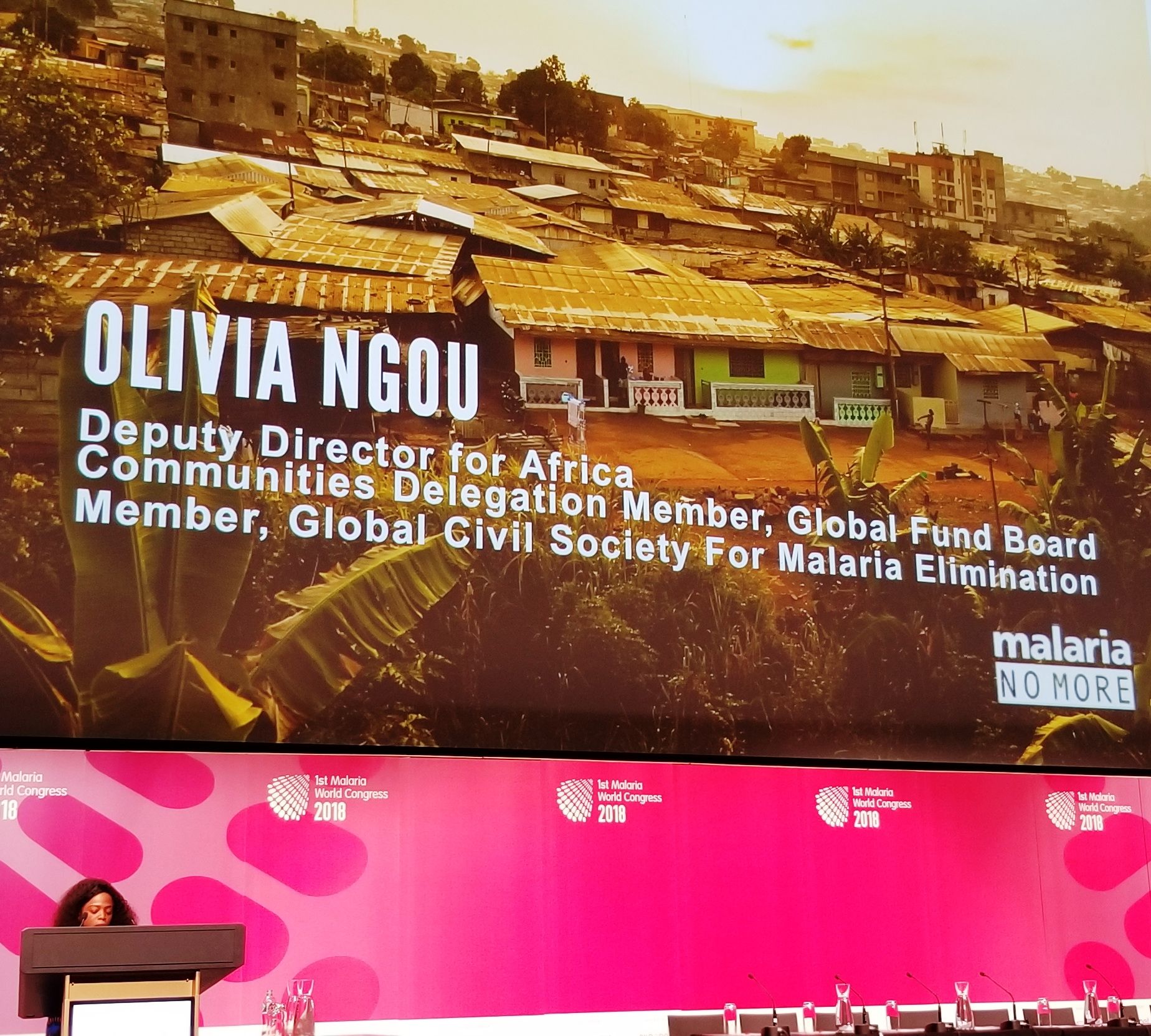 Congress, Global Fund to Fight AIDS, Tuberculosis and Malaria, and the Burnet Institute. An interim working group mode up of individuals that attended the Pre-Meeting was established to coordinate, recommend processes and mechanisms, identify resources and support necessary for CS4ME going forward. For more Information please contact Ms Olivia Ngou Zongue <ngouolivia@gmail.com> of the Interim Working Group of CS4ME for further information. The Declaration arising from their meeting if provided below.
GLOBAL CIVIL SOCIETY FOR MALARIA ELIMINATION (CS4ME) DECLARATION
MALARIA WORLD CONGRESS 1ST-5TH JULY 2018
MELBOURNE, AUSTRALIA
Firm in the belief that empowered community and civil society are game-changers in health responses, we, representatives of national, regional and global malaria communities and civil society attending the First Malaria World Congress, have come together and formed the Global Civil Society for Malaria Elimination (CS4ME) as part of our commitment to joint advocacy for more effective, sustainable, people-centred, rights-based, equitable, and inclusive malaria programmes and Interventions.
At a time when the world has the resources and tools to prevent and treat malaria, it is unconscionable how people – mainly from impoverished, vulnerable and underserved communities – continue to die from the disease. While we commend the efforts of governments and the international community that brought the world closer to malaria elimination, we call for greater accountability, political will and action, resource investments, and sense of urgency to eliminate the disease.
CS4ME makes the following call to the governments of implementing countries, donor countries and other duty bearers:
FRAME MALARIA RESPONSES IN THE CONTEXT Of SOCIAL JUSTICE AND HUMAN RIGHTS, AND WITHIN UNIVERSAL HEALTH COVERAGE
Significant progress has been attained during the past 10 years to reduce the burden of malaria throughout the world and in working towards achieving malaria elimination. As countries enter into the elimination phase, we see again and again the epidemic concentrating among the most marginalised, remote, and disenfranchised communities. In South East Asia, the concentration of malaria among communities barred from accessing quality and affordable health services has accelerated the emergence of drug resistance that now threatens the wor1d at large. Everywhere, the last mile of elimination becomes a matter of access to health for impoverished and marginalised communities, in particular, refugees, ethnic minorities, indigenous communities, migrant and mobile populations – with many of the risks faced by these groups compounded further amongst women and girls.
Including the most local, represents a strategic investment contributing to appropriate, effective service delivery and people-driven surveillance and response.
We call on national governments, international institutions, bilateral and multilateral donors to prioritise and increase funding allocations for community-driven community and civil society initiatives. We request that specific funding streams be made available to community groups, and their access supported through peer-to-peer technical assistance.
Furthermore, we request that key performance indicators that enable accountability for bringing malaria services to the underserved be developed and implemented.
PARTNER WITH CIVIL SOCIETY AND COMMUNITY ACTORS FOR AN EFFECTIVE MALARIA SURVEILLANCE AND RESPONSE
As surveillance becomes an essential pillar for malaria elimination, the need for timely and robust data is increasingly critical. Essential evidence includes routine data, qualitative and quantitative research, as well as experience, lessons learned and the voices from affected communities. Support is required to build the ability of civil society to generate evidence, as well as to communicate it effectively to ensure that community-generated evidence will be able to influence decisions and result in sustained change.
To eliminate malaria, surveillance requires a response. Communities and civil society are the first responders, and will have the clearest insight Into what responses are effective in their context or on behalf of their constituents.
We demand that communities and civil society organisations be given equitable access to data and other information that can inform field-level response. We call for transparent information systems and multi-directional information flows in order to enable dialogue, and inform decisions at all levels. We urge the building up of surveillance systems that involve communities as analysts, advisors, decision-makers and responders.
We, malaria communities and civil society, offer our support, expertise, and lived experiences In contributing towards our shared vision of malaria elimination. We are fully committed to working alongside other stakeholders to build stronger, more inclusive and effective partnerships and sustainable responses towards elimination of malaria in this lifetime.