Elimination &Integrated Vector Management &Mosquitoes Bill Brieger | 30 Mar 2015
Moving toward Malaria Elimination through Integrated Vector Control
As malaria control efforts are scaled up and sustained, we expect a drop in prevalence to the point where Ministries of Health may no longer devote a whole operational unit – a National Malaria Control Program – to the disease. This does not mean that malaria programming stops, otherwise countries would experience a resurgence.
 We can learn from countries like Namibia and Rwanda that are on the frontline of malaria elimination efforts. In Namibia, “The National Vector-borne Disease Control Program (NVDCP) at the Namibia Ministry of Health and Social Services effectively controls the spread of malaria with interventions such as spraying dwellings with insecticides, distributing mosquito nets treated with insecticides, using malaria tests that can give accurate results within 15 minutes, and distributing medicines that kill the parasite.”
The NVDCP falls under the Primary Health Care Services Directorate with its five divisions: Epidemiology; Public and Environmental Health Services; Family Planning; Information, Education and Communication (IEC); Disability Prevention and Rehabilitation. Contrary to what one might think, malaria activities are not lost, but are teaming up with international partners like UCSF Global Health Group’s Malaria Elimination Initiative, the Novartis Foundation for Sustainable Development, the London School of Hygiene and Tropical Medicine, the Clinton Health Access Initiative and the Bill & Melinda Gates Foundation.
In Rwanda we now have the Malaria and Other Parasitic Diseases Division (MOPDD) within the Rwanda Biomedical Center within the Ministry of Health. Major donors like the US Presidents Malaria Initiative are supporting the MOPDD to achieve Rwanda’s national strategic plan of reaching the pre-elimination stage by 2018.
 Even if a country is still highly malaria endemic, it is important to ensure that integrated vector management is taking place so that in the future the country’s malaria efforts will have a strong ‘home base’ to approach elimination. This is why the opportunity presented by upcoming the Second Pan-African Mosquito Control Association is important. According to the organizers …
The 2nd Pan African Mosquito Control Association (PAMCA) Conference themed, “Emerging mosquito-borne diseases in sub-Saharan Africa” will be held in Dar-es- Salaam, Tanzania, from 6-8th October 2015. The 2nd Annual PAMCA conference will build on the momentum generated following the successful hosting of the 1st PAMCA Annual Conference in Nairobi, Kenya. The main objective is to bring professionals, students, research institutions and other stakeholders working in mosquito control and mosquito-borne diseases research together under common agenda to discuss the challenges of emerging and re-emerging mosquito-borne diseases across the African continent. The conference will seek to illuminate this subject of emerging mosquito-borne diseases and develop progressive resolutions that will serve as guidelines to tackling this challenge going forward. The conference will also offer a platform for participants to exchange knowledge and ideas on mosquito control, forge new collaborations and strengthen existing ones.
We hope that colleagues will submit abstracts soonest focusing on the various conference themes:
- Emerging mosquito-borne diseases: new Public Health challenges
- Mosquito resistance to insecticides and population genetics
- Translating research into practice: Linking interventions to mosquito behavior
- Multidisciplinary approaches to tackling mosquito-borne disease
- Mosquito biology & ecology
- Impact of climate change on mosquito control
Indoor Residual Spraying &Integrated Vector Management &Mosquitoes Bill Brieger | 21 May 2014
Indoor Residual Spraying – not a one-trick pony
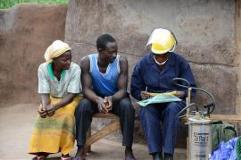
Jasson Urbach and Donald Roberts claim that the malaria fight is hurt by flimsy anti-DDT research as they opine in Business Day (South Africa) on 9th May 2014. They are particularly exercised by an article on possible DDT effects on bird egg shells. Despite the controversy sparked by the article, there is no evidence that any individual country nor WHO itself is recommending removal of DDT from the arsenal of chemicals used in indoor residual spraying (IRS) to control malaria.
PMI: http://www.pmi.gov/how-we-work/technical-areas/indoor-residual-spraying
There is something about DDT that raises hackles among proponents and detractors. But malaria vector control planners do have choices. WHO recommends 14 insecticides for indoor residual spraying against malaria vectors as seen below in an list updated on 25 October 2013:
- DDT
- Malathion
- Fenitrothion
- Pirimiphos-methyl
- Pirimiphos-methyl
- Bendiocarb
- Propoxur
- Alpha-cypermethrin
- Bifenthrin
- Cyfluthrin
- Deltamethrin
- Deltamethrin
- Etofenprox
- Lambda-cyhalothrin
Ironically DDT tops the list. No chemical is 100% safe, so the caveat with any of these chemicals is that, “WHO recommendations on the use of pesticides in public health are valid ONLY if linked to WHO specifications for their quality control. WHO specifications for public health pesticides are available on the Internet.
Interestingly, a bigger concern should be the potential for mosquitoes to develop resistance to any of the above mentioned insecticides. This is why it is important to avoid putting all our eggs – soft or hard shelled – in one basket. Ideally insecticides should be rotated often to prevent resistance from developing.
Decisions to embark on IRS and choice of insecticides should be based on national and sub-national environmental and epidemiological characteristics, not emotional attachment to any particular product.
Environment &Integrated Vector Management &Vector Control Bill Brieger | 22 Apr 2013
Malaria Control and Earth Day: are they compatible?
Clearly no one wants to argue against efforts to curb a deadly disease. The question is whether the approaches to doing so have any negative consequences that can be easily ameliorated.
 Vector control gets the most attention. One concern is the plastic bagging in which long-lasting insecticide treated nets are packaged. Rwanda, which has outlawed commercial use of plastic bags for shopping, is taking the LLIN packaging seriously. The photo shows net packaging that has been removed at a health center and stored for later incineration. Clients take their nets home in paper bags and are encouraged to hang them immediately.
Another net concern is disposal of old, used, damaged nets. LLINs do not have under ‘normal’ conditions the 5-year lifespan originally hoped. Plans for proper disposal are not fully developed in most settings, but the massive distribution of nets to achieve universal coverage from about 2009-12 are about to need replacement. It is possible that some of the net misuse reported in the media is actually repurposing of old nets. More information from communities and local health authorities is needed.
Insecticides for indoor residual spraying usually are the first thought that comes to mind concerning environmental impact of malaria control. While arguments primarily focus on DDT, it is important to note that WHO has approved over a dozen different insecticides for IRS. The problem is not so much the use of chemicals for actual IRS, but the misuse outside approved spraying programs for farms and fish kills. At present IRS is a highly geographically focused activity in most countries, and control of the activities seems to be working for the large part, but even the process of preparing for and cleaning up after a spraying exercise can results in spills and contamination. Guidelines exist, but are they followed?
 Then we get to the issue of medical waste from rapid diagnostic tests. Some health centers sharps and waste boxes for short term disposal and as pictured here in Burkina Faso, have incinerators tor final disposal. Community health worker use of RDTs is usually accompanied by sharps and disposal boxes that can be returned to health centers. All of this needs careful monitoring.
One must even think about packaging of artemisinin-based combination therapy medicines which are prepackaged by age group. These packets are small and are sent home with patients and care-givers. The paper may be burned or composted, but there are also plastic blisters in the packet. This may not account for much on an individual family basis, but on the community level it may be substantial.
 Readers may think of other environmental concerns from their own experiences and share success stories for environmental management accompanying malaria control in their countries. So, as noted, we will not stop malaria control efforts on Earth Day, but at least we can be more conscious of the materials used, whether they can naturally decompose in the environment and thus make some contribution to a healthier planet.
Environment &Integrated Vector Management &Mosquitoes Bill Brieger | 08 Dec 2011
Modeling Malaria – getting a handle on vectors
Models represent reality but the closer they come to reality, they better they are at helping us plan. A session at the American Society of Tropical Medicine and Hygiene yesterday addressed the modeling process for vector control.
VECNet is developing the capacity to take data from multiple sources to tailor vector populations and behavior to local situations. Such models need to consider vector bionomics/population variables, weather/climate/environment, and effectiveness of deployed vector control strategies.
 Modelers encourage us to think beyond existing malaria control strategies and consider a varierty of mosquitoe behaviors beyond direct feeding on humans and immediate resting thereafter. Such understandings can lead us to ask whether new interventions could be directed at other vector bevahiors such as …
- laying eggs (oviposition)
- feeding on sugars
- seeking hosts
- mating
- resting generally
In short, we were challenged to look at aspects of vector biology that have been ignored or unknown in the past.
 The MAP project out of Oxford is also beginning detailed mapping of vectors by region and utlimately my country. Globally there are 41 dominant vector species, so the work ahead is immense, but some mapping has started with three in a program called Risk Mapper.
The session also included product impact estimation. This should help program planners decide on hypothetical outcomes of investments in different existing interventions and even consider possible outcomes were new interventions developed to address the other aspects of mosquito behavior outlined above – e.g. traps, repellents.
The modeling process requires a lot of data that needs to be updated as control interventions proceed. Such data requires a strong corps of entomologists and health information systems staff that many countries lack. Hopefully modeling efforts will also include these elements of human resource development.
Integrated Vector Management &Larvicide Bill Brieger | 16 Nov 2010
What do we know about larvicides?
In SciDec.net we read that, “Cuba has announced plans to build biolarvicide factories in Brazil and several African countries in a bid to tackle malaria and dengue fever.” The move is based on apparent successes of efforts such as those in Angola where the Director-general of Labiofam says that, “Angola, for instance, has reduced malaria incidence by 50 per cent, and some areas have seen a 70 per cent fall,” with similar results in Accra, Ghana.
WHO says that larviciding is “indicated only for vectors which tend to breed in permanent or semi-permanent water bodies that can be identified and treated, and where the density of the human population to be protected is sufficiently high to justify the treatment with relatively short cycles of all breeding places.” What actual documented evidence is there from Angola and elsewhere in Africa about the use and effectiveness of larviciding?
An article on the history of malaria control in Liberia reviews early efforts to use synthetic insecticides for indoor residual spraying and larviciding. Unfortunately, “These projects encountered a spate of difficulties that foreshadowed the general retreat from malaria eradication efforts across tropical Africa by the mid-1960s.” What has changed now that we are in the days of rolling back malaria?
A newly published article on mosquito larval source management in areas experiencing flooding in The Gambia concluded that …
The intervention was associated with a reduction in habitats with late stage anopheline larvae and an 88% reduction in larval densities. The effect of the intervention on mosquito densities was not pronounced and was confounded by the distance of villages to the major breeding sites and year. There was no reduction in clinical malaria or anemia. Ground applications of non-residual larvicides with simple equipment are not effective in riverine areas with extensive flooding, where many habitats are poorly demarcated, highly mobile, and inaccessible on foot.
 A key approach to the use of larvicides may be integrated vector management, where there is not reliance on one control measure alone. In the Kenyan highlands researchers found that, “Vector control with microbial larvicides enhanced the malaria control achieved with ITNs alone. Anti-larval measures are a promising complement to ITN distribution in the economically important highland areas and similar transmission settings in Africa.”
Larviciding was found to have a positive effect in reducing childhood malaria in Tanzania where “larviciding reduced malaria prevalence and complemented existing protection provided by insecticide-treated nets. Larviciding may represent a useful option for integrated vector management in Africa, particularly in its rapidly growing urban centres.”
The two promising articles from Kenya and Tanzania would be strengthened if large scale operations like those described for Angola were better documented and published because as was seen in Liberia many years ago it was the basic operational issues that limited program effectiveness.
Devine and Killeen report in discuss some of the practical issues of larviciding in Malaria Journal and note that, “The effective operational implementation of these campaigns is difficult, time consuming, and expensive,” in part because of “The myriad and cryptic nature of aquatic habitats and the difficulty in identifying and targeting the most productive of these (which) makes maximizing that impact very challenging.”
Devine and Killeen recommend a “new auto-dissemination methodology” based on a “detailed characterization of oviposition behaviour and of the effective transfer distances between feeding, resting and aquatic resources.” Again, these are good ideas, but what of evaluation of current large scale approaches underway? In addition, as RTI suggests programs must establish “baseline information on the acute, intermediate, and chronic effects of chemicals used in malaria vector control on workers and the general population.”
The basic question remains – what can we learn about the right conditions for larvicide use as a major tool in integrated vector management for malaria? All partners in rolling back malaria have a responsibility for helping this learning process by documenting and publishing their experiences. Maybe the proceedings of the recent Labiofam Conference in Havana will be published soon.
Epidemiology &Integrated Vector Management &Procurement Supply Management Bill Brieger | 22 Feb 2010
Malaria – tis the season
In many parts of the tropical world malaria is seasonal, depending in large part upon rains. If taken into account, seasonality can allow malaria program managers to plan better to serve different areas of their countries. There are areas where a dry season or colder weather may appear to put a stop to transmission completely, but often minimal transmission manages to take place.
When we know that some areas have more intense malaria transmission during certain times of year, we can ensure that our interventions are in place well in advance of major rains. Knowledge of seasonality can guide vector control efforts and help plan for increased stocks of medicines and diagnostic tests in clinics, for example. Several examples of the need for such preparations have been in the news this weekend.
Malaria’s Day in Court
In India the Kolkata Municipal Corporation is apparently under legal investigation for inadequate supplies of malaria medicines in clinics in Bhowanipore, which is a malaria-prone area. In a bid to find out what he needed to do, a medical officer unknowingly broke protocol and visited the judge hearing the case to get advice on how better to serve the people of the area.
Fortunately he was not reprimanded for his efforts to get ahead of impending malaria outbreaks.
Awaiting the Storm
 Adding to Haiti’s existing medical chaos and suffering is the season of increasing rains. People are still living in makeshift tents that given no protection when it comes to mosquitoes and malaria.
The Boston Globe reports that, “Some rain typically falls every month in Haiti, meteorologists say, but heavy downpours could begin as early as this month.â€Â As seen in the satellite photo from NOAA, Haiti was in the path of several major hurricanes and tropical storms in 2008 – so rains from these storms kill people directly through flooding, and those who survive can expect to be threatened with malaria.
 Interfaith Preparation
Nigeria accounts for at least one-fourth of the malaria deaths in Africa, according to AFP. A major national net distribution is underway, which will hopefully make major inroads before the heavy rains start.
Planning is the key – we must understand the malaria transmission patterns in our countries and plan to get the material and human resources in place in a timely manner so that they will be effective in bringing down malaria morbidity and mortality.
Funding &Integrated Vector Management &Private Sector Bill Brieger | 18 Dec 2009
Ghana’s private sector support against malaria
Last week we highlighted the global role of the private sector in malaria control. Today we share some specific country level examples from Ghana.
 For the past few years AngloGold Ashanti has been operating a successful pilot indoor residual spray (IRS) program in Obuasi District. The project reported downward trends in hospital attendance and admission due to malaria which were attributed to the twice yearly spraying efforts. Some pilot larviciding was also included.
Based on these efforts US President’s Malaria Initiative working with the National Malaria Control Program and partners began planning to initiate IRS in five northern districts. “PMI expanded IRS from five to six districts, protecting over 708,000 residents,” and is now planning collaboration with Ghana’s Global Fund grant recipients to expand further.
Now Now AngloGold Ashanti is ready “to extend its anti-malaria control to 40 districts in the Upper East and West, Ashanti, Western and Northern regions of Ghana, come January 2010,” as a recipient of Global Fund support from Ghana’s Round 8 Malaria Grant.
Another private partner in Ghana is the Zoomlion Waste Management Company. The Ghanaian Chronicle reports that, “The Volta Region office of Zoomlion Waste Management Company Limited has intensified its efforts to spray gutters, toilets and refuse disposal sites in the districts, as a step to destroying the breeding grounds and resting places of mosquitoes, to curb the menace of malaria.”
While such spraying may be more likely to kill culex species of malaria more than the malaria-bearing anopheles, the effort does show how the private sector can play a direct role.
Another mining company, Newmont, while not providing direct services, does offer health education to “help all those in affected areas prevent the spread of this terrible yet preventable disease,” on its website.
The telecoms giant, “MTN Ghana, a leading telecom company in Ghana, has announced that since its entrance into the Ghanaian telecom market, the company has invested about $2 million in socio-economic development projects in the areas of health and education.” More specifically, as part of its malaria fund and awareness raising efforts leading up to the Football World Cup of 2010, MTN is including Ghana in its target countries.
These examples are not meant to be exhaustive, but to show the different roles the private sector can play at the country level ranging from direct control activities to raising awareness and educating people to protect themselves. For long term benefit, all such efforts need to be coordinated, like the IRS project, with the National Malaria Control Program and its RBM Partners.
Advocacy &Integrated Vector Management &Mosquitoes Bill Brieger | 29 Apr 2008
Learn your vectors
An editorial marking World Malaria Day in Nigeria’s Daily Trust exhorted readers as follows: “If only we can learn to clean our gutters, fumigate our drainage channels, evacuate our rubbish heaps and take other simple and sensible steps to eradicate or reduce the vector that causes malaria, we will not have cause to embark on the yearly ritual of lamenting about how we suffer so much from this public health challenge.”
While mosquitoes may breed in discarded cans and tires in rubbish heaps or in gutters in out cities, the likely culprits are Aedes species, which carry yellow and dengue fevers, and Culex species, which carry filariasis and a variety of viral diseases. Eliminating such breeding sites will certainly go a long way to promoting public health, but may not elimnate the breeding of the Anopheles species of mosquitoes that carry malaria.
For Anopheles mosquitoes the US Centers for Disease Control and Prevention states that, “The larvae occur in a wide range of habitats but most species prefer clean, unpolluted water. Larvae of Anopheles mosquitoes have been found in fresh- or salt-water marshes, mangrove swamps, rice fields, grassy ditches, the edges of streams and rivers, and small, temporary rain pools.” In contrast a study from Cameroon identified the following breeding sites for Aedes, many of which could be found in a refuse heap.:
Used tire, Plastic container, Can and broken bottle, Plastic cup, 200-L barrel, Abandoned car part, Cement washtub, Flowerpot, Tree hole, Cow horn, Cocoa pod, Enameled plate and Snail shell
 The Press is an important Advocate in the fight to eliminate malaria, but it’s role is only as good as it’s access to scientifically sound information, which these days can be obtained on internet sites like those of WHO, RBM and CDC, but just as easily – a phone call to a local expert in the Ministry of Health or a local University.
Agriculture &Integrated Vector Management Bill Brieger | 01 Apr 2008
Insecticide Treated Cows
Some malaria carrying mosquitoes are also attracted to cattle that may be sleeping outside the door of a dwelling. Studies have even shown that “cattle treated with pyrethroid in the control of malaria and reduction of vector density.” While we have seen malaria advocates calling for every house to have insecticide treated nets, we have yet to hear from the proponents of an ITCs (insecticide treated cows) for every home.
 Actually there are a number of ways to fool a mosquito – not just on April 1st – and as the research mentioned above points out, the field of integrated vector management is wide. There may be a number of issues to explore that are appropriate – culturally and technologically – for communities to control their mosquito populations. These need to be explored and promoted for long term sustainability of malaria control efforts.
In the meantime there are donor organizations that provide families in developing countries with cows and other livestock, just maybe not insecticide treated ones. Maybe this is an opportunity for better integration of agriculture and malaria control.
Development &Integrated Vector Management &Mosquitoes Bill Brieger | 22 Mar 2008
Malaria and World Water Day
Greetings on World Water Day, which interestingly is taking place just about one month before World Malaria Day. The theme for the upcoming World Malaria Day focuses on malaria’s lack of respect for borders, and the challenge of guaranteeing and preserving safe water supplies also cuts across national boundaries.
 The connection between water and the breeding of malaria carrying mosquitoes is well known. In a most simple example, one can visualize many of the newly installed borehole wells around Africa that were installed without adequate community involvement. in very little time, these become poorly maintained and spill off water collects into puddles ideal for anopheles mosquitoes.
One can also recall numerous agricultural projects that create mosquito breeding grounds through irrigation canals or simply land clearing that allows rain water to collects. When floods come, which has been very common in southeast Africa recently, communities lose access to safe water while ironically being surrounded by expanses of rivers that overflowed their banks, creating breeding opportunities for mosquitoes.
The ultimate lesson is that both programs, safe water and malaria control, cannot be solved in a vertical way. There needs to be collaboration and a broader development approach that addresses underlying