Posts or Comments 28 April 2026

Advocacy &Elimination &Women Bill Brieger | 07 Mar 2015

Association of Women Doctors of Senegal joins the “Zero Malaria! Count Me In!” campaign to eliminate malaria in Senegal

Yacine Djibo, Founder & President of Speak Up Africa is helping focus International Women’s Day (March 8th) on efforts to protect women from malaria in Senegal. She is highlighting the commitments of 8 strong and beautiful women, in Senegal, that are dedicated to eliminating malaria in their country. These commitments are part of an inclusive mass communication campaign that aims to launch a national movement in favor of malaria elimination in Senegal: the “Zero Malaria! Count Me In” campaign

International Women’s Day, represents an opportunity to celebrate the achievements of women all around the world. This year’s theme is “Empowering Women – Empowering Humanity: Picture it” envisions a world where each woman and girl can exercise her choices, such as participating in politics, getting an education or fighting malaria. Below is the first feature on women fighting malaria.
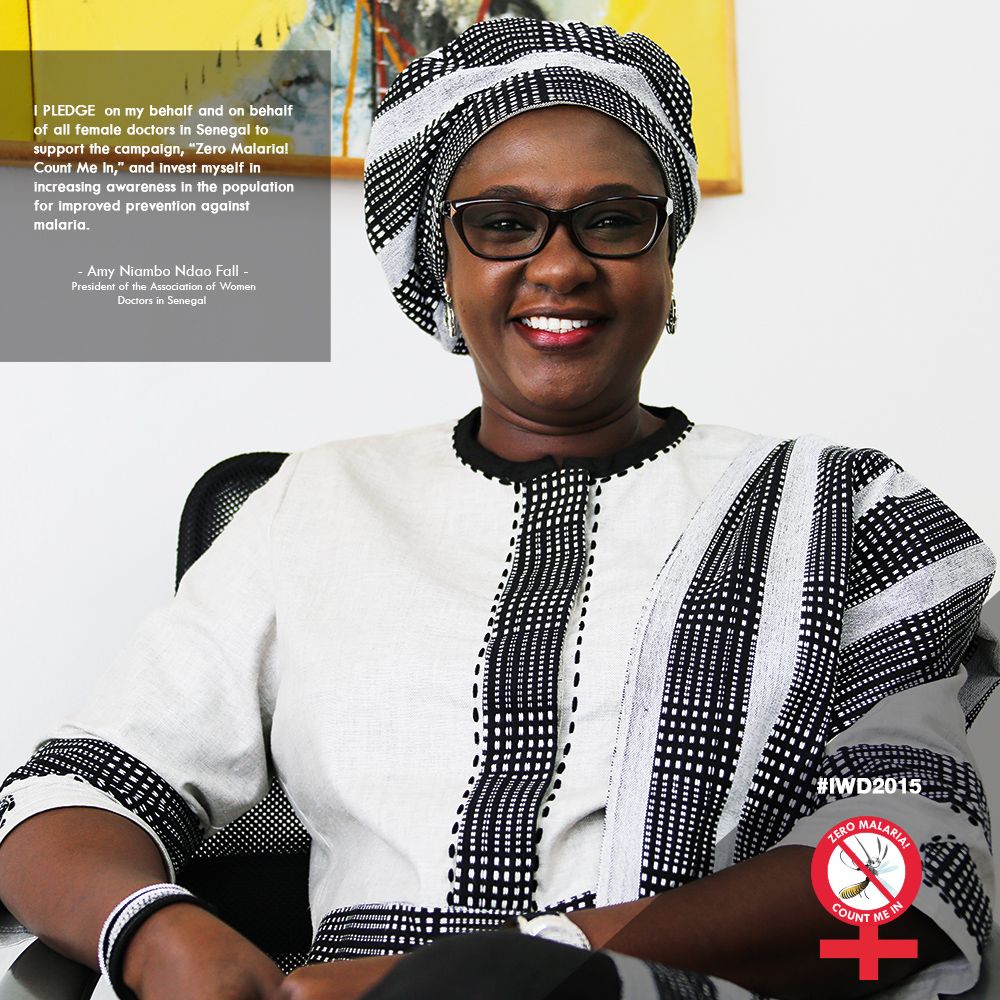
Amy Ndao Fall

Amy Niambo Ndao Fall, President of the Association of Women Doctors

Dr. Amy Ndao Fall is the President of the Association of Women Doctors of Senegal (AFEMS). This Association, composed of 400 members across the country, aims to undertake sustainable activities for the health of the Senegalese populations.

On the eve of Women International Day, in partnership with the Ministry of health and UN women, AFEMS organized in Dakar on March 7, a conference on the theme “women’s health for an emergent Senegal”.

This conference attracted approximately 150 women from all over the country and was chaired by Professor Awa Marie Coll Seck, Minister of Health and Social Action of Senegal.

The conference started with Dr. Ndao signing a pledge, on behalf of AFEMS to support the “Zero Malaria, Count me In” campaign and the National Malaria Control Program in their elimination efforts.

Dr. Ndao stated the association’s commitment to support all efforts toward malaria elimination in Senegal and abroad and concluded with the following words:

ZeroPalu“It is a pleasure and an honour for me, to sign this engagement on behalf of AFEMS, to mobilize all our efforts to eliminate malaria in Senegal. We need to keep in mind that women are particularly vulnerable to this disease and that they can be change agents in their families for more efficient vector control in particular by promoting the systematic use of long lasting insecticide-treated mosquito nets for all their family members.”

On this International Women Day, we celebrate and thank Dr. Ndao and all the women Doctors of Senegal for their leadership and commitment to eliminate malaria and are proud to see such amazing partners joining efforts to make Zero Malaria a reality in Senegal.

*****

Headquartered in Dakar, Senegal, Speak Up Africa is a creative health communications and advocacy organization dedicated to catalyzing African leadership, enabling policy change, securing resources and inspiring individual action for the most pressing issue affecting Africa’s future: child health.


Elimination Bill Brieger | 07 Mar 2015

A new working group to support malaria elimination in the Amazon region

DR Antonio Quispe of our Social and Behavioral Foundations of Primary Health Care has posted the following on the course blog site:

Malaria Elimination Working Group, Iquitos-Peru, February 2014

In February 2014, the Malaria Elimination Working Group (MEWoG), in partnership with the Peruvian Ministry of Health (MoH), hosted its first international conference on malaria elimination in Iquitos, Peru. The two-day meeting gathered 85 malaria experts, including 18 international panelists, 23 stakeholders from different malaria endemic regions of Peru, and 11 MoH authorities.

Several key conclusions and points of consensus arose from this meeting. The most important one is that malaria elimination in the Peruvian Amazon is an achievable and nationally and internationally important goal. It will be important to develop a Comprehensive Regional Strategic Plan, which must satisfy several key characteristics.

It was strongly recommended to first, pilot such strategy in suitable sites in the region to establish efficacy and acceptability.

As such strategy is implemented, it will be important to monitor and evaluate progress through a variety of metrics and to set intermediate goals on the path to regional elimination. Targeted parasite elimination strategies that are appropriate to the region must be used, stressing active case detection using sufficiently sensitive and effective RDTs and species-specific treatment of the asymptomatic reservoir.

This is particularly important in the case P. falciparum malaria, which must be treated with ACT and primaquine to interrupt transmission. The strategy must include and facilitate communication between key stakeholders from the region and political support at all levels of government, and the program should be incorporated into established health systems to improve acceptability and sustainability.

The progression of such strategy should be flexible to allow new knowledge of the social determinants of malaria, the cultural acceptability of key interventions, and novel tests and treatments to be incorporated throughout the effort. With this conference, an agreement on the relevance of pursuing malaria elimination as goal has been reached, and the necessary components characteristics of this effort described.

Moving forward, further detail should be elaborated as commitments from numerous key stakeholders are obtained.

(see more on malaria elimination in the Americas – PAHO)

Community &Treatment Bill Brieger | 05 Mar 2015

Fighting Malaria with Community Case Management (CCM) Scale-Up in Kenya

Arianna Hutcheson has posted the following blog on our course website – Social and Behavioral Foundations of Primary Health Care

Screen Shot 2015-03-04 at 11.25.22 AM

Source: https://www.ifrc.org/Global/Publications/Health/Beyond_Prevention_HMM%20Malaria-EN.pdf

Access to health services is particularly difficult for the poor and those in more inaccessible areas of Kenya. This lack of endemic disease treatment for communities has proven to be quite deadly. With more than 11.3 million cases recorded annually, malaria is the leading killer of children under five years of age in Kenya. CCM, supported by organizations such as WHO and UNICEF, allows Kenya to effectively fight Malaria by using evidence-based life saving treatments that increase the availability and quality of proven interventions.

Using a CCM strategy has shown to decrease under-five malaria mortality by 60% overall under-five mortality by 40%. In Kenya particularly, the CCM pilot program has generated convincing results as seen in the graphic below.

Screen Shot 2015-03-04 at 11.34.45 AM

Access to Artemisinin-based Combination Therapy (ACT)  has increased and the education of communities provided by health workers has improved treatment seeking behavior. While the pilot CCM program is an important step to combating malaria, we are in the right time to take the success of this program and implement it country-wide.

Most importantly, CCM is part of the National Malaria Strategy, but it requires a more pronounced place in the plan to implement the successes of the pilot program in all 8 districts.

Action Needed: The Kenyan Ministry of Public Health and Sanitation (MoPHS) needs to commit and push ahead their own stated agenda for putting community health first by integrating malaria treatment into the already implemented diarrhea CCM program by the end of 2015.

Graphic: https://www.ifrc.org/Global/Publications/Health/Beyond_Prevention_HMM%20Malaria-EN.pdf

ITNs Bill Brieger | 25 Jan 2015

Insecticide treated nets, a fishy subject

Not long ago I had written a blog posting suggesting that widespread misuse of ITNs/LLINs was probably not a major problem. To date the main official published information on the topic came from a community near Lake Victoria that had received an DSCN0189abundance of nets through uncoordinated donor activity and the excess was being used to dry fish on the shore.

True, newspaper articles over the years have featured Ministry of Health officials in numerous countries berating their citizens not to use nets for fishing, agriculture and other non-disease control needs, but evidence had not been forthcoming in the numerous national demographic, health and malaria surveys over the years. There is also the acknowledged possibility that old nets are being repurposed since there are inadequate disposal mechanisms available.

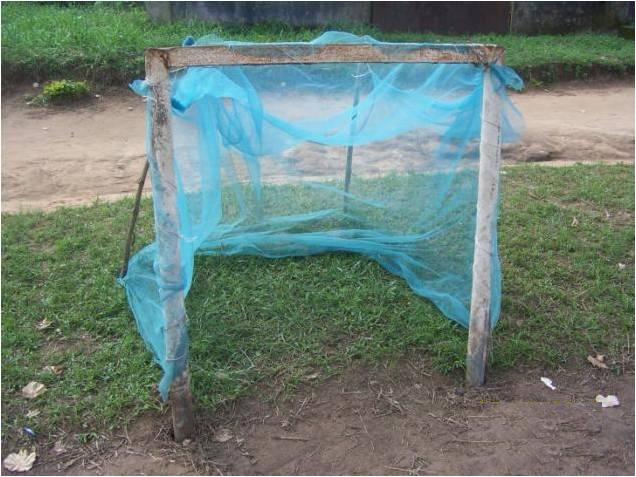
Such concerns are not idle. We also documented misuse of LLINs in Akwa Ibom State with photographs LLINs for goal post 3of nets used to make football goals, protect seedlings in a nursery, cover small kiosks selling food items and penning animals. This occurred in areas where there was inadequate partnership, planning and follow-up with the community by health officials.

Now the New York Times has stirred up the controversy again with strong visual evidence of a fishing communities in Zambia and Tanzania using ITNs for not only fishing, but also making chicken pens, ropes, footballs and football goals. People in that community explain their economic needs which are huge in this poor area of the world, and present the hard choice between augmenting their livelihoods and sleeping under an ITN. The environmental impact of the insecticides when nets are misused was also highlighted. The immediate thought is that malaria control efforts must be integrated into health and development efforts in a country.

The US President’s Malaria Initiative has issued a statement of concern. PMI recognizes that misuse of nets can depend on the particular environment (e.g. near water), but also recognizes the need, as mentioned above, of collaborating with the community to get things right in the first place. These problems will persist until national malaria control programs focus less on the total numbers of nets distributed and more on the actual factors that influence net use.

Advocacy &Costs &Equity &Funding &Treatment &Universal Coverage Bill Brieger | 13 Dec 2014

Malaria Care: Can We Achieve Universal Coverage?

uhc-day-badgeIn New York on 12 December 2014, a new global coalition of more than 500 leading health and development organizations worldwide was launched to advocate for universal coverage (UC) and urged “governments to accelerate reforms that ensure everyone, everywhere, can access quality health services without being forced into poverty.” This marked Universal Health Coverage Day which fell on the “two-year anniversary of a United Nations resolution … which endorsed universal health coverage as a pillar of sustainable development and global security.”

According to WHO delivery of UC involves four components:

  1. A strong, efficient, well-run health system
  2. Affordable care
  3. Accessible care
  4. A health workforce with sufficient capacity to meet patient needs

To this list we might add a functioning and timely procurement and supply management system, and not trust people to read between the lines on component #1 to consider this need.

DSCN2885aWhile much attention in malaria control is appropriately on prevention through various vector control measures, we cannot forget the importance of prompt and appropriate case management, especially as cases decline (according to the new 2014 World Malaria Report) and case detection assumes greater importance.

In 2000 Roll Back Malaria sponsored the Abuja Summit where targets were set for malaria intervention coverage. The goals were established at 80% for insecticide-treated nets (ITNs), intermittent preventive treatment and prompt and appropriate malaria treatment. In 2009, the United Nations declared a goal of universal coverage for ITNs. The potential for UC in malaria case management remained vague, but the new international push for US can certainly include malaria. It would not be coming too late because as we can see from the chart, many endemic countries are far from adequate malaria treatment coverage, let alone UC.

Slide1Frequent surveys help us track progress toward RBM goals and UC – Demographic and Health Survey, Malaria Information Survey, Multi Indicator Cluster Survey. Their helpfulness depends on the questions asked. The 2013 MIS from Rwanda gets closest to finding out what is really happening (Chart 2). We might infer a sequence of events that while not everyone seeks care for their febrile child, those who do are screened by the health worker (including volunteer community health workers); those suspected of malaria are tested (microscopy in clinics, RDTs in communities); and only those found positive are given ACTs.

Slide2Equity is a major concern for advocates of UC. Health insurance is one method to address this. In Ghana around 60% of people have taken part in the National Health Insurance Scheme, but only around 5% in Nigeria where 60% of health expenditure comes from out-of-pocket purchases. Rwanda has a system of mutuelles – community insurance schemes. Insurance does not meet the full need for malaria case management, and thus efforts to expand outlets for affordable quality malaria medicines through the Affordable Medicines Facility malaria (AMFm) was piloted in several countries.

A combination of approaches is needed to achieve UC in malaria case management. Public and private sources are requires. Low cost, subsidized and free care must to be part of the mix. Over half a million people, mostly children, are still dying from malaria annually. Solving the UC challenge for malaria is crucial.

Health Systems &HIV &Malaria in Pregnancy &Treatment Bill Brieger | 02 Dec 2014

Update on Malaria and HIV/AIDS

63719_10152358606695936_7047535049294543967_nWorld AIDS Day is a time to reflect on the broader impact of HIV and its interactions with other infectious and chronic conditions that must be managed through an integrated health system. The past few months have yielded a variety of published studies on the HIV-Malaria link ranging from pharmacological, and physiological to health systems issues. A brief summary follows.

Having HIV does have consequences on malaria infection. Serghides et al. studied malaria-specific immune responses are altered in HIV/malaria co-infected individuals. Fortunately these researchers learned about “the importance of HIV treatment and immune re-constitution in the context of co-infection.”

Malaria, HIV and Pregnancy

Pregnant women are an important group in the population to protect from both HIV and malaria. The link between the diseases may not be one of influencing each other but in the fact that they both appear in the same population with similar negative consequences. Women are at increased risk of anemia in pregnancy due to malaria and/or HIV infection according to Ononge and co-workers. Normally a pregnant woman in a malaria endemic area passes on malaria antibodies to their newborns.

Moro et al. learned that, “Placental transfer of antimalarial antibodies is reduced in pregnant women with malaria and HIV infection.” Chihana and colleagues studied HIV status in Malawian pregnant women and follow-up their children. They reported that, “Maternal HIV status had little effect on neonatal mortality but was associated with much higher mortality in the post-neonatal period and among older children.”

Drug Interactions and Issues

Hoglund and colleagues studied interactions between common antimalarial and HIV medications. They found that, “There are substantial drug interactions between artemether-lumefantrine and efavirenz, nevirapine and ritonavir/lopinavir. Given the readily saturable absorption of lumefantrine, the dose adjustments predicted to be necessary will need to be evaluated prospectively in malaria-HIV coinfected patients.”

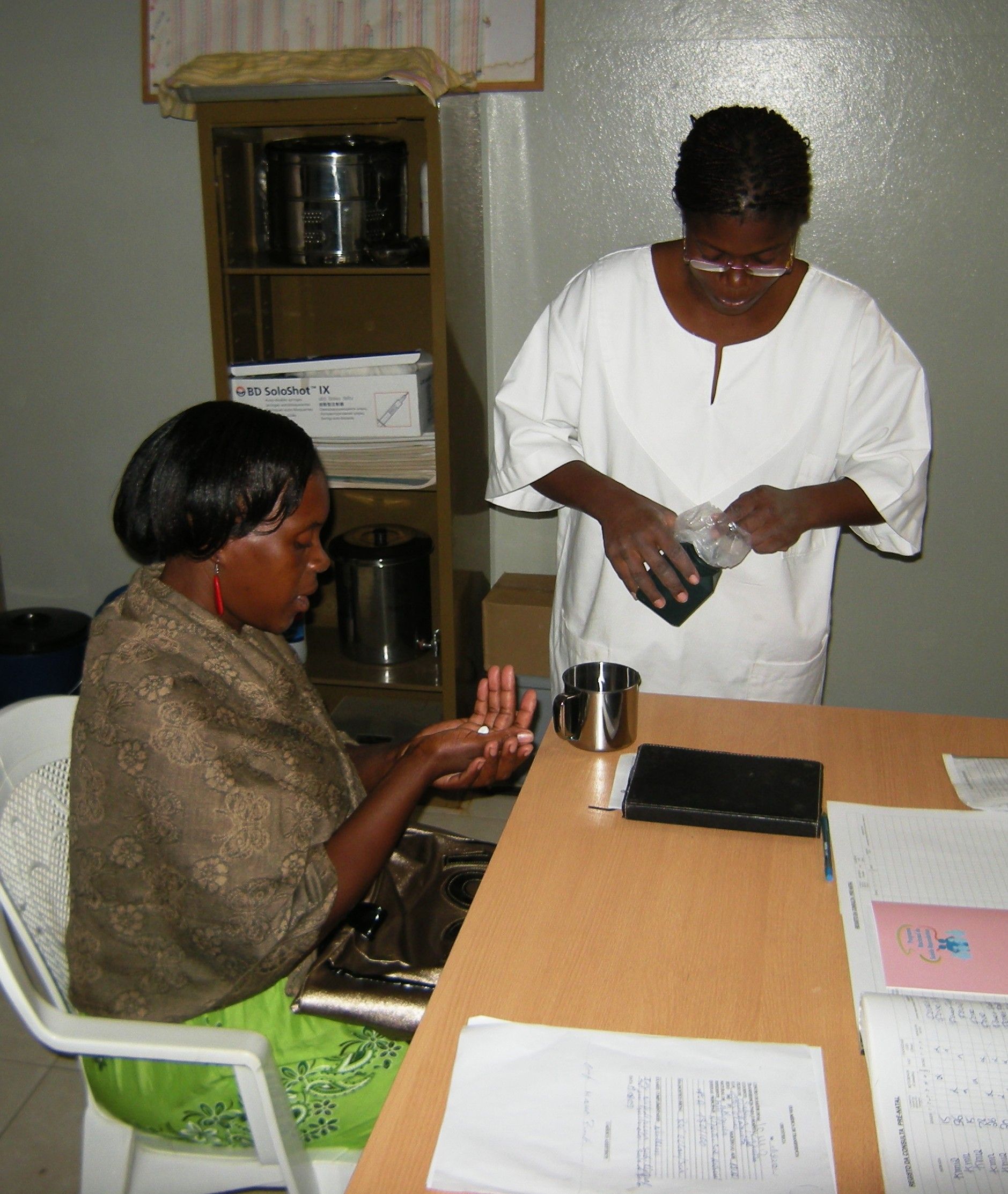
DSCN4994 AngolaDrugs taken during pregnancy to prevent malaria are influenced by HIV status. It is known that Intermittent Preventive Treatment with sulfadoxine-pyrimethamine should not be administered to HIV-positive pregnant women taking cotrimoxazole prophylaxis. González et al. wanted to learn whether mefloquine (MQ) could be used by HIV+ pregnant women. Unfortunately they learned that, “MQ was not well tolerated, limiting its potential for IPTp … (and) … MQ was associated with an increased risk of mother to child transmission of HIV.”

Health Systems Issues

Haji and co-investigators reported that malaria care seeking was delayed in Ethiopia because “Children whose guardians believed that covert testing for HIV was routine clinical practice presented later for investigation of suspected malaria.”

The need to adjust clinical guidance and practice as prevalence of malaria changes was addressed by Mahende et al. in Tanzania. They observed that, “Although the burden of malaria in many parts of Tanzania has declined, the proportion of children with fever has not changed.” More accurate diagnosis is needed as demonstrated by the various causes of febrile illness they found including in addition to malaria, respiratory illnesses, blood infections, urine infections, gastrointestinal illness and even HIV.

Finally Mbeye and colleagues report that cotrimoxazole prophylactic treatment reduces incidence of malaria and mortality in children in sub-Saharan Africa and appears to be beneficial for HIV-infected and HIV-exposed as well as HIV-uninfected children. This lesson from HIV programming can have broader implications for malaria control strategies.

Integrated control of infectious diseases is essential for population health, especially at the primary care level. Hopefully research as shown above can assist in planning better services for people living in areas that are endemic to both malaria and HIV.

Uncategorized Bill Brieger | 30 Nov 2014

Malaria Diagnostic Service Availability – Mapping of Nigerian Private Sector Service Delivery Outlets

maps logoThis study was undertaken in seven US President’s Malaria Initiative supported Nigerian States through the Malaria Action Program for States (MAPS) project. Authors include Abiodun Ojo, Bolatito Aiyenigba, Sonny Johnbull, Adamu Onu, Olabanji Ipadeola, Muhammad Salihu, Kolawole Maxwell, Ebenezer Baba, and Abba Umar. Their presentation appeared at the recent annual meeting of the American Society of Tropical Medicine and Hygiene.

The private sector’s role in health services in Nigeria has increased in recent times, and provides approximately 60% of health services. The PMI Malaria Action Program for States (MAPS) project currently supports the implementation of parasitological confirmation of malaria cases in public health facilities only in selected states. A mapping exercise was carried out to identify private facilities providing malaria diagnostic services and determine the gaps in existing malaria diagnostic capacity with the aim of designing a strategy for improvement

Questionnaires were administered to the private health facility owners and location data collected using handheld Global Positioning System (GPS) device. Data were collected from all private health facilities in the state capital of each MAPS supported states (Benue, Cross River, Ebonyi, Kogi, Nasarawa, Oyo and Zamfara) in October 2013.

Private sector staff distributionThe questionnaire was designed to assess human resource capacity, method of malaria diagnosis and patient/client workload in the health facility. Data collectors and supervisors were trained on tools and methodology of the survey.

Results revealed that 394 private health facilities in 7 state capitals were mapped. Only 24.6% health workers had received training on malaria diagnosis in the last 12 months preceding the survey, while 35% had no formal or on-the?job training.

Private sector malaria servicesSeventy-one health facilities had no routinely available malaria diagnostic services; 55 (77.5%) of these, referred patients to other health facilities where there is availability of malaria diagnosis, 6 (8.5%) prepared microscopy slides and sent to other laboratories for malaria examination, and 10 (14.1%) took no diagnostic action.

Using outpatient and laboratory statistics for the 3 months preceding the survey we found that the overall prevalence of clinically diagnosed malaria in the outpatient clinics was 70.3%. The malaria slide positivity rate was 78.8%. An antimalarial drug was prescribed on average 1.2 times out of every 10 negative malaria test results.

A good pool of human resources exist in private health facilities and their capacity needs to be built on malaria diagnosis especially mRDT for non laboratory staff. Quality of malaria microscopy could be improved with re?training of Laboratory Scientists.

A policy framework that provides for access to quality malaria diagnostic services and commodities while also creating an enabling environment for use of diagnostic results is needed to support the massive scale up of campaigns for malaria control towards elimination

[The contents of the poster/presentation are the responsibility of the Malaria Action Program for States Nigeria and do not necessarily reflect the views of the US Government.]

ITNs Bill Brieger | 28 Nov 2014

Is Mosquito Net Mis-Use Exaggerated

Health Officials commonly berate community members for misusing insecticide treated nets (ITNs) given out during malaria prevention campaigns and programs. Villagers are blamed for doing everything from using nets to catch or dry fish, protect crops or poultry, make football goals and cover their market goods.

For example, The Nairobi Star of 12 March 2012 reported that health officials in Nyanza, Kenya were disturbed that people were using their ITNs to protect their gardens from pests and their kitchens from rodents. The officials threatened to prosecute anyone misusing their nets.

LLINs for goal post 3Likewise the Lusaka Times published a story on 10 July 2011 that ITNs were being misused to made wedding dresses/veils and for fishing. “North-Western Province Minister Daniel Kalenga has directed District Commissioners in the province to report any misuse of Insecticide Treated mosquito Nets (ITNs) to the police as it is an offense under the public health Act.” A similar story appeared in April 2014.

There is some theoretical logic to net misuse. Keita Honjo and colleagues concluded from a modeling exercise that, “ITN use for malaria protection can be thwarted in settings of extreme poverty, where an increase in labour productivity by an alternative ITN use can offset the perceived benefits of avoiding malaria infection.”

One has often suspected these challenges to net use border on myth at times. Eisele and colleagues leveled the following critique against the media: “There are a number of potentially damaging misconceptions about insecticide-treated mosquito nets (ITNs) in Africa that have been propagated in media
reports, almost all of which are based on anecdotal accounts.”

Therefore, we were quite interested to learn of a newly published study that analyzed ITN use with “Data from 14 sub-national post-campaign surveys conducted in Ghana, Senegal, Nigeria (10 states), and Uganda between 2009 and 2012 (that) were pooled,” to find out what happens to “lost” nets.

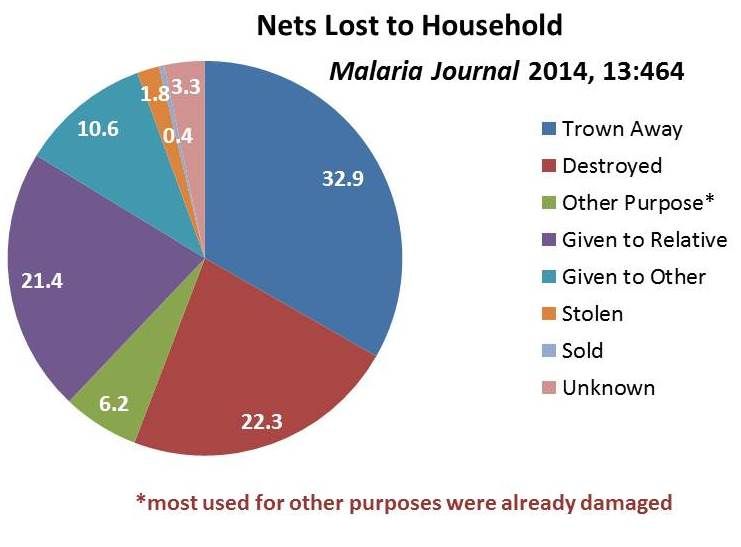
Nets Lost to Household KoenkerWhile 16% of 25,447 nets were no longer serving their original purpose, only 6.2% of those were being used for another purpose. Importantly, over 3/4 of those had been damaged prior to re-purposing. The fact that the major reason why nets left the household was because they were given to other users (e.g. relatives) implied that better assessment of community need for nets was required.

In fact re-purposing of old nets may be a natural response to failure of health agencies to devise an environmentally safe way of disposing of ITNs that have passed their natural lifetimes. Therefore WHO recommends that National malaria control and elimination programs should work with national environment authorities work together to ensure proper removal of old nets no longer in use to prevent malaria.

This reassuring article certainly takes precedence over newspaper reports of misuse, but we should still be on the look out for net use problems. A classic example appeared in Malaria Journal in 2008 documenting with data and photos the use of ITNs to dry fish along the shores of Lake Victoria. In that case the root cause of the problem was lack of coordination among agencies such that the villages were supplied more nets than they needed. This appears to have been a one-of-a-kind study.

What is more likely to happen, it seems is that households acquire their nets but for various reasons do not always hang them, as was the case with nearly 30% of recipients in a small study in Rivers State, Nigeria. Malaria control programs need to pay more attention to helping people actually hang and use their nets correctly and regularly than simply being satisfied with reporting the numbers distributed.

Treatment Bill Brieger | 19 Nov 2014

Understanding Child Illness and Malaria Care Seeking in Bauchi State Nigeria

Bright Orji, Masduk Abdulkarim, William Sambisa, Amos Paul Bassi, Solomon Thliza, and William Brieger shares a poster at the 2014 American Public Health Association Annual Meeting that focuses on a baseline study for child illness interventions under the USAID Targeted States High Impact Project (TSHIP). The authors work with John Snow International and Jhpiego. The poster abstract follows:

Bright at APHA IMG_6630Seeking of appropriate and quality care for childhood illnesses is a major challenge in much of Africa including Bauchi State, Nigeria. In advance of an intervention to improve available care in the most common points of service (POS), government primary health care centers (PHCs) and patent medicine vendors (PMV), a survey was done of child caregivers in four districts concerning responses to febrile illness, suspected malaria, acute respiratory disease and diarrhea.

The ethical review committee in the Bauchi State Ministry of Health approved of the study. A total of 3077 children below the age of five were identified in the households sampled.

treatmentTheir mothers, fathers or other caregivers consented and were interviewed. Among the children 74% had any Illness, 57% had fever, 26% had cough, and 15% had diarrhoea. Only 8.7% of 1186 febrile children had their blood tested. Care seeking from PMVs varied from 45% with fever, 40% with cough to 36% with diarrhoea.

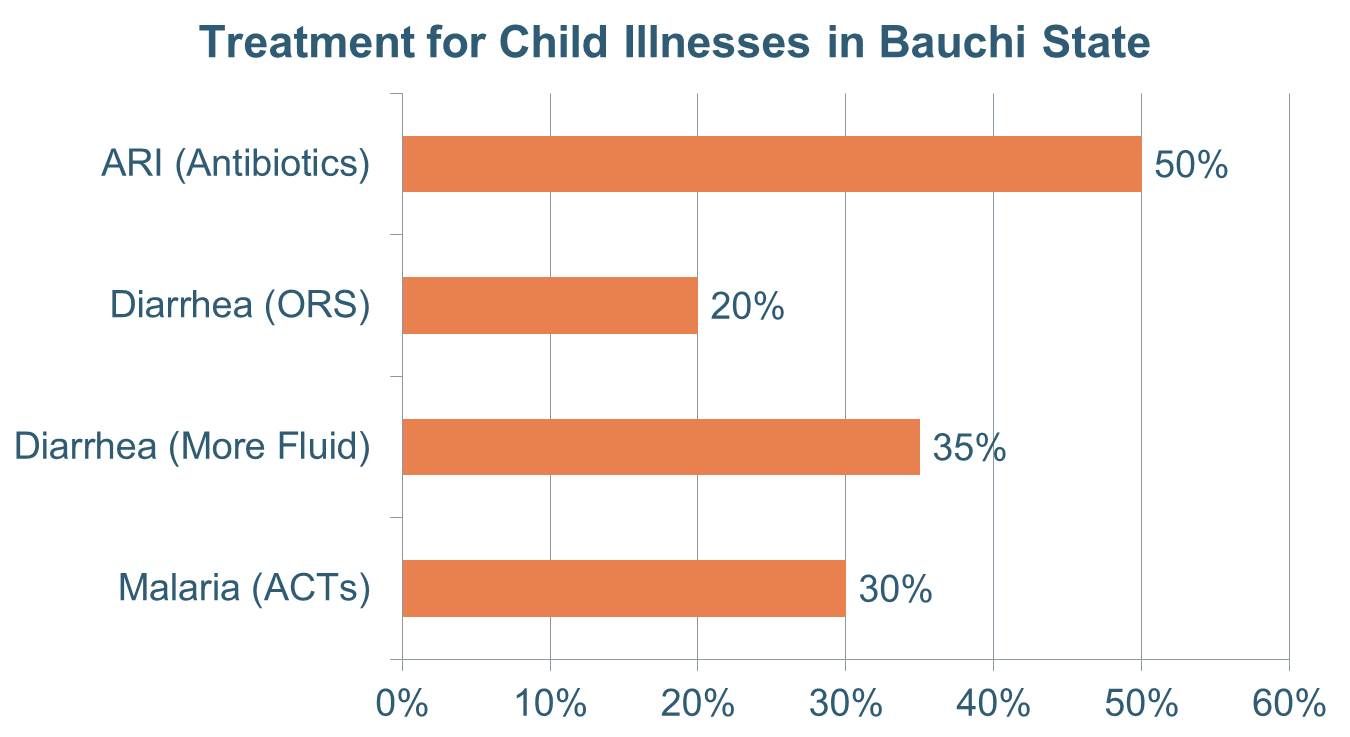
DSCN2924 wideCare from public sector POS varied from 26-33%. Treatment that might be considered ‘appropriate’ for each also varied with 30% receiving antimalarial drugs for suspected malaria, 20% getting oral rehydration solution for diarrhoea and 50% being given an antibiotic for a suspected acute respiratory illness.

The results show that providing quality case management with appropriate commodities through PHCs and PMVs can improve the illness care of a majority of children in Bauchi State, and interventions are currently being planned to do this.

Severe Malaria &Treatment Bill Brieger | 07 Nov 2014

Severe malaria case management practices in selected states in Nigeria: Need for urgent intervention

At the recently concluded American Society of Tropical Medicine and Hygiene 2014 Annual Meeting, USAID’s MAPS Project presented a poster on severe malaria in Nigeria. The authors, Yetunde Oke, Banji Ipadeola, Bolatito Aiyenigba, Grace Nwankwo, Justice Adaji, Olatunde Olotu, Aniefiok Akpasa, and Abba Umar, share their findings below.

maps logoSevere malaria is a life threatening medical condition that requires emergency interventions including prompt and effective treatment to prevent death (WHO 2000). The AQUAMAT* study showed a relative reduction in mortality of 22.5% with use of parenteral artesunate compared to quinine in the management of severe P. falciparum malaria and the Nigeria national policy on malaria diagnosis and treatment has been revised based on this evidence.

However, implementation of this guideline is still a challenge. The goal of this study was to determine baseline capacity and management practices for severe malaria in selected secondary health facilities in Nigeria with the aim of designing interventions to address specific gaps identified.

A cross?sectional study was conducted to assess twenty?four secondary public health facilities in three states (Benue, Kogi and Oyo States) in Nigeria in August 2013. Data on the capacity of health care providers; malaria services provided at different service delivery points (three months preceding the survey).

Medical supplies were collected using modified WHO severe malaria assessment tools. Data  entry was done  using the SPSS software programme and analysis done with STATA version 10.0.

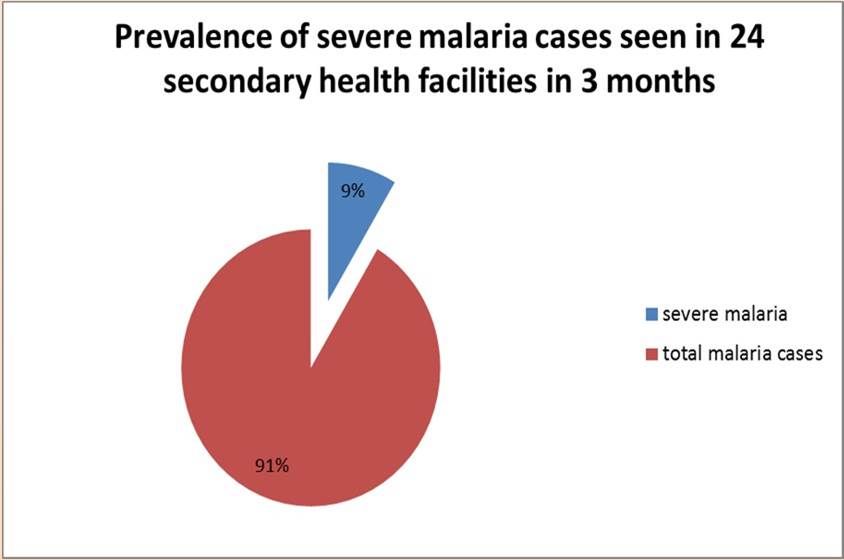
Prev Severe MalTotal number of confirmed malaria cases reported in the three states over the three months preceding the assessment was 18, 695 and diagnosis of severe malaria was made in 8.6% of the total malaria cases. Out of the severe malaria cases, 75.9% were discharged, 3.8% referred and 1.5% died.

Fifty per cent of the health care providers had attended training on malaria case management 12 months preceding the survey. The majority of providers managed severe malaria with injectable artemether (45.8%), quinine (37.5%) compared with artesunate (29.2%).

Routine antimalarialsMost of the health facilities (95.8%) practiced parasite-based diagnosis of malaria but only (29.2%) monitored the parasite clearance of patients with severe malaria. 70% of the facilities did not have basic supplies for ancillary management of severe malaria. 66.7% and 30% of the health facilities experienced stock?out of parenteral artesunate and parenteral  quinine respectively  in the previous three months.

Health system strengthening with emphasis on capacity building of health care providers, medical commodity security and improvement in supportive/ancillary management of severe malaria is needed to reduce the mortality attributable to severe malaria.

« Previous PageNext Page »