Posts or Comments 26 April 2026

Antenatal Care (ANC) &CHW &IPTp Bill Brieger | 19 Nov 2021

Changes in ANC Attendance and IPTp Uptake after Introduction of Complimentary Community Interventions
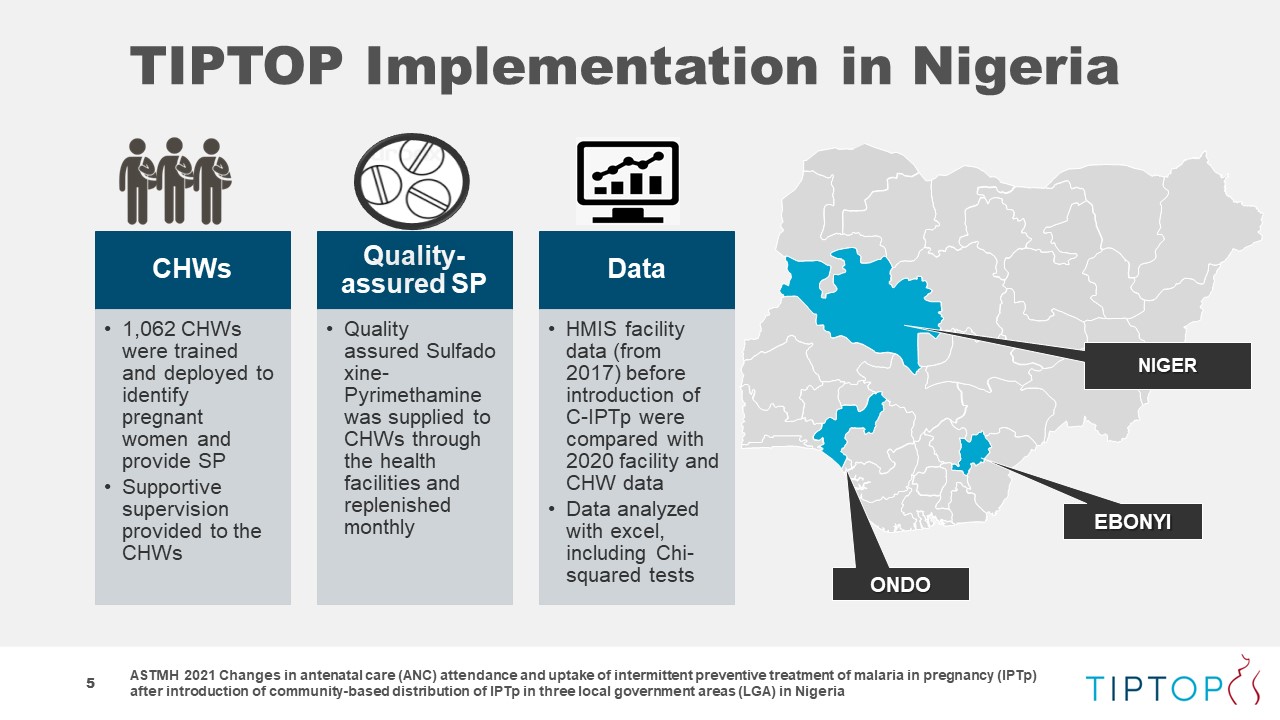
The TiPToP malaria in pregnancy project of Jhpiego and Unitaid has been aiming to increase coverage of Intermittent Preventive Treatment of malaria in pregnancy. The abstract below shares experiences from Nigeria, one of 4 TiPToP countries, is being presented at the 2021 American Society of Tropical Medicine and Hygiene Annual Meeting. Described are Changes in antenatal care (ANC) attendance and uptake of intermittent preventive treatment of malaria in pregnancy (IPTp) after introduction of community-based distribution of IPTp in three local government areas (LGA) in Nigeria. See Author List below.
In Nigeria, community health workers (CHWs) from three LGAs were engaged to introduce community delivery of IPTp (C-IPTp) with quality-assured sulfadoxine-pyrimethamine to prevent malaria. This approach, which complements IPTp delivery during ANC visits, was carried out in Ohaukwu, Akure South, and Bosso LGAs. C-IPTp was introduced in September 2018 in Ohaukwu and in December 2019 in Akure South and Bosso.

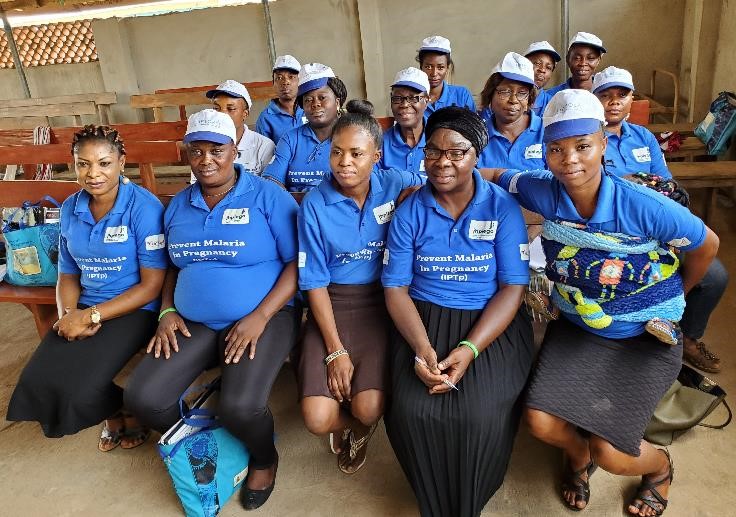
A total of 1,062 CHWs were trained on early identification of pregnant women, referral to ANC, IPTp administration, and use of mobile phones to capture and report data. CHWs conduct household visits, provide malaria health education, refer and encourage pregnant women to attend ANC, and provide IPTp.
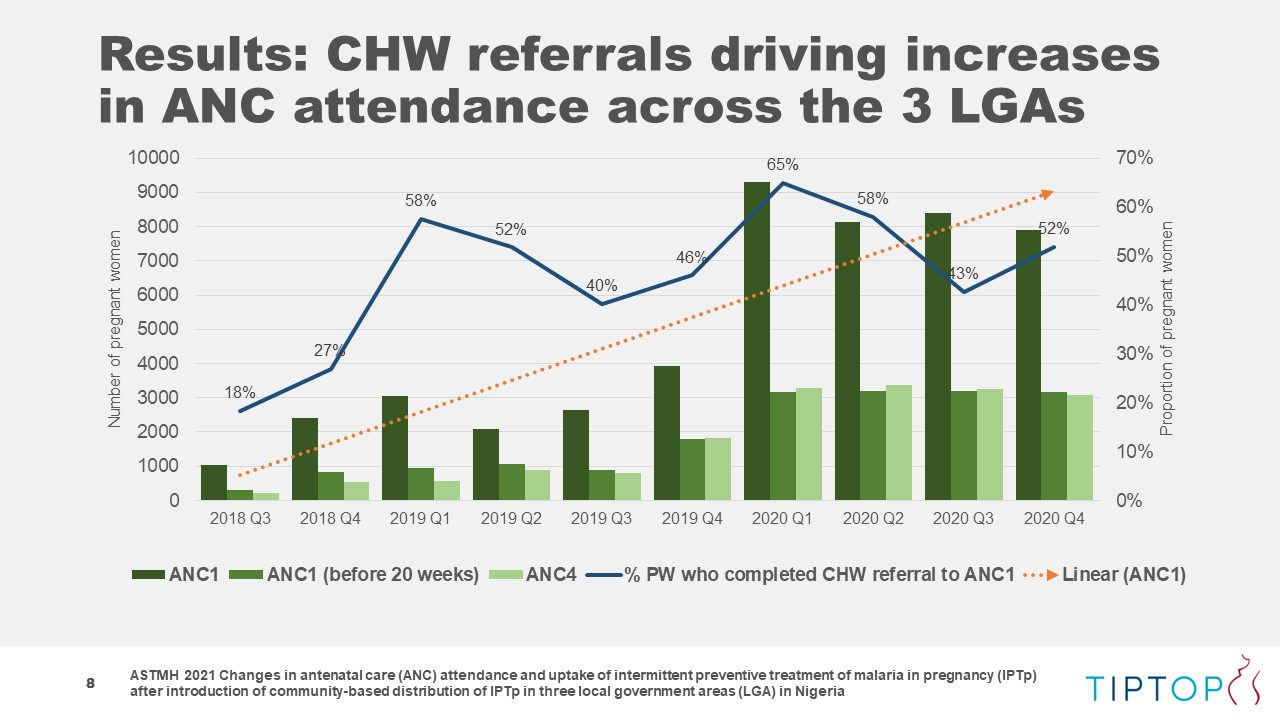
Routine facility data from 2017 before introduction of C-IPTp were compared with 2020 facility and CHW data to understand the effect of C-IPTp across the LGAs. Before C-IPTp, 43% of the estimated number of pregnant women in these areas attended at least one ANC visit as compared to 57% in 2020 (p<.05).

Attending at least four ANC (ANC4) visits increased in Ohaukwu by ten percentage points to 29% in 2020 (p<.05). In Akure South, ANC4 remained steady Bosso pre-C-IPTp data on ANC4 visits were of too poor quality to conduct a meaningful analysis. Though this project focused on C-IPTp, it also resulted in statistically significant increases in IPTp distribution during ANC visits.

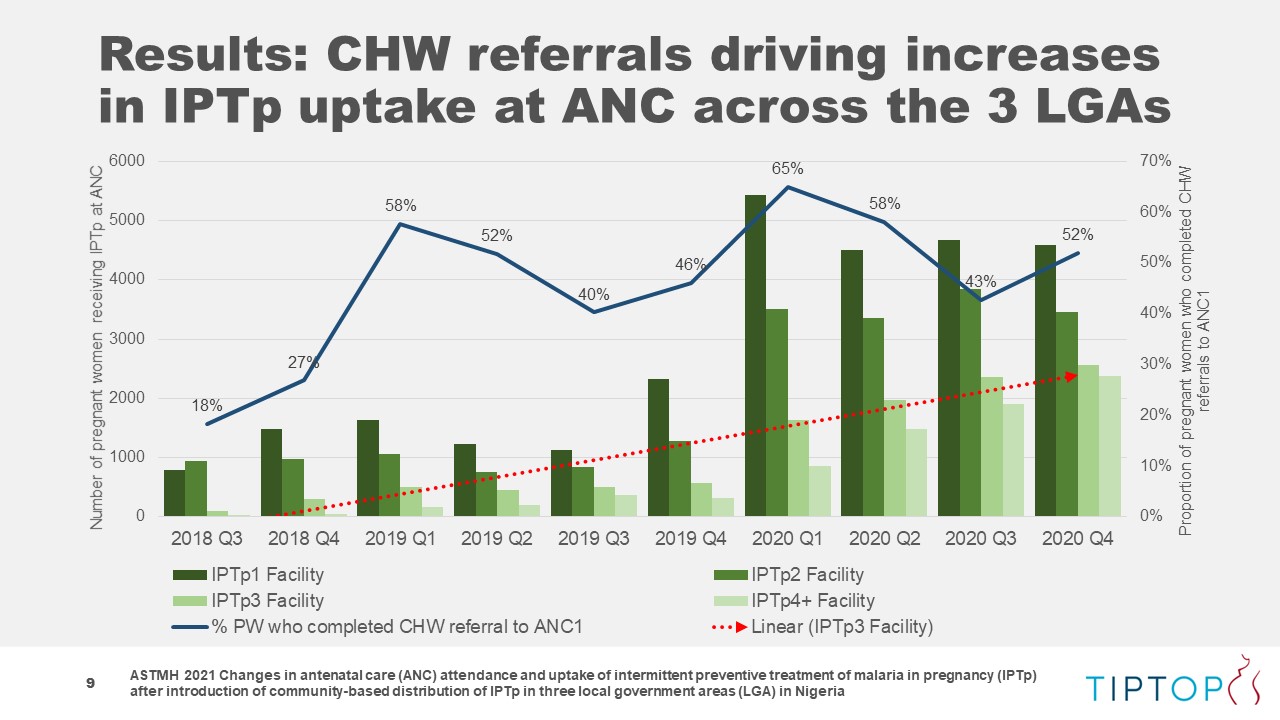
From 2017 to 2020, coverage of IPTp doses 1, 2, and 3 all saw increases across the three sites: IPTp1 increased from 54%?to 57%; IPTp2 from 36% to 42%; and IPTp3 increased 20 percentage points from 5% to 25%. Of pregnant women receiving all doses of IPTp, 39% did so through ANC with 61% receiving IPTp from CHWs.
These data suggest that in addition to contributing to overall increases in IPTp coverage, C-IPTp may also contribute to increases IPTp delivery in ANC and ANC attendance.

AUTHORS LIST:

Herbert Enyeribe Onuoha1, Bartholomew Odio1, Christina Maly2, Lawrence Nwankwo3, Folayan Waheed Adewale4, Elizabeth Njoku1, Oniyire Adetiloye1, Orji Bright1, Emmanuel Dipo Otolorin1, Elaine Roman2 — 1Jhpiego, Abakaliki, Nigeria, 2Jhpiego, Baltimore, MD, United States, 3Ebonyi State Ministry of Health, Abakaliki, Nigeria, 4Ondo State Ministry of Health, Alagbaka, Akure, Nigeria
Chronic/NCDs &NCDs &Schools &Training Bill Brieger | 19 Nov 2021

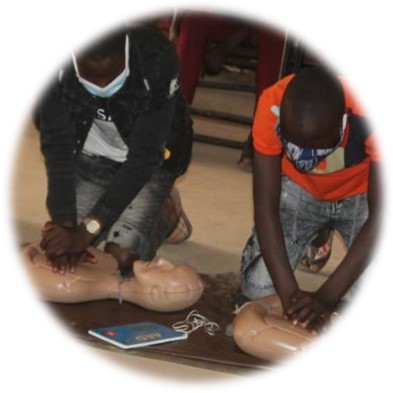
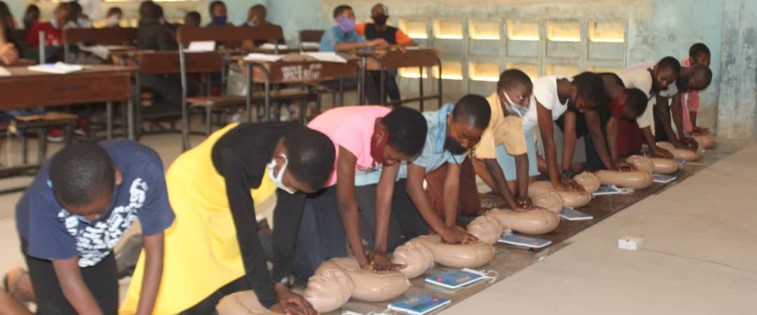
Hands-only CPR Training Program of Secondary School Students in Ibadan, Nigeria

NCDs are increasingly being recognized as health problems in Nigeria and other LMICs.  Here, Bolanle Akinyele, Olufunso Odunukan, Oluwaseyi Bolorunduro, and William Brieger describe a Pilot project to help high school students learn to perform CPR through a Combination Virtual and In-person Learning. This is being presented at the 2021 American Society of Tropical Medicine and Hygiene Annual Meeting.

Out-of-hospital cardiac arrest (OHCA) is estimated to have an average global incidence of 55 adults per 100,000 person-years. However, despite advances in medical care and technology, survival to hospital discharge remains abysmally low at 8-10%. In low to middle income countries like Nigeria, where cardiovascular disease is rising but emergency response systems are poor, the rate of survival after OHCA is lower.

Interventions such as bystander cardiopulmonary resuscitation (CPR) training and automated external defibrillator (AED) use are effective, scalable, and low-cost interventions that can reduce the OHCA mortality. Training schoolchildren to perform Hands-only CPR has been shown to increase bystander CPR.

Cardiopulmonary Resuscitation Peer Educator’s Program (CPEP) is a community-based program in Ibadan, Nigeria, designed enhance understanding of CPR in secondary school students. The American Heart Association’s school health module was adapted. The training was run jointly by staff of the four pilot schools, a Nigerian NGO, and the Revolving Hearts Foundation, Atlanta.

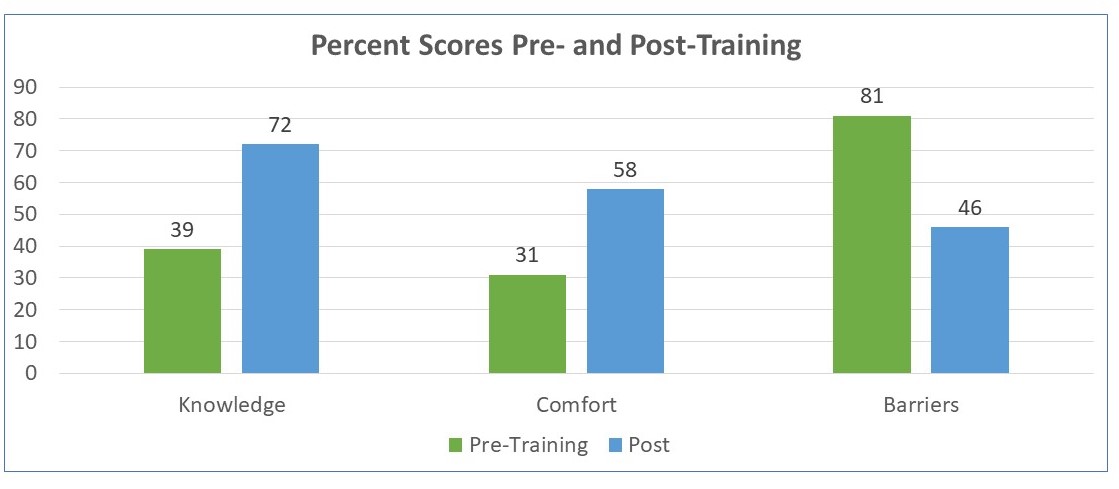
The training had both in-person and virtual components due to COVID-19 travel restrictions on Atlanta based partners. Here we present the results of training on knowledge, comfort level and perceived barriers of performing hands-only CPR.

A pre-training survey was conducted in February 2021 using convenience sampling that also was used to recruit participants. Pre- and post- training responses were matched by participants to assess the changes. Data were analyzed using Stata 16.1 software. A paired t-test analysis was conducted. The primary outcome was a percentage change in mean knowledge scores and secondary outcome was a change in comfort level and perceived barriers pre- and post- training.

A total of 45 secondary school students from 4 schools completed the tests. Females comprised 31.1% of students and the average age was 15.02 + 0.18 years. Paired t-test showed a significant change of 44.6% (p <0.0001) in the mean knowledge score. There was also an increase in comfort level in performing hands-only CPR, and a decrease in perceived barriers.

Trainees have started sharing what they learned through skits at school assemblies. Planning is underway to follow-up on training and to expand to other schools and states.

PS: as a followup another training session with a new group of 45 students and 15 teachers was conducted. The students made videos of their understanding of CPR from the program so it could be used for peer education, and most of them were pretty good and creative.

Antenatal Care (ANC) &Case Management &CHW Bill Brieger | 19 Nov 2021

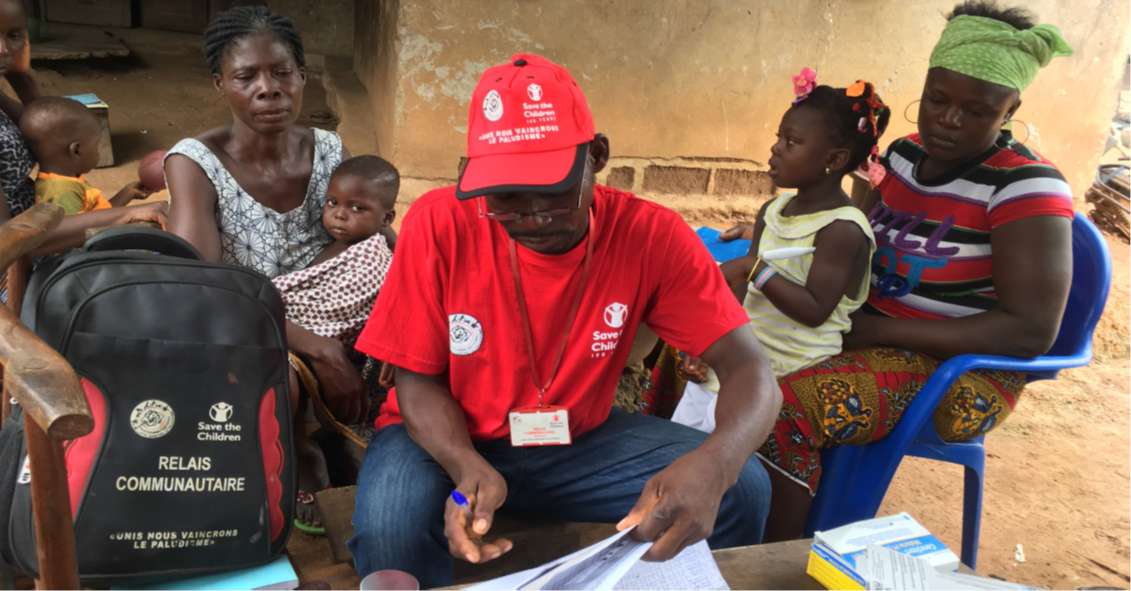
The role of community health workers in malaria control in in Cote d’Ivoire

Save the Children is sharing a wealth of information on programs at the 2021 American Society of Tropical Medicine and Hygiene Annual Meeting. Here is an abstract from one of their malaria efforts. See Author List below.

Since the Alma Ata Declaration in 1978, international efforts to improve access to primary health care have shifted towards the deployment of various types of community health workers (CHWs). This study aimed to assess the contribution of CHWs and identify challenges faced, which may impede malaria control efforts in Cote d’Ivoire.

A mixed-methods assessment was conducted in 16 health districts. A total of 1,922 community members were surveyed using a structured questionnaire. Qualitative data was gathered through 48 focus group discussions with pregnant women and mothers of children under 5, women’s groups and men and 132 in-depth interviews with government and implementation stakeholders, community members, caregivers and community leaders. Thematic content analysis around the key themes of the project implementation was used.

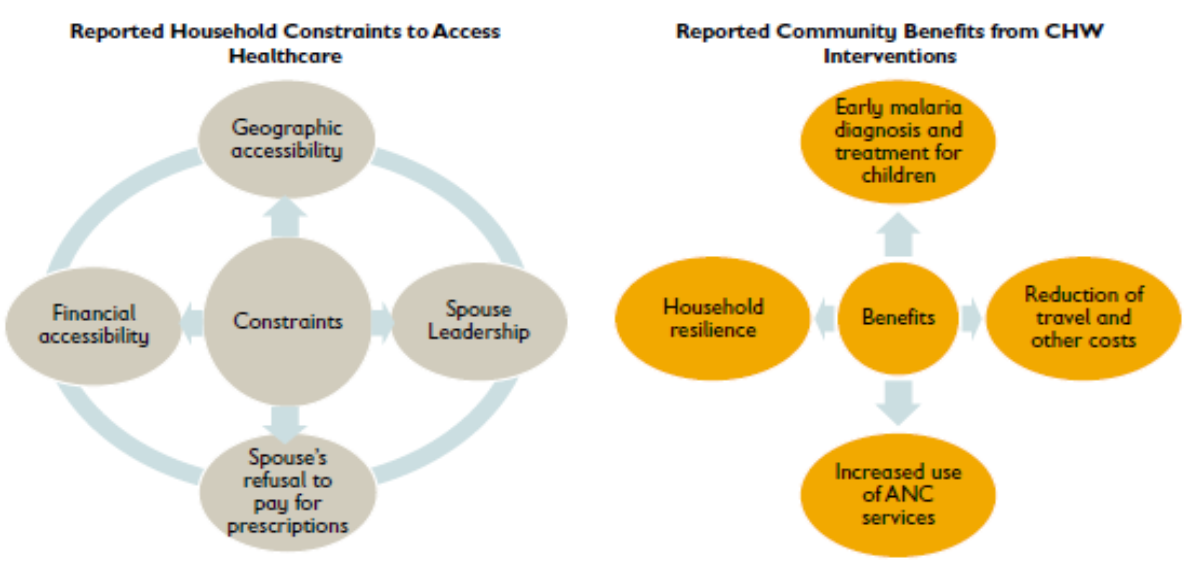
Over 50% of participants knew the CHW. The reported services provided by the CHW were diagnosis and treatment (47.4%), referrals to the health center (17.3%), education (14.1%), other medicines (12.2 %), and support at the health center (6.4%).  The benefits to children U5 reported by the participants were home-based treatment (22.9%), children get less sick (20.4%) and are in good health (14.7%), children suffer less from malaria (14%), and families spend less money on treatment (12.8%).

Additionally, up to 53% of pregnant women who had stopped attending ANC started to go again after being sensitized by the CHW. The main challenges reported by community members in accessing CHW services were non-coverage of all households by CHWs (13.6%), stock-outs of ACTs (10.9%), treatment provided is mostly for children U5 (10.4%). Distances between the CHW and the households were a major barrier to malaria treatment by CHWs.

CHWs were well perceived by the communities they serve. Expanding CHW coverage as well as CHW’s role to diagnose and treat adults is necessary for malaria control. Additionally, the lack of consistent supplies necessary for day-to-day activities, like ACTs and RDTs, must be addressed at the system level. Supply chain strengthening in Cote d’Ivoire, including forecasting and monitoring, is vital for CHWs to be effective.

AUTHOR LIST

Edouard C. Balogoun1, Manasse N. Kassi1, Philomène A. Beda1, Serge B. Assi2, Jacob Y. Agniman1, Théodore D. Doudou3, Rodolphe H. Yao4, Adama Z. Ouattara5, Joel Koffi1, Aristide E. Kouadio1, Apollinaire N. Kouadio1, Paul Bouey6, Sara Canavati6, Eric Swedberg6 — 1Save the Children, Abidjan, Côte D’Ivoire, 2Le Programme Nationale de Lutte contre le Paludisme (PNLP), Abidjan, Côte D’Ivoire, 3Sociologue de la Santé CRD/UAO, Abidjan, Côte D’Ivoire, 4National Statistical Institute (INS), Abidjan, Côte D’Ivoire, 5Socio-Anthropologue de la Santé (CRD/UAO), Abidjan, Côte D’Ivoire, 6Save the Children, Washington, DC, United States

Antenatal Care (ANC) &COVID-19 Bill Brieger | 18 Nov 2021

Factors related to changes in health facility attendance among pregnant women during COVID-19

As mentioned previously, the TiPToP malaria in pregnancy project of Jhpiego and Unitaid has been adjusting to the COVID-19 pandemic by training health workers to be more conscious of infection prevention skills. The abstract below is being presented at the 2021 American Society of Tropical Medicine and Hygiene Annual Meeting outlines what is happening with clinic attendance. See Author List below.

COVID-19 disrupted public health interventions and weakened global and national health systems. We used a mixed-methods study to explore factors related to changes in health facility attendance during the COVID-19 pandemic in three local government areas (LGAs) in Nigeria: Ohaukwu, Akure South and Bosso.

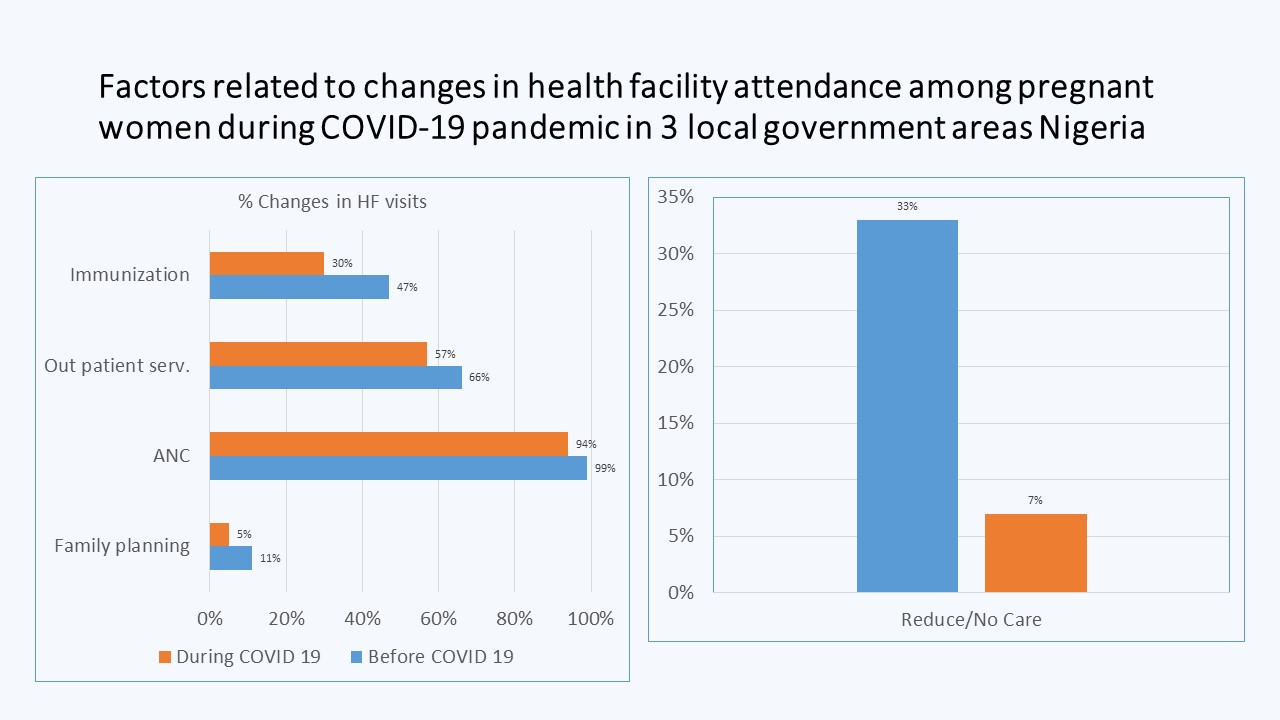
Three hundred fifteen pregnant women seen for antenatal care (ANC) in November 2020 participated in a survey about their attendance before and during the pandemic; 198 women participated in focus group discussions (FGDs). One quarter of women surveyed reported that they reduced the frequency of their visits or did not visit during the pandemic.

The biggest reported changes in visits were for immunization (47% visited before the pandemic versus 30% during the pandemic, p<0.001) and other outpatient services (66% to 57%, p=0.027), with small but statistically significant declines in ANC (99% to 94%, p=0.002) and family planning (11% to 5%, p=0.002). Both LGA and religion were significantly correlated with reduced/no visits during the pandemic; other socio-demographic characteristics were not. Whereas 33% of Christian women reported reduced/no care seeking, only 7% of Muslim women did (p<0.001).

Women in Ohaukwu were most likely to report reduced/no visits (39%), followed by those in Akure South (26%), and Bosso (7%) (p=0.012). During FGDs transport issues, proximity to health facilities, and fear of contracting COVID-19 or being labeled as COVID-positive were the most common reasons mentioned for not seeking care during the pandemic.

Differences by LGA are likely related to differences in both levels of transmission and the State-level response to the pandemic. Ebonyi state, where Ohaukwu is located, had the longest lockdown and most restricted movement; better understanding of differences in the pandemic and state response could inform future actions.

The FGDs findings highlight the need for health systems to consider how to facilitate service utilization during a pandemic, such as providing safe transport or increasing outreach, and to minimize stigma for those seeking care.

AUTHOR LIST

Bright Orji 1, Elizabeth Oliveras 2, Emmanuel Ugwa 3, Aishatu Bintu Gubio 4, Edima Akpan 5, Bartholomew Odio 1, Herbert Onuoha 1, Ibrahim Idris 6, Emmanuel Dipo Otolorin 1, Elaine Roman 2 1Jhpiego, Abuja, Nigeria, 2Jhpiego, Baltimore, MD, United States, 3Federal Medical Center, Birnin kudu, Jigawa state, Nigeria, 4National Malaria Elimination Program, Federal Ministry of Health, Abuja, Nigeria, 5Reproductive Health Division, Federal Ministry of Health, Abuja, Nigeria, 6Niger State Ministry of Health, Minna, Nigeria

Uncategorized Bill Brieger | 18 Nov 2021

Infection Prevention and control knowledge and practices of frontline health care workers during the COVID-19 pandemic in Nigeria

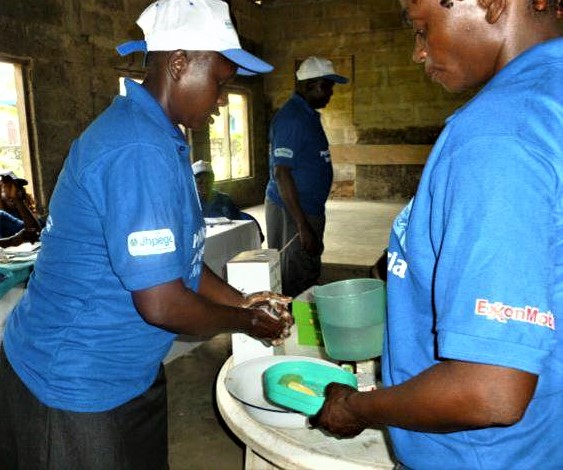
COVID-19 has caused many health projects in Nigeria to reconsider how they function. The TiPToP malaria in pregnancy project of Jhpiego and Unitaid has been adjusting to the COVID-19 pandemic by training health workers to be more conscious of infection prevention skills. The abstract below is being presented at the 2021 American Society of Tropical Medicine and Hygiene Annual Meeting explains what is being done. See Author List below.

Given the importance of infection prevention and control (IPC) measures for reducing the transmission of COVID-19, a cross-sectional, mixed-methods study was conducted to assess IPC knowledge and practices of frontline health workers – both facility- and community-based health workers (CHWs) – in three local government areas (LGA) in Nigeria: Akure South, Bosso and Ohaukwu. In November 2020, a structured survey was administered to 622 health workers – 294 facility-based (47%) and 328 CHWs (53%) – at 174 primary health care centers.

In each LGA, key informant interviews (KII) were conducted with health department management teams; 5 members from LGA and 3 from State health teams. Of all health workers surveyed, 58% had been trained in IPC during COVID and 5 of 11 questions were correctly answered by >94% of providers; however, 3 questions were correctly answered by 65% or fewer.

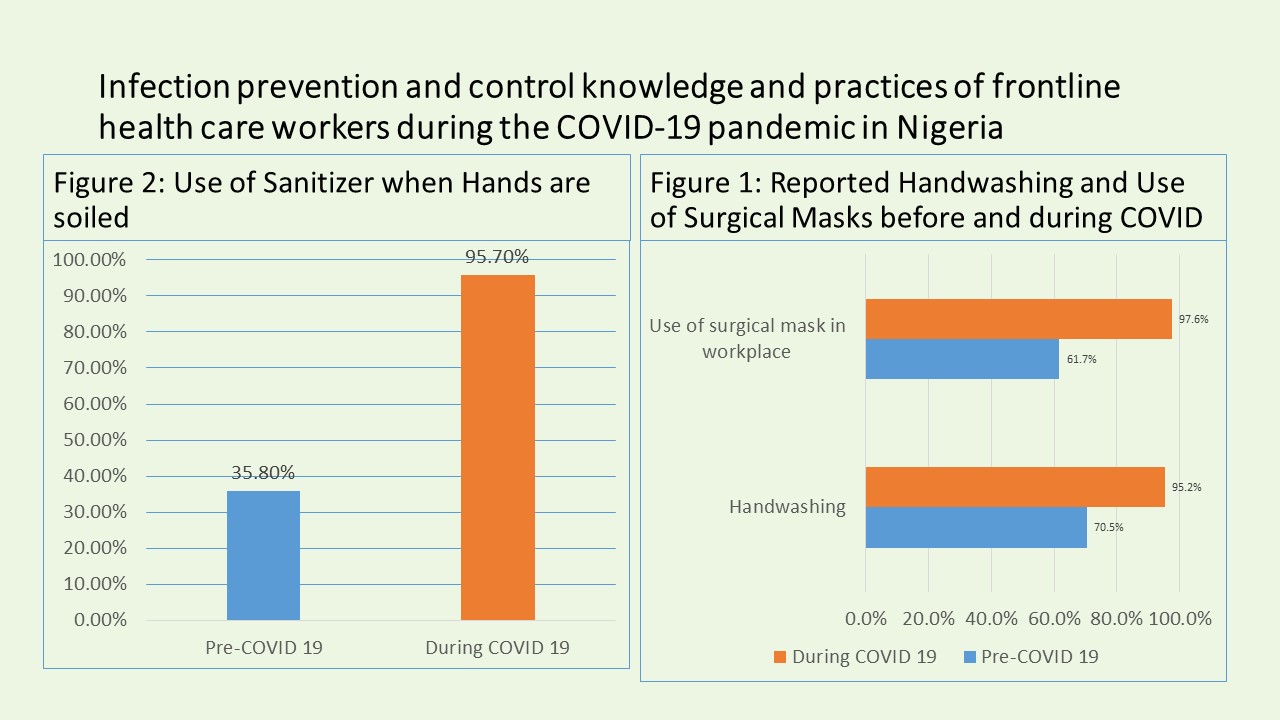
More health workers reported that they practiced recommended IPC behaviors during than before the COVID 19. Significant differences were seen for reported washing hands before glove use (70.5% vs 95.2% during COVID), washing hands after glove use (70.5% vs 95.2%), and using a surgical mask in the workplace (61.7% vs 97.6%).

There was no change in reported washing and disinfecting of hands after contact with each patient (69.0% vs 68.6%) or use of an N95 mask in the workplace (8.2% vs 9.1%). Incorrect use of hand sanitizer when hands are visibly soiled however increased (35.8% vs 95.7%). The KIIs confirmed these findings.

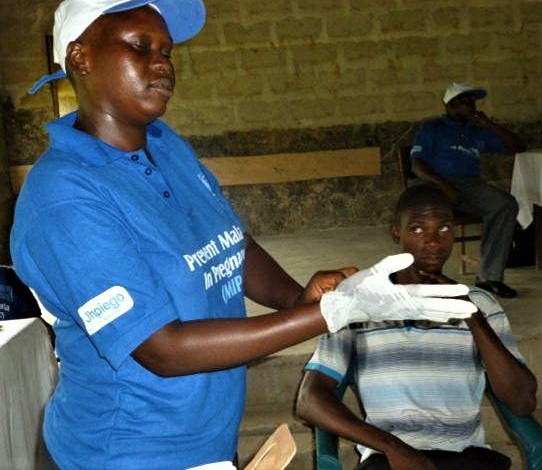
As one CHW in Ohaukwu said, “We increased our use of face masks, hand sanitizer and gloves,” while a facility-based health worker from Bosso said, “. . . now we take more precaution than then . . . unlike before we palpate with our hands but now we use gloves.”

KII showed that fear of contracting the disease was the reason for change in behaviors. Despite reports of improved IPC measures, use of N-95 masks and hand sanitizer practices remain sub-optimal. There is need for continued support for correct hand hygiene, and to reinforce the relative importance of different IPC practices to ensure adherence to COVID-19 preventive measures

AUTHOR LIST

Bright Orji 1, Elizabeth Oliveras 2, Emmanuel Ugwa 3, Bartholomew Odio 1, Herbert Onuoha 1, Christina Maly 2, Ibrahim Idris 4, Festus Okoh 5, Emmanuel Dipo Otolorin 1, Elaine Roman 2 — 1Jhpiego, Abuja, Nigeria, 2Jhpiego, Baltimore, MD, United States, 3Federal Medical Center, Birnin kudu, Jigawa state, Nigeria, 4Niger State Ministry of Health, Minna, Nigeria, 5National Malaria Elimination Program, Federal MOH, Abuja, Nigeria


Antenatal Care (ANC) &Communication &Community &COVID-19 &IPTp &Malaria in Pregnancy &mHealth Bill Brieger | 18 Nov 2021

SMS to support health worker knowledge retention of maternal health and malaria interventions

The TiPToP malaria in pregnancy project of Jhpiego and Unitaid has been adjusting to the COVID-19 pandemic. Their abstract below is being presented at the 2021 American Society of Tropical Medicine and Hygiene Annual Meeting and explains the use of bulk SMS to support health worker knowledge retention on antenatal care and the use of intermittent preventive treatment of malaria in pregnancy during COVID-19 in Bosso local government area of Niger State, Nigeria. See Author List below.

In light of COVID-19 travel restrictions, bulk SMS were used to support knowledge retention of health workers following an in-person training held before the pandemic. In December 2019, 72 facility health workers and 260 community health workers (CHWs) in Bosso local government area of Niger State, Nigeria participated in a 12-day training about benefits of early antenatal care (ANC) attendance, CHW referrals to ANC, and use of intermittent preventive treatment in pregnancy (IPTp) with sulphadoxine-pyrimethamine to prevent malaria.

In-person supervision visits were conducted 3 months following training, although three months later in-person supervision was no longer possible due to COVID-19 related travel restrictions. Post-training support transitioned to use of bulk SMS which were sent twice a week to each cadre for two 3-month rounds of messaging.

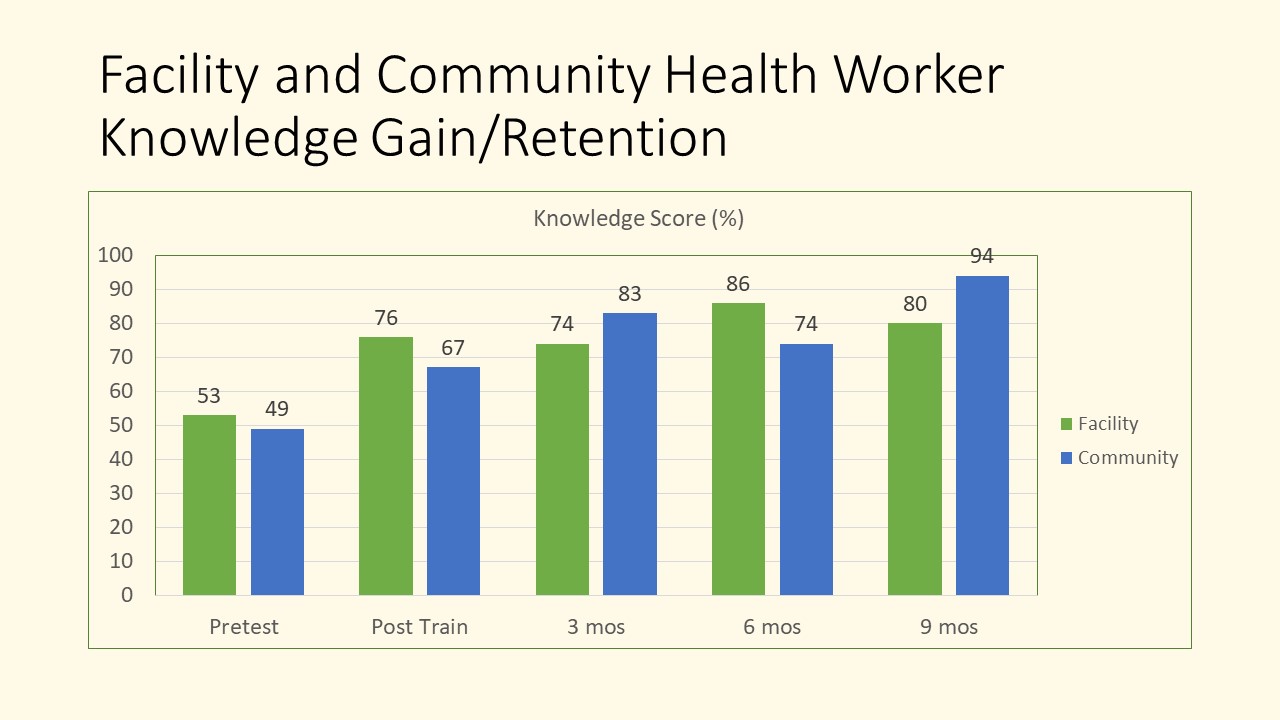
Knowledge tests comprised of 10 multiple choice questions linked to key ANC and IPTp guidelines were administered at 5 time points: 1) baseline; 2) post-training; 3) at in-person supervision visit 3 months after training; 4) after first round of bulk SMS (6 months post-training); and 5) after second round of bulk SMS (9 months post-training).

Average test scores for each cadre were calculated at each time point and T-tests were used to assess differences in scores. The results show that facility health workers scored an average of 53% on the pre-test followed by scores of 76%, 74%, 86%, and ending at 80% 9 months following training. CHWs started with an average score of 49% which increased to 67% post-training; subsequent average scores were 83%, 74%, and 94%.

Results were compelling with facility health worker knowledge improving from 76% immediately post-training to 80% 9 months later (p-value<0.05) and for CHWs the improvement was from 67% to 94% (p-value<0.05). These findings suggest that use of SMS can support knowledge retention of key ANC and IPTp guidelines following an in-person training. Program managers, trainers and supervisors may consider using this approach to support health workers where resources and/or movement are restricted.

AUTHOR INFORMATION:

Charity Anoke 1, Orji Bright 1, Joseph Enne 1, Bartholomew Odio 1, Christina Maly 2, Amina Zimro 3, Ibrahim Idris 3, Elizabeth Njoku 1, Oniyire Adetiloye 1, Emmanuel Dipo Otolorin 1, Elaine Roman 2  — 1Jhpiego, Abuja, Nigeria, 2Jhpiego, Baltimore, MD, United States, 3Niger State Ministry of Health, Minna, Nigeria

Community &Diagnosis &Guidelines &Health Workers &IPTp &Malaria in Pregnancy &Monitoring &Treatment Bill Brieger | 02 Nov 2021

Updating Malaria Guidelines and Tools: The Kenya Example

Kenya Division of National Malaria Program (DNMP) with support from PMI Impact Malaria (IM) and in collaboration with other stakeholders reviewed/developed/updated nine key program documents. Agustine Ngindu and the Impact Malaria/PMI team stress the importance of keeping key malaria technical guidance and tools up-to-date.

Guidelines for the Diagnosis, Treatment, and Prevention of Malaria in Kenya was revised to indicate the start of IPTp at 13 weeks from the prior recommendation of 16 weeks of gestation and updated the IPTp schedule in line with WHO guidance. The program also updated dosing charts for artemether lumefantrine, dihydroartemisinin-piperaquine, and injectable artesunate to include both weight and age range particulars. This update will enhance adherence to treatment guidelines among healthcare workers

The Kenya Quality Assurance Guidelines for Parasitological Diagnosis of Malaria was in draft form for nearly 10 years. Revisions were motivated by the lack of a functional quality assurance (QA)/quality control (QC) system for malaria diagnosis. Sections were added to guide implementation of internal quality control and external quality assurance programs. Updates also provided guidance on surveys to determine the extent of gene deletion and its effect on routine RDT-based malaria diagnosis.

Implementation Framework for Malaria Rapid Diagnostic Tests was developed to facilitate rollout of malaria diagnostics QA/QC in line with Kenya Malaria Strategy (KMS) of 2019-2023. As p[art of this effort, the M&E framework was expanded to include the performance matrix. A costed implementation matrix to provide guidance was developed on costing of activities in line with KMS 2019-2023.

Biosafety Guidelines for Malaria Rapid Diagnostic Testing at Community Level was highlighted in new guidelines developed to address emerging QA and biosafety concerns at community level. This was a response to requirements by the Kenya Medical Laboratory Technicians and Technologists Board to allow for a new waiver for community health volunteers (CHVs) to conduct testing using mRDTs.

The Guidelines on Community Case Management of malaria and its implementation plan were strengthened as was the Implementation framework for Rapid Diagnostic Testing. Updated job aids included dosing schedules for artemether lumefantrine (AL) and injectable artesunate for use at service delivery points by Health Care Workers in line with the revised guidelines.

Hopefully all national malaria programs will take the Kenya experience as an example of the need to update regularly all the tools needed for front line staff to achieve malaria elimination.

Climate Bill Brieger | 25 Oct 2021

Malaria and The 2021 Lancet Countdown on health and climate change

The Lancet has published the 2021 update of the important climate countdown series in time for the upcoming UN Framework Convention on Climate Change 26th Conference of the Parties (COP26) in Glasgow. Interestingly in that 44-page Lancet climate paper malaria is mentioned several times, but basically the same example of increased months of transmission in highland areas repeated. Specifically…

“The number of months with environmentally suitable conditions for the transmission of malaria (Plasmodium falciparum) rose by 39% from 1950–59 to 2010–19 in densely populated highland areas in the low HDI group, threatening highly disadvantaged populations who were comparatively safer from this disease than those in the lowland areas (indicator 1.3.1).”

Hopefully the malaria community will use the other information in the report to explore and document additional malaria-climate issues including…

  • Desertification reducing mosquito habitats
  • Climate heightened conflicts putting more people at risk of malaria
  • Translating economic losses into difficulty paying for health systems to support malaria programs
  • Increased zoonotic transmission of malaria (e.g. knowlesi) threatening elimination
  • Rising sea levels affecting mosquito habitats

Malaria is an ideal exemplar condition to demonstrate the effects of climate change by having definitive effects on the host, the vector and the parasite. These issues need immediate attention if malaria elimination targets are to be maintained and achieved.

Vaccine Bill Brieger | 07 Oct 2021

The RTS,S Malaria Vaccine: Logistics Are the Next Issue

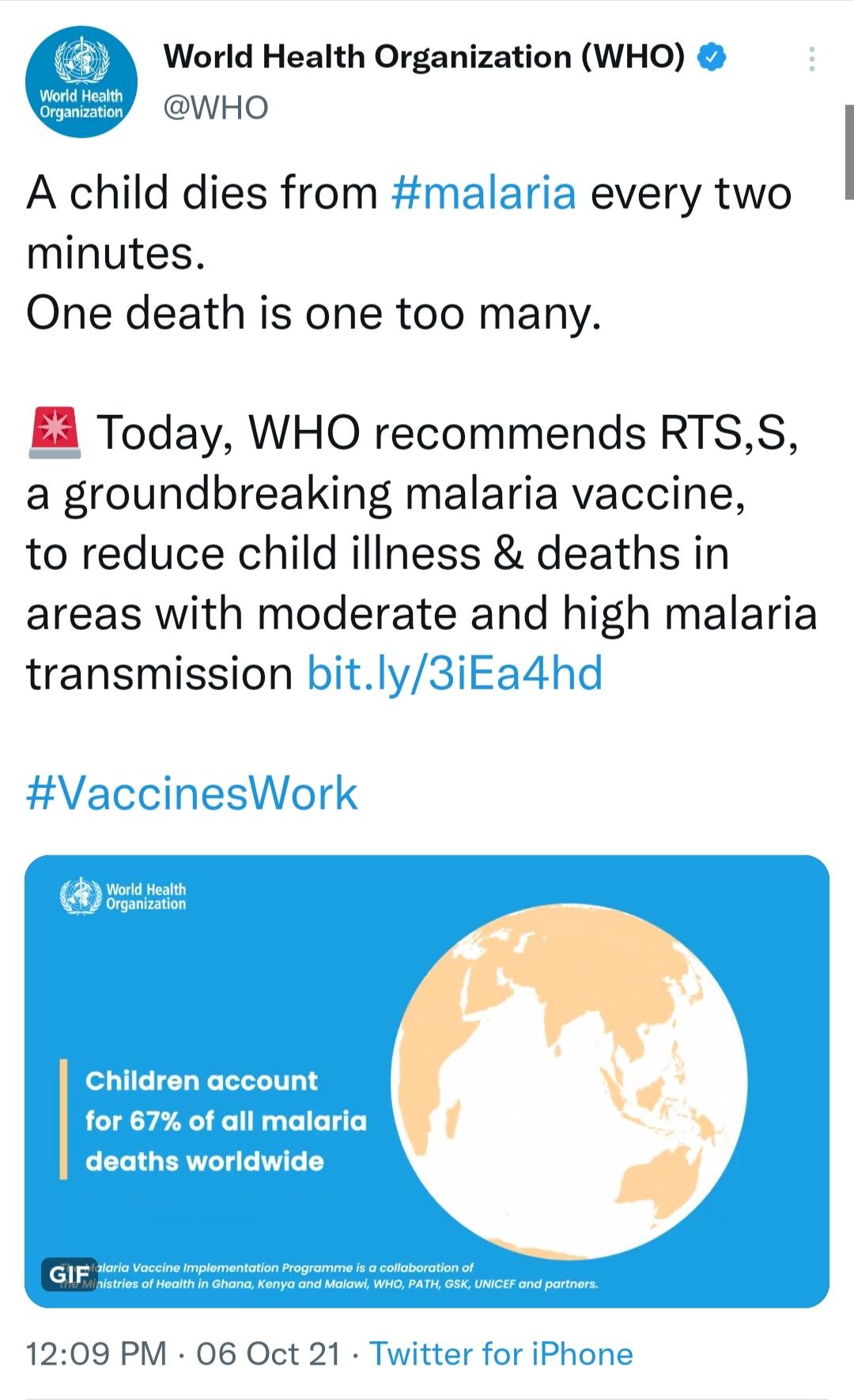
The World Health Organization and its Global Malaria Program are happily announcing approval of the RTS,S/AS01 (RTS,S) malaria vaccine after many years of testing. Though research on this particular vaccine stretches back to the 1980s, the most recent test has been a pilot program in Ghana, Kenya and Malawi that has reached more than 800,000 children since 2019 in real life district health settings.  Because the vaccine is not 100% effective, WHO Director-General Dr Tedros Adhanom Ghebreyesus notes that the intervention will compliment other efforts such that by “Using this vaccine on top of existing tools to prevent malaria could save tens of thousands of young lives each year.”

Specifically, WHO explains that he RTS,S/AS01 malaria vaccine would be used “for the prevention of P. falciparum malaria in children living in regions with moderate to high transmission as defined by WHO.”  RTS,S/AS01 malaria vaccine requires a “schedule of 4 doses in children from 5 months of age for the reduction of malaria disease and burden.”

The vaccine was found to have a strong safety profile, and in keeping with the concept of using it together with other preventive measures it produces, “Significant reduction (30%) in deadly severe malaria, even when introduced in areas where insecticide-treated nets are widely used and there is good access to diagnosis and treatment.”

The pilot effort was supported at the global and country levels by WHO, PATH, UNICEF and GlaxoSmithKline (GSK) in collaboration with the health systems of the three countries. An important component of the pilot effort was learning about delivery process, which in this case meant collaboration with district health services including overall childhood immunization programs. In fact, because of the link with vaccinations, children who were not reached with other malaria services had a better chance of getting protection from the vaccine.

It is important to state that WHO approval of RTS,S does not mean that malaria vaccine research has been complete. Several other vaccine candidates are currently in the research pipeline. In addition, the current COVID-19 vaccine efforts have led researchers to consider different approaches to malaria vaccine development.

Approval by WHO is just the beginning of the logistical and policy challenge up and down the supply chain. First, there are questions of production capacity. Secondly, Funding must be secured such as the assistance that Gavi (the Vaccine Alliance), GFATM (the Global Fund to Fight AIDS, Tuberculosis and Malaria), and Unitaid have provided to low- and middle-income countries to promote their immunization and health programs. In August Gavi announced that, “Gavi, MedAccess and GlaxoSmithKline (GSK) will join forces to guarantee continued production of the RTS,S antigen for the RTS,S/AS01e malaria vaccine

A third issue is obtaining regulatory approval in malaria endemic countries that wish to use the vaccine. Fourth, lessons on management of the vaccine delivery within both malaria and child health services on the ground, including community involvement, need to be shared with other countries in the region.

More than 30 years into the development and application of the RTS,S malaria vaccine, we are in a way just getting started when it comes to figuring out how to reach children and save their lives.

Elimination &Vaccine Bill Brieger | 23 Aug 2021

Malaria Vaccine Approval Nearing

Over the coming three days the Malaria Vaccine Implementation Programme (MVIP) Advisory Group in its capacity as SAGE/MPAG Working Group will conduct a full evidence review of the RTS,S/AS01 malaria vaccine and develop proposed recommendations for Strategic Advisory Group of Experts (SAGE) on Immunization and MPAG. This comes on the heels of the recent 74th World Health Assembly Resolution that, “Urges Member States to step up the pace of progress through plans and approaches that are consistent with WHO’s updated global malaria strategy and the WHO Guidelines for malaria. It calls on countries to extend investment in and support for health services, ensuring no one is left behind; sustain and scale up sufficient funding for the global malaria response; and boost investment in the research and development of new tools.”

The large scale pilot intervention of the RTS,S/AS01 malaria vaccine started two years ago in selected districts in three countries countries: Ghana, Kenya and Malawi.  For example, “Two years on from the launch of a pilot programme, more than 1.7 million doses of the world’s first malaria vaccine have been administered in Ghana, benefitting more than 650,000 children with additional malaria protection.” WHO says that, “Insights generated by the pilot implementation will inform a WHO recommendation on broader use of the vaccine across sub-Saharan Africa,” which will then be considered by global advisory bodies for immunization and malaria, i.e. the SAGE and MPAG.

WHO is asking the Working Group to address the following question, “Does the additional evidence on the feasibility, safety and impact of the RTS,S/AS01 vaccine support a WHO recommendation for use of the vaccine in children in sub-Saharan Africa beyond the current pilot implementation?” WHO has set the following meeting objectives:

  1. To examine and provide input to the Grading of Recommendations Assessment, Development and Evaluation (GRADE) evidence profiles of the quality of the evidence used to inform the recommendations;
  2. To review and interpret the evidence, with explicit consideration of the overall balance of benefits and harms;
  3. To formulate recommendations – in alignment with the endorsed 2019 RTS,S Framework for Decision – taking into account benefits, harms, values and preferences, feasibility, equity, acceptability, resource requirements and other factors, as appropriate.

Hopefully decisions will be forthcoming soon so that planning can get underway to address immunization as part of the overall malaria elimination effort.

« Previous PageNext Page »