Posts or Comments 29 April 2026

Community &IPTp &Malaria in Pregnancy Bill Brieger | 09 Oct 2013

Jhpiego at MIM2013 – Use of Community Health Workers to Improve Pregnancy Outcomes in Kenya

Augustine Ngindu, Sanyu Kigondu, Rose Mulindi, Christine Ayuyo, Muthoni Magu-Kariuki, Isaac Malonza, Julius Kimiteiand Elizabeth Washikaof Jhpiejo, the Ministry of Health (Kenya) and the Maisha/USAID Project reported on using Community Health Workers to identify and refer pregnant women to access intermittent preventive treatment (IPTp) in Kenya
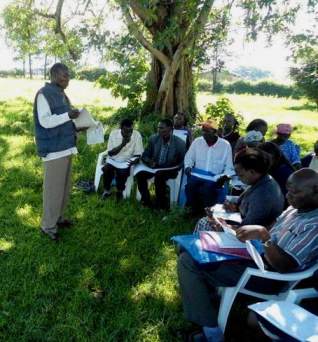
Community Health Worker Training

Community Health Worker Training

Malaria in pregnancy is associated with anemia, low birth weight, miscarriages and death. Despite availability of effective MIP interventions intermittent preventive treatment using Sulfadoxine Pyrimethamine (IPTp-SP) and insecticide treated nets (ITNs), coverage rates in Kenya have remained low; IPTp2 uptake- 25% and ITN coverage- 41%.

To increase coverage rates Kenya has adapted a community strategy approach sensitizing pregnant women to start antenatal care (ANC) early to receive comprehensive care throughout pregnancy.  This includes access to an ITN at first ANC visit and IPTp uptake beginning in the second trimester to increase coverage rates.

Trained community health workers (CHWs) registered pregnant women in their Community units for follow up monthly. CHWs conducted monthly follow up of all registered pregnant women to identify those not attending ANC and referred them for ANC services as well as counseled those not using ITNs.

CHWs received supportive supervision from district managers and MCHIP staff to assess performance skills on quality of data and mentorship on MIP interventions.  Data collected was analyzed for pregnant women registered, accessing IPTp and referred for ANC services.

3,212 pregnant women were registered and 1,541 (48%) of the registered pregnant women were referred for ANC services because they were either late in starting ANC attendance or IPTp after 1st trimester or defaulters of scheduled visits.  Among the registered pregnant women 81% had taken one or more IPTp doses.

Use of CHWs in identification of pregnant women not accessing IPTp and referral of 48% of them has shown an effective methodology of identifying defaulters  in IPTp uptake among pregnant women.  Scaling up of this community-based approach would ensure early ANC attendance and access to the available effective MIP interventions including IPTp.


Research Bill Brieger | 08 Oct 2013

Involving ‘Alumni’ in Strengthening the Tropical Disease Research Program

TDR PresentationsmThe Special Programme for Research and Training in Tropical Diseases (TDR – Unicef/UNDP/World Bank/WHO) seized the opportunity of the Multilateral Initiative on Malaria (MIM) 6th Pan-African Conference on Malaria in Durban 6?11 October to touch base with its ‘alumni’ who have received research and training grants over the almost 40 years since its inception.  A workshop was held discuss a new TDR alumni network platform and seek input on ideas for what that platform might look like and accomplish.

TDR has trained and supported thousands of researchers across the globe. We would like to assess how we can continue to support our alumni and their connections to people and institutions. This is a major new initiative that TDR will develop in 2014, and it wanted people who are familiar with TDR to provide feedback to initial plans for a new platform that will allow for better tracking of career progression and promotion, and to get ideas on how to increase opportunities for collaborations with other researchers and funders.

The idea of an alumni network was received enthusiastically by the more than 40 participants at the session, many of whom attested to the crucial role TDR played in their scientific careers either by supporting their doctoral studies or providing them grants that resulted in published work that help promote their careers.

Participants discussed various web based options where alumni profiles could be maintained and opportunities to share skills and solicit collaboration on research and training activities.  Other suggestions included an alumni newsletter and regular alumni meetings to coincide with international conferences that address the diseases of poverty.

TDR Director John Reeder said the organization was enthusiastic about receiving alumni input.  This participation will hopefully reinvigorate an organization that had been in a quiet transition over the past few years. The network will provide a good opportunity to learn how TDR investment in individuals and small teams has spawned further discoveries and disease control innovations.

On a personal basis, I can say that TDR grants to our team at the University of Ibadan beginning in 1981, helped us refine the concepts and capacities of volunteer community health workers (CHW) in tropical disease control including a contribution to guinea worm elimination in Nigeria, dissemination of pre-packaged anti-malarial drugs and refining the concept of the community directed distributor of ivermectin for onchocerciasis control and elimination.

These CHW principles have been worked into a new offering on Coursera, “Training and Learning Programs for Community Health Workers,” so that others can benefit from the lessons engendered through TDR support. Hopefully other alumni can use the network to share the benefits they have gained from TDR.

Malaria in Pregnancy Bill Brieger | 08 Oct 2013

MIM2013: IPTp policy in Zanzibar towards pre-elimination of malaria: results from a study of placental parasitemia

maisha 1Mwinyi Issa Ramadhan Khamis, Elaine Roman, Raz Stevenson, Chonge Kitojo, Julie Msellem, Marya Plotkin, Khadija Said; Natalie Hendler; Asma Gutman, and Peter McElroy developed this presentation for the MIM2013 6th Pan-African Conference on Malaria in Durban. They represent the Zanzibar National Malaria Control Programme, Zanzibar Ministry of Health, Jhpiego Tanzania, Jhpiego Baltimore, United States Agency for International Development, US Centers for Disease Control and Prevention and the US President’s Malaria Initiative and were involved in the bilateral Maisha Project.

Due to scale up of malaria prevention and treatment by the Zanzibar Malaria Control Programme (ZMCP) of the Ministry of Health (MOH), Zanzibar is in the pre-elimination phase of malaria control P. falciparum prevalence in the general population is currently less than 0.5% [1], and the diagnostic positivity rate among febrile patients was 1.2% in 2011 [2]
Control of Malaria in Pregnancy (MIP) follows the 3 pronged approach recommended by WHO:

  • Intermittent preventive treatment for pregnant women (IPTp) with sulfadoxine-pyrimethamine (SP) distributed through antenatal care (ANC) services
  • Long lasting insecticide treated nets
  • Case management of malaria in pregnancy

IPTp-SP was implemented in 2004 when malaria prevalence exceeded 20%. Coverage among pregnant women remains low. In their last pregnancy:

  • 69% women reported taking any SP
  • 43% women reported taking 2+ doses of SP [3]

The MOH of Zanzibar is reconsidering provision of IPTp through ANC services in light of very low malaria prevalence. ZMCP has introduced screening for malaria in ANC services. In 2011 and 2012, 0.2% of ANC clients tested positive for malaria using mRDT (19,724 malaria tests were performed in 2011 and in 27,186 performed in 2012) [4]

Placental 1aThe Placental Parasitemia Study was a prospective observational study was conducted in selected health facilities in Zanzibar with the objective of measuring placental parasitemia rates among pregnant women who did not receive IPTp. The study addressed the Policy question: Is IPTp useful at current level of transmission in preventing maternal and neonatal morbidity?

A Convenience sample of pregnant women enrolled at six hospitals in Zanzibar on day of delivery was recruited from September 2011 – April 2012. Client card checked for documentation of provision of IPTp (eligible= no doses of SP, resident of Zanzibar). Informed consent obtained from eligible clients.

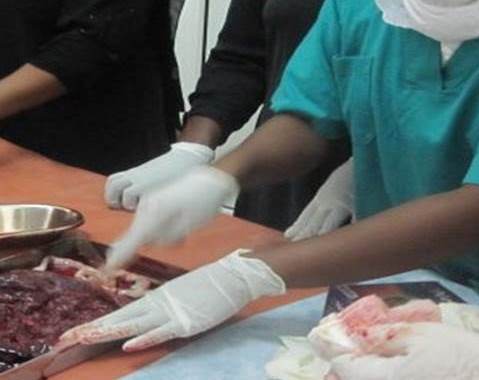
Samples were taken from maternal side of placenta by labor ward midwives. Dried blood spots (DBS) on filter paper were prepared from placental blood specimens DBS were analyzed via polymerase chain reaction indicating active Plasmodium infection (all species).

1,423 deliveries were enrolled from Pemba (52%) and Unguja (48%), representing 6% of the total deliveries at the six facilities.  The Average age of women was 26.9 years and 376 (32%) were primigravidae.
In 9 of 1,349 (0.8%, 95% confidence interval 0.2–3.3%) placental specimens were PCR positive. Only P. falciparum detected. Six (66%) of the nine placental infections were from Unguja deliveries. Eight placental infections were accompanied by a normal birth weight delivery (? 2500 g). Placental infections were not more common during the seasonal transmission increases of 2011-12.

In Conclusion, Malaria infection among pregnant women who have not had IPTp is extraordinarily low (0.8%). Given the low prevalence of placental malaria infection among women who had not had IPTp, in combination with the overall low prevalence of malaria on the islands, a policy shift away from IPTp is not an unreasonable option, if this is done with expanded surveillance of MIP and strengthening of detection and case management of women with MIP.

We Recommend Enhanced surveillance of MIP through expansion of the existing surveillance system, MEEDS, to capture symptomatic pregnant women diagnosed at ANC and ensure that pregnancy status is recorded for women diagnosed at the outpatient department. Case management of MIP should be strengthened and continued high ownership and use of ITNs should be ensured, particularly among women of reproductive age.

A internal review of costs and findings from surveillance to inform on whether the cost of screening every pregnant woman in antenatal care is justified

References

  1. Bhattarai A, Ali AS, Kachur SP. Impact of artemisinin-based combination therapy and insecticide-treated nets on malaria burden in Zanzibar. PloS Med 4(11): e309.
  2. Zanzibar Malaria Control Programme. Zanzibar Malaria Epidemic Early Detection System Biannual Report, Mid-Year 2011; Vol. 3,  (No.1); 2011.
  3. Tanzania HIV/AIDS and Malaria Indicator Survey (THMIS) 2011-12.
  4. Zanzibar Malaria Control Programme. Unpublished 2012 National surveillance data.

Malaria in Pregnancy &Treatment Bill Brieger | 08 Oct 2013

Jhpiego at MIM2013 – Improving malaria case management by health care providers in antenatal clinics in Akwa Ibom State of Nigeria

William R Brieger, Bright C Orji, and Emmanuel Otolorin, of Jhpiego shared Jhpiego’s work on improving the health of pregnant women in southeastern Nigeria at the MIM2013 6th Pan-African Malaria Conference in Durban.

RDT Nigeria aIn Nigeria approximately 11% of maternal deaths are caused by malarial in pregnancy (MIP). Use of Long Lasting Insecticide-treated Nets (LLINs), intermittent preventive treatment (IPTp) and prompt and effective case management have been recognized as key interventions to control MIP. Of these three MIP interventions, case management is the less well developed with fever in pregnancy often being treated presumptively as malaria, possibly leaving pregnant women to die from other illnesses.

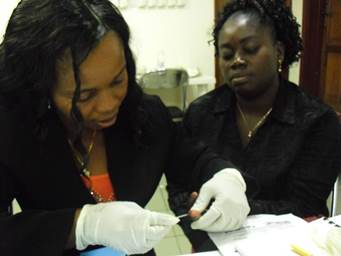
The use of rapid diagnostic tests (RDTs) to confirm malaria before treatment provides an opportunity for earlier recognition of febrile illnesses not due to malaria and appropriate treatment for those that are due to malaria. This study sought to learn whether the introduction of RDTs into antenatal care (ANC) would influence the pattern of malaria fever and malarial case management in Akwa Ibom State, Nigeria.

The study reviewed record cards of pregnant women attending government owned ANC clinics before and after introducing and training health staff on parasitological diagnosis of malaria using RDTs. The ANC client cards were drawn from first non-follow-up visits where a complaint of ‘fever’ was recorded. Data extraction was conducted between February 2010 and March 2011 by trained nurses/midwives across six primary health care centers in two Local Government Areas of the state.

At baseline 597 cards were reviewed, and 472 at endline. At baseline presumptive malaria treatment took place among 506 (84.8%) of the febrile women using ACT (23%), Quinine (32%) and other antimalarials (30%). At endline 361 (76%) of febrile women were tested with RDTs, with 71 (20%) of tests being positive.

All RDT+ women received an antimalarial, with 76% getting either ACT or quinine as recommended. Among the 290 RDT- women, 28% were given an antimalarial drug. In contrast 60% of RDT- women received an antibiotic, although most of them had complained of a respiratory illness.

The review of records did show that nursing and midwifery staff at government clinics could in a relatively short time period adopt the use of RDTs.  They did improve their prescribing of appropriate antimalarials, but still were using some inappropriate ones and did treat a small proportion of RDT- women for malaria. Continued follow-up and supervision will be needed to ensure that correct malaria diagnostic and treatment guidelines are fully practiced.

Malaria in Pregnancy Bill Brieger | 08 Oct 2013

Jhpiego at MIM2013 – Persistence of Malaria in Pregnancy as Rwanda Targets Pre-Elimination

Rwanda MIP aWilliam Brieger, Corine Karema and Beata Mukarugwiro from Jhpiego/MCHIP and the Malaria and Other Parasitic Diseases Program of the Rwanda Ministry of Health reported on the prevalence of malaria in pregnancy in Rwanda as the country moves toward elimination at the MIM2013 6th Pan-African Malaria Conference in Durban.

Through universal coverage of long-lasting insecticide treated nets and access to artemisinin based combination treatment Rwanda has achieved a national malaria prevalence estimated at 1.4% among children aged 6-59 months and 0.7% among women aged 15-49 years (2010 DHS). Slide positivity rates at health centers have dropped over 85% since 2005, and yet malaria persists.

Pregnant women remain vulnerable. While Rwanda no longer practices IPTp, it is interested in offering the best malaria protection to pregnant women. In order to plan appropriately, there was need for a malaria in pregnancy prevalence study.

Pregnant women were studied at first ANC registration in 38 health centers in two districts each of low, moderate and relatively higher malaria transmission areas (as determined by health information system laboratory reports) using microscopy, rapid diagnostic test (RDT) and polymerase chain reaction (PCR). Ethical clearance was provided by the ethical review board within the Ministry of Health.

ANC staff were trained to obtain data during normal client visits. RDTs were performed by the ANC staff. They also prepared blood slides to be analyzed in health center laboratories and PCR papers that were analyzed at the Johns Hopkins Bloomberg School of Public Health.  Information on parity, age, bednet use, anemia, HIV status and fever were normally collected for ANC records and also recorded on project data forms.

Among 3,781 women studied, malaria prevalence with microscopy was 1.6%, RDT was 2.4%, and PCR was 5.6%. Negative tests were associated with LLIN use the night before. Positive tests were associated with anemia, but none of the other variables. The highest positivity for all three tests (4.5%, 6.9% and 12.5% respectively) was in the designated high prevalence districts on the eastern border of the country.

Results show that even with low apparent levels of malaria, health services need to continue to protect pregnant women and their unborn children in Rwanda through consistent use of LLINs and identification and tracking women with anemia. Cross-border collaboration will also be needed to prevent reintroduction of the disease as the country moves towards elimination.

Malaria in Pregnancy &Uncategorized Bill Brieger | 07 Oct 2013

Jhpiego at MIM2013 – Harmonizing Malaria in Pregnancy Guidance: A Review from 5 African Countries

Elaine Roman, Patricia Gomez, Aimee Dickerson from Jhpiego (An Affiliate of Johns Hopkins University) and MCHIP developed the following abstract for a poster presentation at MIM2013 in collaboration with the US President’s Malaria Initiative. A copy of the full report is available at MCHIP.

MIP 5 country doc reviewsmThirty-nine countries in sub-Saharan Africa have malaria in pregnancy (MIP) policies in place, including intermittent preventive treatment (IPTp), insecticide treated bed-nets (ITNs) and effective case management.  Nonetheless, IPTp and ITN coverage among pregnant women remains well below international goals.  MIP policies are typically produced by National Malaria Control Programs (NMCP), but are implemented by National Reproductive Health Programs (RHP).

We reviewed MIP policy documents from the NMCP and RHP in Kenya, Mali, Mozambique, Tanzania and Uganda to understand 1) how closely national MIP documents reflect  WHO MIP guidance and 2) how consistent documents produced by the NMCP and RHP are with each other.  We developed a framework to compare MIP documents from RHP and NMCP according to WHO guidance for MIP, including IPTp timing and dosing, directly observed therapy, linkages to HIV prevention programs, promotion and distribution of ITNs, and diagnosis and treatment.

All countries have national documents promoting IPTp, ITN use, and case management of MIP.  WHO guidance was not always reflected in these documents: four countries restrict dosing of the first and second IPTp doses to specific gestational weeks, provide inconsistent guidance on MIP prevention in HIV+ women, and fail to provide clear guidance on the different antimalarial treatment that should be administered in the first vs. later pregnancy trimesters. .  All countries had discordant guidance between RH and NMCP in at least one official MIP guidance document.  For example, all countries had conflicting guidance on the timing or dosing of SP and the mechanism pregnant women should use to obtain ITNs. Considerable discrepancies exist between MIP guidance documents from NMCP and RHP.

These discrepancies contribute to confusion by health workers implementing MIP programs, contributing to the low coverage of IPTp and ITNs.  Harmonization of national MIP documents is urgently needed, with effective re-orientation and supervision of health workers to updated materials to help accelerate implementation.  While this review is targeted primarily at country level stakeholders, the information is important for regional and global level stakeholders as well.  This exercise is being repeated in other President’s Malaria Initiative countries.

Uncategorized Bill Brieger | 07 Oct 2013

MIM 2013 Opens – MIM Chair Speech

MIMExcerpts of opening session speech by Professor Rose Gana Fomban LEKE at 6th MIM Pan African Malaria Conference looks at 15 years of the Multilateral Initiative for Malaria.

It’s been 15 years of promoting global co-ordination and collaboration in malaria research. In these years, MIM via its unique organizational structure consisting of multiple supporting mechanisms (MIM/TDR, MIMCOM, MR4 and MIMSEC) converging to strengthen researchers in malaria endemic countries, has been very influential in;

  • Developing sustainable malaria research capacity in Africa through funding high quality research,
  • Strengthening knowledge transfer between malaria research and control,
  • Raising public awareness of the malaria burden and
  • Promoting global communication and cooperation between organizations and individuals.

Importantly, MIM has played a significant role in attracting additional funds into malaria research and building research capacity in Africa. An assessment of the MIM/TDR research capability strengthening program in 2007 revealed that 69 competitive grants for research and training had been awarded to 56 African principal investigators working in 33 institutions across Africa. Most of the grants involved national and international collaboration and supported projects which focused on local priorities with potential impact on malaria control. With each grant awarded, funds were allocated to support masters and doctoral training.

A total of a hundred and seven PhD, 96MSc, and 15MPH students were trained within the projects. The projects also offered the acquisition of new skills, competencies through workshops and attachment to more advanced laboratories in collaborating institutions.  Some of the funded projects contributed to the pool of evidence that informed national decisions on;

  1. Antimalarial treatment policy,
  2. Insecticide resistance profiles and
  3. New strategies for effective malaria control.

Likewise, MIM Com with the overarching goal of enhancing communication and internet connectivity, successfully established internet connectivity through satellite- based transmission in 27 sites across 14 countries throughout the African continent. Through the activities of MR4, several African research laboratories have benefited from the free reagents, participated in MR4 organized workshops on the management of reagents, proprietary and ethical issues and quality control for African malaria research laboratories.

The MIM has also created unprecedented opportunities for interaction between scientists across Africa, America, Europe and Asia. From its first meeting in Dakar, Senegal, the MIM meetings have grown in size and quality making it the convener of the largest malaria gathering in the world. What an amazing trajectory over the last 15 years!  This strong pool of researchers, program managers, bilateral and multilateral institutions facilitates discussions on issues in malaria research and control, sharing of results from findings, sharing of best practices, and the forging of new collaborations.

Drug Quality &Private Sector &Treatment Bill Brieger | 05 Oct 2013

Patent Medicine Vending: vendors’ perspectives on business and health

Patent medicine vendors (PMVs) , also known as medicine shop owners, are a major source of malaria medicines. This qualitative examination of how PMVs perceive their business was conducted by Kabiru Salami, Bill Brieger and Stephen Kodish.

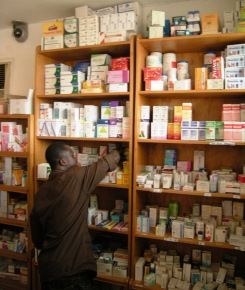
DSCN3873 Pharmacies see many malaria patients, but do they keep malaria records 2Access to high-quality, affordable medicines is a global concern but manifests in distinctly local ways. In Nigeria, patent medicine vendors (PMVs) are a major source of medicines.  Criticism of PMVs focuses on drug quality, dispensing practices, and their lack of formal health care training.

This qualitative investigation approached PMVs as small business people and sought their business perspectives in comparison with views of other small business owners in Igbo-Ora, Nigeria.  This study utilized an iterative approach to data collection among 51 entrepreneurs.

In-depth interviews about participants’ businesses were collected from PMVs (16), Food (7), Clothing (7), Provisions (9), Motor Parts (n7), and others (n5). A codebook containing 27 themes was inductively developed from emergent data and combined into broader themes for interpretation using Atlas.ti v7.1.

Accounts from participants reveal differences between PMVs and other businesses including amount of education necessary to learn the trade, as well as the level of professionalism and cleanliness required to operate successfully. Unlike other groups, PMVs routinely are asked for highly technical information at point of purchase.

PMVs work largely under strong trade associations due to more controls imposed by regulatory agencies. Although selling medicine is a small-scale enterprise, the purveyors of the trade see their work differently from other small business people. Their business model is based on having adequate knowledge about their products and maintaining standards. PMVs can increase human resources for health because they want to improve both their work and business prospects.

Elimination &Health Systems Bill Brieger | 30 Sep 2013

Will we eliminate malaria programs before we eliminate malaria?

DSCN3623 smAs malaria cases dwindle and we approach elimination, will malaria programs be integrated into broader disease control efforts? Integration is all the rage, but what does it mean for disease eradication efforts?

The arguments for and against vertical versus horizontal, siloed versus integrated programming sometimes misses the point when it comes to disease eradication.  Eradication is by nature a time-bound and focused activity.  Without a clear, reasonable target date, eradication will not happen, but disease control will linger until some financial or other event causes us to drop the ball completely and cases start rising again. This might sound familiar to those who were around for the malaria eradication efforts that floundered in the 1960s.

We may have been premature to start talking about malaria eradication a few years ago, but the discussion is needed about the state of malaria programming as pre-elimination and elimination are being reached in many countries. We must begin looking around for the resources for that last push toward eradication.  In the absence of a dedicated malaria eradication effort – a vertical program if you will – will be be able to organize the efforts needed for the final step?

filter use at home 2Let’s draw some lessons from guinea worm.  From the start in the 1980s programs were established that were called National Guinea Worm Eradication Programs, not guinea worm programs or guinea worm control programs, but eradication programs.  A specific date was set – 1995, and in most cases a dedicated team of people went to work on a well defined set of interventions from the national to regional to district to community levels.

Where the guinea worm effort faltered was when countries tried to ‘integrate’ it with other disease control or primary health care services. Work became unfocused and ten or more years were added to what should have been a straight-forward march to elimination in these countries by 1995.  What this meant in Nigeria was that the pace slowed, but at least was continual, and now 18 years after the original target date was finally declared free of the disease. In Ghana, with guinea worm hidden amongst the duties of pluripotent district disease control officers, cases began to rise again.

Already some countries that are in a high level of control and witnessing major drops in incidence and mortality have combined their malaria programs into a broader disease control unit or department.   There are hints that donors may wish to focus more on high burden areas for major scale-up and control.  All partners must be willing to ensure that both the funds/resources as well as the organizational infrastructure (systems) are in place to guarantee elimination in each endemic country.

Human Resources &MIM2013 Bill Brieger | 29 Sep 2013

Human Resources for Malaria

Two major international meetings are coming up in the next two months. One if the Multilateral Initiative for Malaria’s 6th Pan-African Malaria Conference (MIM2013) and the Third Global Forum on Human Resources for Health.  Neither apparently cross-reference the other.  None of the Plenary Sessions or Symposiums at MIM2013 explicitly address the crucial need of appropriate human resources to eliminate malaria, though we are sure it will be woven in to several presentations.

Nigeria CDD performs RDT in Upenekang Community Ibeno LGA Akwa Ibom State 2One of the most prominent focal points for malaria human resources arises from the effort to expand integrated Community Case Management (iCCM). The American Journal of Tropical Medicine and Hygiene features a special supplement launched at its 2012 annual Conference on iCCM.  The most interesting aspect of the iCCM movement is the innovative task shifting that is occurring to bring malaria and other disease solutions to the grassroots through a variety of auxiliary health workers and community volunteers. It has become clear that malaria treatment coverage cannot meet targets  – either the 2010 Roll Back Malaria goal or 80%, let alone the push toward universal coverage – without involving non-formal providers such as volunteer community health workers (CHWs) as well as patent medicine shop staff.

But finding human resources for treatment tasks is only the tip of the iceberg.  A variety of health workers are needed for malaria work in the areas of entomology/vector control, health information systems/surveillance, and laboratory/diagnosis, to name three.

The Global Health Workforce Alliance did issue a report in 2011 that questioned the ability of countries to meet Millennium Development Goal number 6 – reducing the inpact of HIV, TB, Malaria and other endemic diseases. Issues such as the distribution of health workers in a country were raised – especially the challenge of meeting the needs of rural areas where malaria is more common.

Training has a major role to play. When Jhpiego/MCHIP began a 3-year effort with USAID to improve malaria services in Burkina Faso in 2009, they found a need to provide in-service training on malaria for newly graduated nurses and midwives. An examination of the curricula of the various cadres and branches of the National School for Public Health (ENSP) found a paucity of malaria content, especially content that reflected current national malaria guidelines from the Ministry of Health. This led to work with the ENSP to set up a planning committee to update the malaria components of its curricula.

DSCN3798 Ghana smWHO has a variety of training materials on issues and cadres ranging from strengthening malaria laboratory workers, entomology and vector control staff, as well as the basic training of health workers involved in malaria case management.

In addition to issues of health worker number are the issues of retention and performance quality. Researchers in Kenya are undertaking a study that will test whether a pay-for-performance (P4P) will improve malaria case management. Pay incentives might aid retention as well as improve quality of care. We need more such efforts to tackle the coverage gaps in malaria service delivery.  This also means addressing the human resource gaps among malaria researchers in national institutes and universities in endemic countries.

We need to use every forum available to discuss human resources for malaria control, elimination and eradication. The scourge of malaria will linger as long as we lack the quantity and quality of human resources to fight the disease.

« Previous PageNext Page »