Posts or Comments 29 April 2026

Burden &Economics &Equity Bill Brieger | 22 Feb 2014

Rural Health and Malaria, a South Africa Example

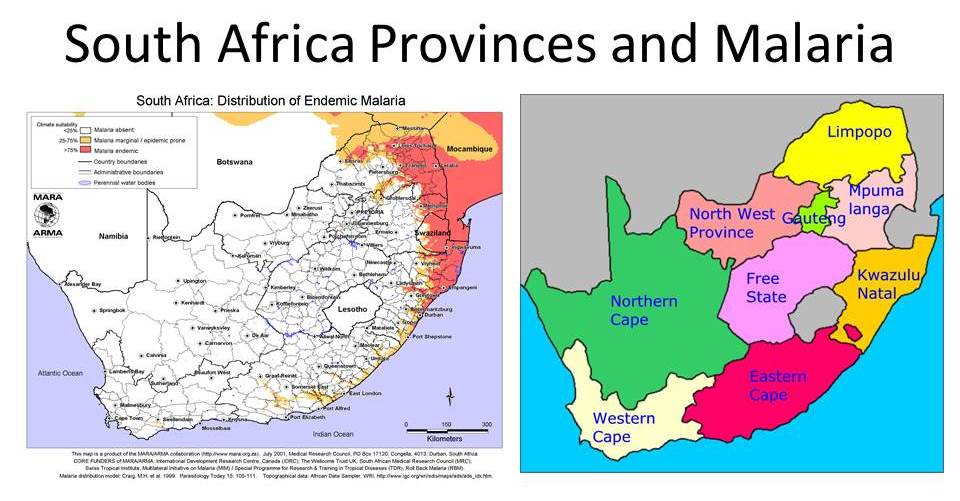
South Africa’s Rural Health Advocacy Project (RHAP) has released a report or fact sheet on rural health in South African provinces. Of interest is the overlap of rural problems and malaria endemicity.  Three Provinces that border Mozambique are also endemic for malaria – from north to south: Limpopo, Mpumalanga and Kwa Zulu Natal (KZN).

South Africa Provinces and MalariaSeven of the 10 poorest districts in the country fall in two of these endemic provinces, Limpopo and KZN. The two districts with the highest HIV prevalence are in Mpumalanga and KZN, and those two provinces themselves have the highest HIV prevalence among all the provinces.

The fact sheet also reports that, “Poor rural households in a Limpopo District spend up to 80% of monthly income on health expenditure, travel costs being a significant contributor.”

Limpopo and Mpumalanga are among the four provinces with the lowest distribution (or highest shortages) of human resources for health. Concerning maternal mortality, the fact sheet notes that, “Each year an estimated 4300 mothers die. KZN most affected.”

While one cannot say the exact role malaria plays in rural poverty and rural health disparities, it is important to note that interventions to control and eliminate the disease must have a strong rural focus. Hopefully there will be economic benefits to such interventions.

Funding &Partnership Bill Brieger | 20 Feb 2014

Is donor assistance a right? … wrong

In response to donor criticism of human rights issues in one malaria endemic country and because of subsequent possible links with future donor cooperation, a prominent government official of that country was quoted as saying, “We don’t like to blackmail others. It’s very dishonest, very irresponsible and unfriendly of persons to attach behavior of another community to their sharing resources.”  (Reuters) This complaint ironically comes from a country that is on record as having squandered Global Fund resources.

Are donors under obligation to ‘share’ their resources with anyone regardless of their ‘behavior’, not just in the field of human rights, but also financial accountability? No country is forced to share its resources, and while all could do more, remarks like those above from recipients add fuel to the fire of those who would be happy to curtail foreign aid all together.

Burkina Faso contributes to malaria drug supplies

Burkina Faso contributes to malaria drug supplies

It is unfortunate that many countries are highly dependent on donors to solve problems like HIV, malaria TB, NTDs and NCDs for the foreseeable future. But a solution to the perceived manipulation by donors would of course be a greater commitment of domestic resources to solve these problems.

One country that is seeking a good balance is Burkina Faso. While the country does receive major support from the Global Fund and the US President’s Malaria Initiative for its fight against malaria, Burkina Faso is stepping up to play its own part.  Government has in recent years steadily increased its financial support to buy malaria commodities from $2 million to over $4 million annually in the past few years.

Relative to donor amounts this contribution may seem small, but the point is the willingness of the government to step up and help its own people. These additional government funds have played a crucial role in filling medicine and commodity gaps that naturally occur when donor supply schedules do not match needs at a given time.

The fight against malaria will be won by having more action oriented governments like Burkina Faso and fewer complainers and embezzlers.

Learning/Training &Malaria in Pregnancy &Partnership &Strategy Bill Brieger | 05 Feb 2014

Jhpiego at 40 – commitment to malaria prevention and control in Burkina Faso

Jhpiego 40th Anniversary celebration in Ouagadougou with First Lady, US Ambassador, Minister for Health and Jhpiego's President and Vice President

Jhpiego 40th Anniversary celebration in Ouagadougou with First Lady, US Ambassador, Minister for Health and Jhpiego’s President and Vice President

Jhpiego was founded in 1973 to provide technical assistance to countries where the risk of maternal mortality and morbidity was quite high.  While focusing on local capacity building from the start, Jhpiego’s model for technical assistance has evolved.  Burkina Faso first benefitted in 1983 by having health staff attend intensive training at Johns Hopkins Hospital.  Subsequently Jhpiego’s work moved to the field, and some of the early trainees became staff on the ground.

Jhpiego established an office in Ouagadougou in 1996, and one of the earliest projects focused on malaria in pregnancy as part of USAID’s flagship program “Maternal and Neonatal Health” (MNH).  It was during that time that Jhpiego collaborated with partners like CDC to do some of the early testing of the intermittent preventive treatment of malaria in pregnancy (IPTp) in West Africa.  The results of this life-saving intervention were published in the American Journal of Tropical Medicine and Hygiene.

Jhpiego continued to provide technical assistance on malaria in pregnancy interventions and capacity building to the Ministry of Health (MOH) in Burkina Faso through the MNH project and into its successor, USAID’s ACCESS project. Jhpiego worked with partners to update malaria guidelines, training materials, supervisory tools and job aids during this period.

Cover Page Directives finalisées du 23 5 2013In 2009 USAID presented the Maternal and Child Health Integrated Project (MCHIP) with the opportunity to carry out an integrated package of malaria care and prevention strengthening with the MOH and particularly the National Malaria Control Program (NMCP). Over a period of three years Jhpiego, the lead organization in MCHIP, working with together with partners from the NMCP and MOH, was able to accomplish among others the following:

  • Updating Malaria policy and guidelines
  • Updating Malaria supervisory tools and training of supervisors
  • Updating In-service training materials on malaria and training of health facility staff
  • Developing a Strategic communications plan and strategy for malaria
  • Forming of curriculum update committee on malaria at national training schools for primary health staff
  • Training of US Peace Corps Volunteers to support malaria activities in their communities
  • Building the capacity and organizational strengthening for the NMCP itself
  • Conducting a situation analysis of rapid diagnostic test acceptance and use
  • Undertaking a health systems analysis of the strengths and bottlenecks of malaria program implementation in Burkina Faso

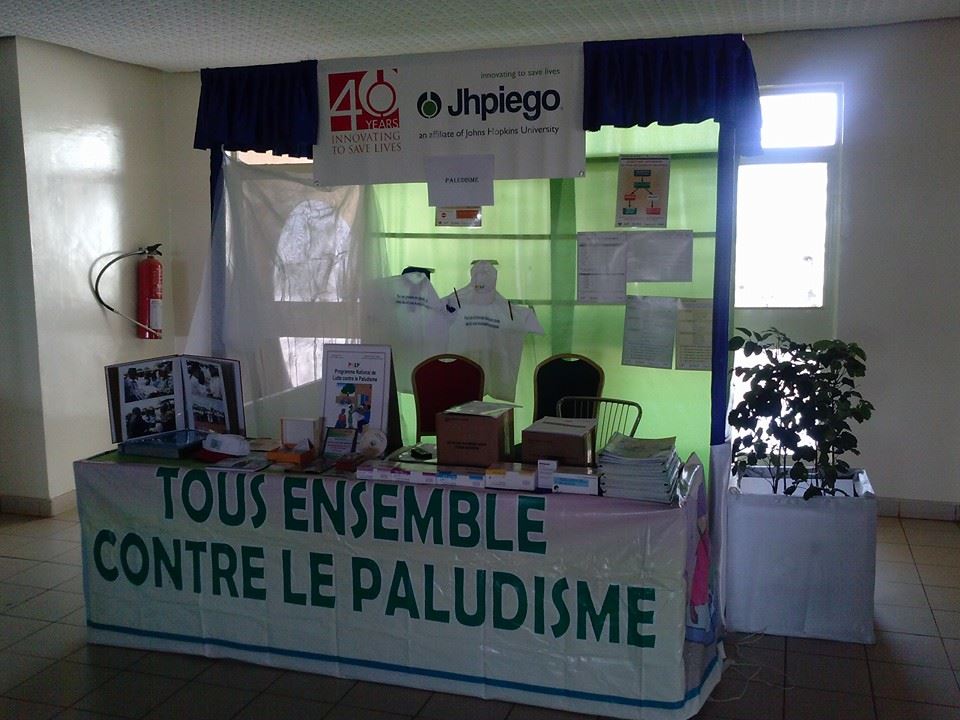
Jhpiego 40th Malaria BoothLast week, the Burkina Faso office of Jhpiego hosted the organization’s African Malaria Technical Update Workshop with staff from 15 countries participating. Today Jhpiego is taking its 40th Anniversary celebrations to Ouagadougou.  Jhpiego will express appreciation to local partners in the fight against malaria and threats to maternal and child health.

Jhpiego has been committed on the ground in Burkina Faso to building national capacity for controlling malaria specifically for over 15 years. The recent award by USAID of its bilateral program “Improving Malaria Care” to Jhpiego last October cements Jhpiego’s commitment to the country and to reducing malaria for another five years.

Cancer &NCDs &Treatment Bill Brieger | 02 Feb 2014

Malaria and Cancer: World Cancer Day on 4th February

wcd-badgeAs World Cancer Day approaches it is worth considering the connections between communicable and non-communicable diseases.  Below are some brief extracts from recent studies that show relationships between malaria and cancers when it comes to diagnostics, drug research, treatment, prevention and epidemiology.

PLoS One has a new article entitled: “Sloth Hair as a Novel Source of Fungi with Potent Anti-Parasitic, Anti-Cancer and Anti-Bacterial Bioactivity.” The authors found that, “Seventy-four isolates were cultivated in liquid broth and crude extracts were tested for bioactivity in vitro. We found a broad range of activities against strains of the parasites that cause malaria (Plasmodium falciparum) and Chagas disease (Trypanosoma cruzi), and against the human breast cancer cell line MCF-7.”

The Nature Group’s Scientific Reports sheds some more light on links between malaria and Burkitts lymphoma in the article “Relationship between Plasmodium falciparum malaria prevalence, genetic diversity and endemic Burkitt lymphoma in Malawi”. The researchers report that, “Endemic Burkitt lymphoma (eBL) has been linked to Plasmodium falciparum (Pf) malaria infection, but the contribution of infection with multiple Pf genotypes is uncertain… Further work is needed to evaluate the possible role of Pf genetic diversity in the pathogenesis of endemic BL.”

Recently KH Khan drew our attention to the fact that, “DNA vaccines against cancer, tuberculosis, Edwardsiella tarda, HIV, anthrax, influenza, malaria, dengue, typhoid and other diseases,” have been explored. It was noted that “These vaccines function by generating the desired antigen inside the cells, with the advantage that this may facilitate presentation through the major histocompatibility complex.”

DSCN8367Hematologists must also deal with a variety of communicable and non-communicable diseases that affect red blood cells. According to Fedovsov and colleagues, “Hematologic disorders arising from infectious diseases, hereditary factors and environmental influences can lead to, and can be influenced by, significant changes in the shape, mechanical and physical properties of red blood cells (RBCs), and the biorheology of blood flow,” as well as broad spectrum of hematologic disorders including certain types of cancer.

Again in the area of drug research, Hooft van Huijsduijnen and colleagues explore the “Anticancer properties of distinct antimalarial drug classes.” Within these drug classes the researcher observed that “Several of the antimalarials tested in this study have well-established and excellent safety profiles with a plasma exposure, when conservatively used in malaria, that is well above the IC50s that we identified in this study. Given their unique mode of action and potential for unique synergies with established anticancer drugs, our results provide a strong basis to further explore the potential application of these compounds in cancer in pre-clinical or/and clinical settings.”

We need to maintain a broader vision of human health past the 2015 Millennium Development Goals and neglect neither communicable nor non-communicable diseases, but see synergies and complementarities in working on both together.

Morbidity &Treatment Bill Brieger | 29 Jan 2014

Ronald McDonald House Charities Awards Jhpiego Grant to Reach Thousands of Children with Lifesaving Malaria Services

masthead JhpiegoFOR IMMEDIATE RELEASE
Contact: 410.537.1829; www.jhpiego.org

Baltimore, Md. (January 28)—Jhpiego, an affiliate of Johns Hopkins University, received a $150,000 grant from Ronald McDonald House Charities (RMHC) to strengthen and expand malaria prevention and treatment services to vulnerable pregnant women and children in Chad.

DSCN0540aJhpiego, a global health non-profit working in more than 50 countries, was among nine organizations selected by the global office of RMHC to improve the skills of health care workers through innovative approaches that directly benefit the health and welfare of vulnerable children around the world. The RMHC grant will build on Jhpiego’s current work in Chad to reduce deaths from malaria, the leading cause of death of children under five in the central African country.

“Jhpiego is thrilled to begin this new relationship with RMHC to ensure that children receive quality health care services in Chad and survive,’’ said Leslie Mancuso, President and CEO of Jhpiego. “More children under five in Chad die from malaria than from any other cause. In cooperation with the government, we will build the capacity of community health volunteers to educate families on malaria prevention and promote home use of insecticide-treated nets. These volunteers who go door to door are often the first line of care in many countries, providing basic health messages and connecting families to health facilities.”

DSCN0492aThe goal of the project funded by RMHC is to allow more children under five and pregnant women to receive much-needed services by training 10 Master Trainers, who will then educate and train 100 community health volunteers in malaria prevention activities. This approach will build a sustainable method for serving pregnant women and children in their communities. Jhpiego will target 109,571 children under five and 25,466 pregnant women who live in malaria-endemic districts in the East Logone region of Chad.

Through its Global Grants and matching grants program to local U.S. RMHC Chapters, the Charity has awarded nearly $97 million in grants in the last 11 years. “Child mortality rates around the globe continue to be alarming. There is a need to invest in resources and training to create lasting change,” said David C. Herman, MD, MSMM, President and CEO, Vidant Health, and RMHC Board of Trustees member. “For 40 years, RMHC has been part of the solution in helping to eliminate some of the barriers that make it more difficult for families and children to get the health care they need.”

For more information about Jhpiego and its lifesaving mission, contact Melody McCoy, 410-537-1829 or melody.mccoy@jhpigeo.org.

About Jhpiego: Jhpiego (pronounced “ja-pie-go”) is an international, non-profit health organization affiliated with Johns Hopkins University. For 40 years, Jhpiego has empowered front-line health workers by designing and implementing effective, low-cost, hands-on solutions to strengthen the delivery of health care services for women and their families. For more information, go to http://www.jhpiego.org.

About Ronald McDonald House Charities: Ronald McDonald House Charities® (RMHC®), a non-profit, 501 (c) (3) corporation, creates, finds and supports programs that directly improve the health and well-being of children. Through its global network of local Chapters in 58 countries and regions, its three core programs, the Ronald McDonald House®, Ronald McDonald Family Room® and Ronald McDonald Care Mobile®, and millions of dollars in grants to support children’s programs worldwide, RMHC provides stability and resources to families so they can get and keep their children healthy and happy. All RMHC-operated and -supported programs provide access to quality health care and give children and families the time they need together to heal faster and cope better. For more information, visit www.rmhc.org, follow us on Twitter (@RMHC) or like us on Facebook (Facebook.com/RMHC Global).

The following trademarks used herein are owned by McDonald’s Corporation and its affiliates: Ronald McDonald House Charities, Ronald McDonald House Charities Logo, RMHC, Ronald McDonald House, Ronald McDonald Family Room and Ronald McDonald Care Mobile.

Diagnosis &Monitoring &Surveillance Bill Brieger | 21 Jan 2014

World Malaria Report 2013: Surveillance and Monitoring, Getting to the Heart of the Matter

Although “Malaria surveillance, monitoring and evaluation” is the seventh of eight chapters in the 2013 World Malaria Report (WMR), it is in fact the heart of the matter.  Progress on goals, finance, vector control, preventive therapies, diagnosis and treatment and of course impact (chapters 2-6 and 8) could not be produced without the documentation processes discussed in Chapter Seven. So what does WMR 2013 tell us about the status of malaria surveillance?

DSCN1496The global press has been taken by World Health Organization estimates that deaths from malaria world-wide have reduced by fifty percent since 2000.[i] These claims have been made despite the note in WMR 2013 that, “In 2012, in 62 countries of 103 that had ongoing malaria transmission in 2000, reporting was considered to be sufficiently consistent to make a reliable judgment about malaria trends for 2000–2012. In the 41 remaining countries, which account for 80% of estimated cases, it is not possible to reliably assess malaria trends using the data submitted to WHO. Information systems are weakest, and the challenges for strengthening systems are greatest, where the malaria burden is greatest.”[ii]

WHO explains that, “Improved surveillance for malaria cases and deaths will help ministries to determine which areas or population groups are most affected and help to target resources to communities most in need.”  WHO suggests that the design of malaria surveillance systems focuses on two fundamental factors. First, the level of malaria transmission should be ascertained, and the resources available to conduct surveillance must be made available. WHO has released two manuals to strengthen malaria surveillance depending on whether the country is high burden and still at the level of “Malaria Control,”[iii] or the country is approaching “Malaria Elimination.”[iv]

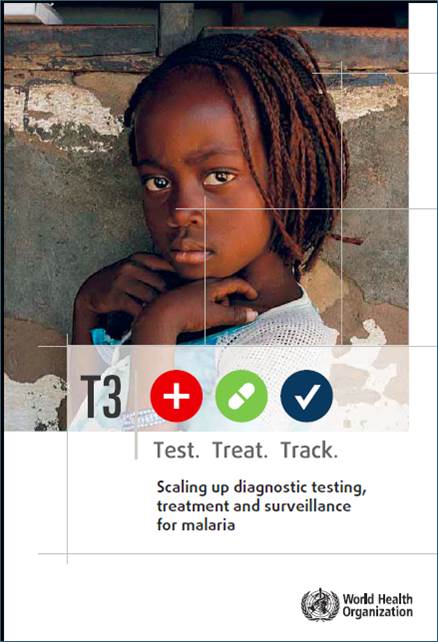
3T BrocheureThe World Health Organization has issued a series of documents focusing on “Test. Treat. Track.” or ‘3T’.  In short these documents support malaria-endemic countries in their efforts to achieve universal coverage with 1) diagnostic testing, 2) antimalarial treatment, and 3) strengthening their malaria surveillance systems to track the disease.[v]

WHO notes that in elimination settings, surveillance systems should seek to identify and immediately provide notification of all malaria infections, whether they are symptomatic or not. A summary of WHO’s recommendations for the “Track” or surveillance aspect of 3T follow:

  1. Individual cases should be registered at health facility level. This allows for the recording of suspected cases, diagnostic test results, and treatments administered
  2. In the malaria control phase, countries should report suspected, presumed and confirmed cases separately, and summarize aggregate data on cases and deaths on a monthly basis
  3. Countries in elimination phase should undertake a full investigation of each malaria case.

Some country examples of surveillance efforts in the move toward malaria elimination will be featured in the upcoming January 2014 issue of Africa Health. Watch for it at: http://www.africa-health.com/


[i] Pizzi M. WHO: Malaria deaths of young children cut by half, but gains ‘fragile’. Aljazeera America. December 11, 2013. http://america.aljazeera.com/articles/2013/12/11/who-malaria-battlehalfwaywon.html

[ii] WHO GLOBAL MALARIA PROGRAMME. World Malaria Report: 2013. World Health Organization, 20 Avenue Appia, 1211 Geneva 27, Switzerland, 2013. http://www.who.int/malaria/publications/world_malaria_report_2013/en/index.html

[iii] World Health Organization. Disease surveillance for malaria control. World Health Organization, Geneva, 2012.

[iv] World Health Organization. Disease surveillance for malaria elimination: an operational manual. World Health Organization, Geneva, 2012.

[v] World Health Organization. Test. Treat. Track. Scaling up diagnostic testing, treatment and surveillance for malaria. World Health Organization, Geneva, 2012.

Health Systems Bill Brieger | 14 Jan 2014

Launching of Improved Malaria Care Project, Burkina Faso

Guest Posting from Jhpiego.

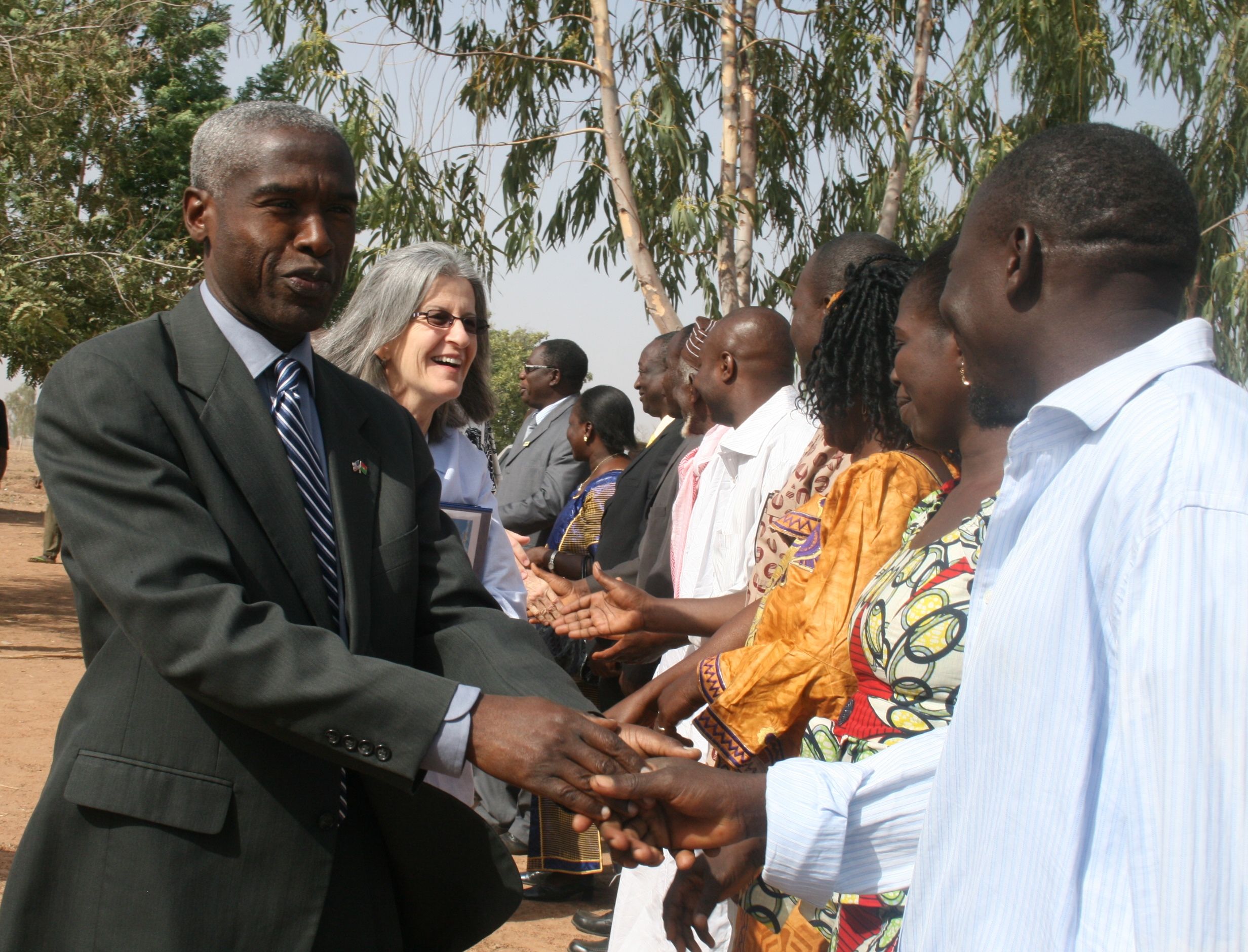
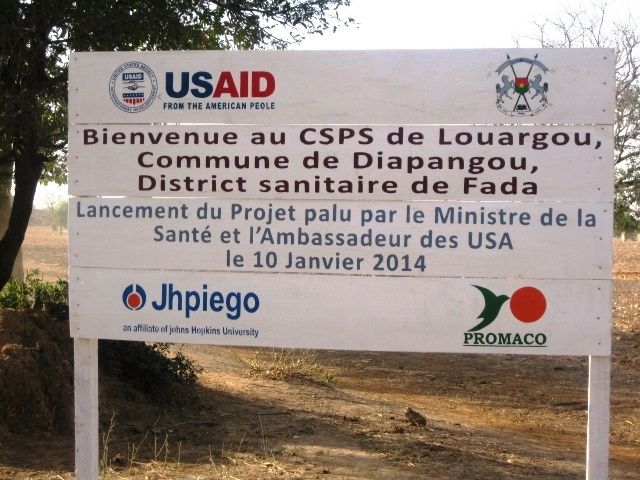
Tulinabo Mushingi, the US Ambassador to Burkina Faso, was on hand in Louargou, Burkina Faso this week to launch USAID’s $15 million award to reduce by half malaria deaths in the West African country. As he noted, the 5-year project  is another example of the Obama administration’s commitment to prevent children in Africa from dying of preventable causes.

US Ambassador & wife greeting the Louargou communityMushingi, a veteran foreign service officer who served throughout Africa before being named ambassador, underscored the importance of the Improving Malaria Care project to the future of Burkina Faso:  “Investing in the fight against malaria will have an important benefit for child survival. Healthy children are at the heart of the prosperity of each nation and its sustainable development. Healthy children are more likely to live longer, stay in school, become active members of society and contribute to the development of Burkina Faso.”

Malaria is the leading cause of health consultation, hospitalization and death in health facilities across Burkina Faso. Over 4 million cases of malaria were reported in 2011, and approximately 70 percent of children have been hospitalized for the disease by the time they turn five.

IMG_8923The Improving Malaria Care project is a collaboration of the Ministry of Health, Jhpiego and PROMACO (le Programme de Marketing Social et de Communication pour la Santé). The partners will focus on improving the quality of prevention, diagnosis and treatment services in 100 percent of public health facilities with the aim of keeping the most vulnerable — pregnant women and children – alive and healthy.

Advocacy &Communication &Community &Health Systems Bill Brieger | 03 Jan 2014

Behavior Change for Malaria: Are We Focusing on the Right ‘Targets’

Two articles caught my attention this morning. One reviewed the merits of improved social and behavior change communication (BCC) for the evolving malaria landscape. The other addressed the damage institutional corruption is doing in Africa. And yes, there is a connection.

When I was trained as a community or public health educator in the MPH program at UNC Chapel Hill, the term BCC had not yet been coined. We were clearly focused on human behavior and health.  What was especially interesting about the emphasis of that program was the need to cast a wide net on the human beings whose behaviors influence health.

DSCN7742 CHW flipchart

BCC of individuals and communities may not be enough

While the authors in Malaria Journal state that, “The purpose of this commentary is to highlight the benefits and value for money that BCC brings to all aspects of malaria control, and to discuss areas of operations research needed as transmission dynamics change,” a closer look shows that the behaviors of interest are those of individuals and communities who do not consistently use bed nets, delay in seeking effective treatment, and do not take advantage of the the distribution of intermittent preventive therapy (IPTp) during pregnancy. The shortfalls in the behavior of other humans is lies in not “fully explaining” these interventions to community members.

The health education (behavior change, communications, etc. etc.) program at Chapel Hill taught us that a comprehensive intervention included not only means and media for reaching the community, but also processes to train health workers to perform more effectively, to advocate with policy makers to adopt and fund health programs, and intervene in the work environment using organizational change strategies to ensure programs actually reached people whose adoption of our interventions (nets, medicines) could improve their health.

At UNC we tried to focus change on all humans in the process from health staff to policy makers to ensure that we would not be blaming the community for failing to adopt programs that were not made appropriately accessible and available to them. We did not call it a systems approach then, but clearly it was.

This brings me back to the article on corruption. Let’s compare these two quotes from the IRIN article …

  • The region accounts for 11 percent of the world’s population, but carries 24 percent of the global disease burden. It also bears a heavy burden of HIV/AIDS, tuberculosis and malaria but lacks the resources to provide even basic health services.
  • Poor public services in many West African countries, with already dire human development indicators, are under constant pressure from pervasive corruption. Observers say graft is corroding proper governance and causing growing numbers of people to sink into poverty.

Illicit cash transfers out of countries and bribery of civil servants, including health workers, are manifestations of the same problem at different ends of the spectrum resulting in less access to basic services and health commodities.  Continued national Demographic and Health Surveys show that well beyond 2010 when the original Roll Back Malaria Partnership coverage targets of 80% were supposed to have been achieved, we see few malaria endemic countries have achieved the basics, and some have regressed. Everyone is bemoaning the lack of adequate international funding for malaria (and HIV and TB and NTDs), but what has happened with the money already spent?

Without a systems approach to health behavior and efforts by development partners to hold all those involved accountable, we cannot expect that the behavior of individuals and communities will win the war against malaria.

Eradication &Health Systems Bill Brieger | 21 Dec 2013

Remembering a Pioneer in International Health and Health Systems: Tim Baker

Honoring people in their lifetime is important, and fortunately Prof. Timothy Baker and his wife Prof Sue Baker were jointly recognized for their many years of service, not only to the Johns Hopkins University Bloomberg School of Public Health, but generally to the fields of global health systems and management.  A portrait of the couple was presented and hangs at the School to remind all of their contributions. Unfortunately Tim Baker left us earlier this week.

DSCN1653While such departures are not often surprising when people have passed their three score and ten, Tim Baker at 88 was still active in teaching, research and service.  In fact we served together on the School’s MPH Admissions Committee where Tim Baker brought his wealth of experience and compassion for training students to bear at each meeting.  From the student’s point of view, I can saw that even though Tim Baker was not my adviser in during my DrPH at JHU (1989-91), he always looked after my academic progress and was the one to nominate me for Delta Omega (Public Health Honor Society) membership.

On the occasion of the portrait unveiling in 2011, the school shared these brief notes on Dr. Baker’s career: “

Timothy Baker, MD, MPH, a professor in International Health, joined the School as a faculty member in the Department of Public Health Administration and as an assistant dean. In 1961, he founded the School’s Division of International Health and served as acting director. Over the next five years, he was instrumental in building the Division into the Department of International Health. Baker’s fundamental contributions to the Department include faculty recruitment, curriculum development, student mentoring and fundraising. He was instrumental in establishing one of the School’s first endowed professorships—the Edgar Berman Professorship in International Health.

“In more than 50 years as a researcher and consultant, Baker—who holds joint appointments in Health Policy and Management and Environmental Health Sciences—worked in over 40 countries, focusing on health services and assessment of disease and injury burden. He also held leadership positions in several international public health agencies.”

Dr Baker touched many lives. Prof. Peter Winch, Director of International Health’s Social and Behavioral Interventions Program expressed the following in his e-mail to colleagues:

Tim Baker passed away today at the age of 88. I first met him in 1987 as an MPH student when he lectured in Introduction to International Health. It is truly impossible to summarize all of his contributions to the Department of International Health, and to the field of Global Health. This is a quick of superficial overview of his contributions. It is always difficult to know who originated any given idea. But if Tim was not the first one to push the elevator button, he was definitely at the ground floor before the elevator went up. So here is my partial list of his conceptual contributions. This is my paraphrasing of his thinking. He usually expressed such ideas in a more circuitous manner, or did not make a statement at all but rather demonstrated the idea through his actions.

  1. Public health professionals from low and middle-income countries need training not only on disease prevention and control, but also the design of health systems, management and supervision, leadership and advocacy.
  2. A central task of global health spending by the US government in low and middle-income countries needs to be capacity-building of local institutions and health professionals. If we don’t do good capacity building, the investments will not yield any lasting results.
  3. Health systems in low and middle-income countries need to address not only infectious causes of morbidity and mortality, but also occupational health, environmental health, injuries and chronic disease.
  4. Health workforce development is a complex matter, and warrants high-quality planning, evaluation and research.
  5. Our School of Public Health benefits from a dynamic, multi-disciplinary, problem-based Department of International Health. Such a Department is an asset to other more disciplinary departments, rather than a threat or a problem.
  6. Finally: There are no problem students. Every student is an asset. If the faculty identify a student as a problem, there is a good chance the problem lies with the faculty.

Likewise Prof. Adnan Hyder, Director of the Health Systems Program with which Dr. Baker was most recently associated expressed these thoughts:

It is with great sadness that I email you to announce that our beloved Dr. Tim Baker passed away yesterday. This is an incredible loss for our program, the department, and the school to start; but really the entire global health community. As the founder of our department, he was a powerhouse of knowledge, inquiry, and persistence; as a teacher and mentor he was a giant in the field; and as a proponent of the poor and vulnerable, he hid a warm and glowing heart under his witty exterior. So many of us were fortunate to be his students, colleaugues and friends; and how lucky we were to receive his wisdom, insight and sharp advice. Not a man to appreciate praise, he always cut it short; not one to stand pomp and ceremony he often avoided it; and not one to accept failure he believed in the power of humanity to succeed. We will dearly miss him, his humor, his flowers (for ladies only) and his raisin bread – and always remember that he asked us to work harder, and better than anyone else in the world for the cause of social justice and international health.

Let us make sure we never forget his legacy.

Although tropical diseases per se were not Tim Baker’s primary focus, he was concerned about the health systems implications of control programs. In 1962 as the first global effort to eradicate malaria was underway, Tim Baker made the following observations in the American Journal of Public Health:

Malaria eradication “contributes to our own protection. Malaria can be reintroduced into the United States, as several local epidemics have conclusively proved. Just as in the case of yellow fever, where our shores were not safe from imported epidemics until the disease had been controlled in the major ports throughout the world, so it is with
malaria; the world is not safe from the threat of disastrous epidemics until malaria has been eradicated everywhere.” Dr Baker was well aware of challenges that still face us today when he noted that, “widespread development of insecticide resistance lends overwhelming urgency to the completion of eradication.”

He further explained that, “health workers are presented with the opportunity of developing and proving a new method of attack on disease that has tremendous economic import.” The economic impact of malaria remains today one of the driving forces behind efforts to eliminate the disease.

More recently (2007), Dr Baker demonstrated the importance of maintaining a long term perspective. Concerning India’s efforts at controlling malaria from its first through 10th five-year plan, Dr Baker drew on 50+ years of experience to comment that, “The drop from a million to a thousand deaths underscores the value of the malaria program.” It may be another 50 years until malaria is truly eradicated, but if we keep a critical long term view as exemplified by Dr Baker we will be alert to both the challenges and opportunities to bring malaria to an end.

Community Bill Brieger | 17 Dec 2013

Community-Based versus Community-Directed Approaches

Guest Blog Posting: Meike Schleiff is a DrPH Candidate in International Health Systems at JHSPH. She has a background in agriculture and natural resources and holds a Master of Science in Public Health (MSPH) from JHSPH as well. Meike is the Founder and Executive Director of The GROW Project (www.thegrowproject.org) based in West Virginia and working in communities in and around Cap Haitien, Haiti.

The Declaration of Alma Ata (WHO, 1978) sets out a vision for equitable, multi-sectoral, and locally relevant, effective, and affordable health care in holistic terms. The role the community is central, and the local health workers and primary level of contact with the health system create the “central function and main focus” on which other development and levels of care can be built. Ken Newell wrote eloquently in Health by the People (1975) about the importance of “self-sufficiency” of communities to the greatest extent feasible as being the most cost-effective, appropriate, and immediate option to further health.

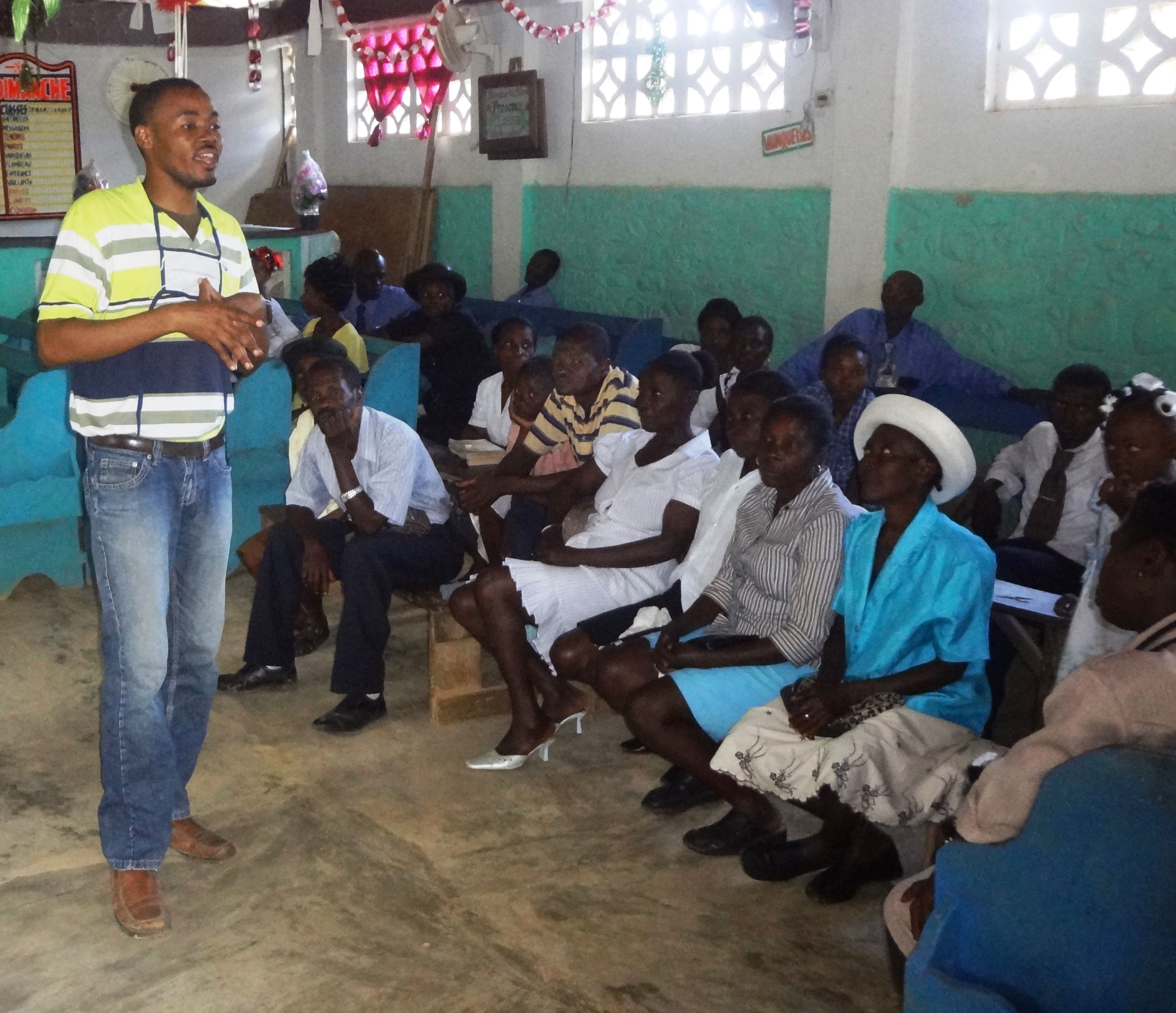
Mac Henri, a young local leader, heads a cholera information session in the Baptist Church at Soufriere, Haiti.

Mac Henri, a young local leader, heads a cholera information session in the Baptist Church at Soufriere, Haiti.

In 2009, Paul Freeman, Henry Perry and others conducted a Review of Community-Based Primary health Care (CBPHC) approaches to achieving the MDG for child health. Although many projects in the review effectively incorporated a community-based component and delivered Primary Health Care (PHC) interventions, the level of involvement and leadership of the community varied and was difficult to ascertain and may not have been the main reason for conducting the intervention outside of a facility. The findings of the review (which are ongoing) show the difficulty of finding evidence of empowerment and leadership given to communities. The projects seem to have overall positive affects, but there a wide range of levels of engagement and community roles.

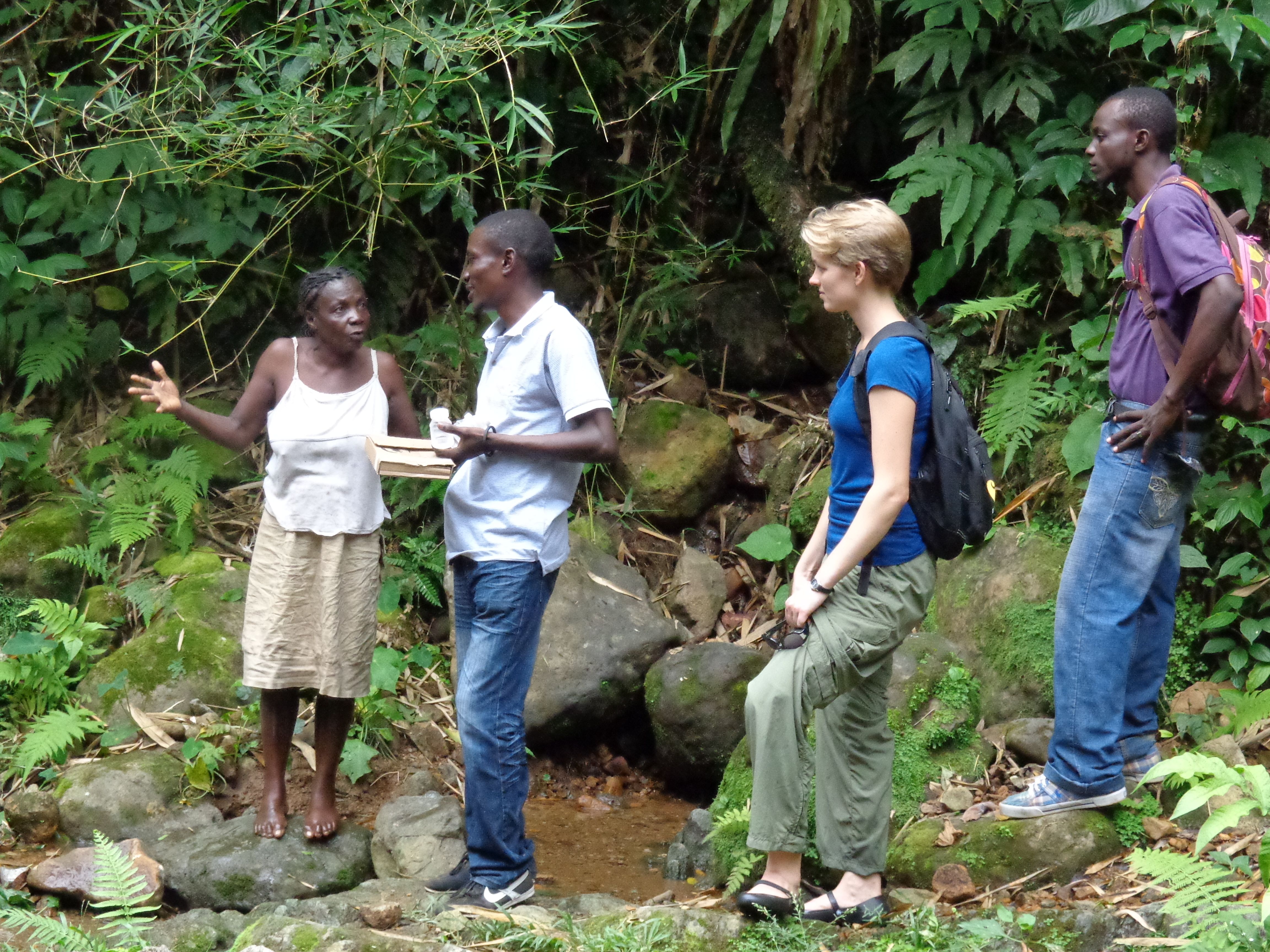
A local woman explains to Meike and a Ministry of Health representative where the different drinking water sources (mostly springs and the river) for her neighborhood are. She is helping us decide on the best location for a community water system that will protect and treat a water system against cholera and other water-borne diseases.

A local woman explains to Meike and a Ministry of Health representative where the different drinking water sources (mostly springs and the river) for her neighborhood are. She is helping us decide on the best location for a community water system that will protect and treat a water system against cholera and other water-borne diseases.

Several publications from Africa use language of Community-Directed Initiatives (CDIs) as a model built on PHC principles in order to deliver health interventions in communities. In the CDI model, communities are the driving force of planning and implementing the interventions, and gain a sense of ownership and motivation far beyond financial gains that help ensure sustainability (The CDI Study Group, 2010). This model has been used effectively in Nigeria, Cameroon and Uganda (Ajiyi et al, 2013 & The CDI Study Group, 2010).

In my experience, what is called community-based versus community-directed in the literature can be difficult to differentiate. However, as Dr. Carl Taylor aptly pointed out, empowerment—and I would venture to include leadership and true initiative by communities—can easily be recognized because “you know it when you see it”. When a community feels heard and is effectively engaged, a process to fulfill the original vision of PHC from Alma Ata is possible.

To me, the central argument that spans both CBPHC and CDI is that building capacity and leadership are essential. This can be done within local facilities as well as in people’s homes. Conversely, so-called community projects can still be very much driven by outside agendas and voices. Volunteers, resources, and data should be accountable and shared first with the community and secondly with supervisors. Both are important, but too often in Public Health the latter is only direction of knowledge-sharing to which funds, time, and patience are allocated.

To conclude, terminology can easily become blurred and can be used for a variety of different levels of engagement, leadership, and capacity-building for communities. The importance to me is whether the community has a voice and some level of leadership, control, and responsibility of the destiny of their health and well-being.

————————

The Community Council of Soufriere, Haiti meets along with some spectators to problem-solve and discuss the most important priorities for health--beyond cholera--in their community. The Council includes a Ministry representative and the local judge, but is mostly composed of religious and educational leaders, the local Agent Sante (community health workers), and the nurses who staff the cholera treatment center.

The Community Council of Soufriere, Haiti meets along with some spectators to problem-solve and discuss the most important priorities for health–beyond cholera–in their community. The Council includes a Ministry representative and the local judge, but is mostly composed of religious and educational leaders, the local Agent Sante (community health workers), and the nurses who staff the cholera treatment center.

References: Ajayi, I., Jegede, A., Falade, C., Sommerfeld, J. (2013). Assessing Resources for Implementing A Community Directed Intervention (CDI) Strategy for Providing Multiple Health Interventions in Urban Communities in Southwestern Nigeria: A Qualitative Study. Infectious Diseases of Poverty, 2:25. (http://www.ncbi.nlm.nih.gov/pubmed/24156481)

Freeman, P., Perry, H. B.,, Gupta, S.K., Rassekh, B. (2009). Accelerating Progress in Achieving  the Millennium development Goal for Children Through Community-Based Approaches. Global Public Health: An International Journal for Research, Policy and Practice, 7:4, 400-419. (http://www.ncbi.nlm.nih.gov/pubmed/19890758)

Newell, K. (1975). Health by The People. World Health Organization, Geneva, Switzerland.

The CDI Study Group. (2010). Community-Directed Interventions Against Health Problems in Africa: Results of a Multi-Country Study. Bulletin of the World Health Organization. 88:509-518. (http://www.who.int/bulletin/volumes/88/7/09-069203/en/)

WHO. (1978). Declaration of Alma Ataz: International Conference on Primary Health Care, Alma-Ata, USSR, 6-12 September, 1978.
« Previous PageNext Page »