Posts or Comments 26 April 2026

Nigeria &NTDs &Schistosomiasis Bill Brieger | 04 Sep 2020

Efforts to Eliminate Schistosomiasis in Nigeria, A Multifaceted Approach

As part of the activities in the course Social and Behavioral Foundations of Primary Health Care, class members write a blog on a current health issue. Amr Marawan has shared the context of schistosomiasis control in Nigeria on the class blog. His writing is reposted below and can also be read along with those of his classmates in the SBFPHC Blog site.

Schistosomiasis was described in papyrus papers thousands of years ago by ancient Egyptians. Then it was re-described by Theodore Bilharz, a pioneer parasitologist, 150 years ago in Cairo, Egypt. Schistosomiasis is among a group of neglected tropical diseases hitting sub-Saharan Africa. There are more than 25 million individuals infected and more than 100 million at risk in Nigeria. Among the different types of schistosomiasis, Schistosoma Haematobium affects the urogenital system causing blood in the urine and other symptoms and predisposes to urinary cancer.

photo source: http://www.bio.davidson.edu/people/midorcas/GISclass/GISwebsites/grayson/Schistosomiasis.htm

Despite the global efforts over the past 50 years, we only achieved limited success in Nigeria. Most of the campaigns designed used Praziquantel for prevention and treatment, as it has shown great success in multiple countries. Unlike other previously endemic states, the use of chemotherapy was not sufficient to address this major problem in Nigeria due to several limitations. In 2012. The World Health Organization (WHO) and World Health Assembly (WHA) adopted a multifaceted plan to eradicate schistosomiasis. The plan aims at strengthening the local health systems, using chemotherapy, appropriate sanitation, and water systems, as well as promoting hygiene education and snail control. There will be multiple designs for this approach to address the different challenges in the different states.

In order to succeed in this battle, all the stakeholders should cooperate and understand their role. The Federal ministry of health in Nigeria should communicate and supervise the local communities closely to ensure that there is no waste of resources. The pharmaceutical companies play a fundamental role by supplying millions of praziquantel pills with the help of non-governmental organizations (such as the Carter Center). The schools and religious leaders should educate the citizens about this disease and the role of both chemotherapy and sanitation to lead a healthy and productive life. The local community leaders are responsible for maintaining the momentum to achieve the utmost benefit for their people in spite of the conflicting perception for this campaign.

Six years after the WHA declaration, there was a substantial success demonstrated by treating approximately 75 % of school aged children. There is a new road map issued by the WHO for the tropical diseases for 2021-2030 to address the gaps and finish the incomplete mission.

 

Coordination &COVID-19 &Ebola &Microscopy &Mosquitoes &Vector Control Bill Brieger | 04 Sep 2020

Malaria News Today 2020-09-04

Today, we are sharing more updates from newsletters and journal abstracts found online. Issues include citizens in Rwanda trapping mosquitoes, the need for standardizing microscopy, more information on Uganda’s Malaria fund, the challenge of containing three epidemics at once, an increase in cases in Namibia and genetic diversity of the parasite in Comoros. Click on links to read details.

Citizen science shows great potential to reduce malaria burden

A year-long collection of mosquitoes with self-made traps and over a hundred volunteers in rural Rwanda reporting levels of mosquito nuisance revealed when and where malaria risks were the highest. In addition to their reporting, the volunteers appeared to distribute knowledge and skills on controlling malaria within communities. Studies by Wageningen University & Research and the University of Rwanda show that citizen science has great potential to reduce the disease burden across the globe.

Uganda renews fight to eliminate malaria by 2030 – more on Malaria Free Uganda Fund

Uganda says it is fast-tracking efforts to eliminate malaria, which continues to take lives and bleed the country’s economy more than any other disease. The disease is responsible for 30 to 40 percent of outpatient hospital visits, 15 to 20 percent of admissions, and 10 percent of inpatient deaths, mostly pregnant mothers and children, according to the health ministry figures. The country on September 2 launched the board of directors of the Malaria Free Uganda Fund as part of its continued investment to eliminate the disease by 2030, as per the global target.

Malaria Free Uganda Fund is a nonprofit public-private partnership established to mainstream responsibility for malaria across all sectors and help remove financial and operational bottlenecks in fighting the disease. The National Malaria Control Program currently faces a three-year 206 U.S. million dollars budget gap, or 33 percent of the total, according to the ministry of health.  External donors, according to the ministry, fund over 95 percent of the fight against the disease in the country. The country is now looking at domestic resourcing in view of the global uncertainties like the COVID-19 pandemic that is affecting foreign financing. “The talent and experience we have mobilized to this board from the private and civil society will help the government achieve a significant reduction of malaria cases and deaths in Uganda,” said Ruth Aceng, minister of health while launching the board here.

Namibia records 12,507 malaria cases, 40 deaths in 2020

Namibia’s malaria cases this year increased to 12,507 from 2,841 recorded in 2019, according to statistics from the Ministry of Health. The southern African country recorded 31,000 cases of malaria in 2018. The National Vector-borne Diseases Control Program from the Health Ministry which monitors the weekly malaria situation in the country shows that this year alone 12,507 malaria cases where recorded, while 40 deaths occurred.

The ministry said the huge difference between 2019 and this year is attributed to the fact that 2019, was a drought year and the rainfall pattern was not similar to 2020 and 2018, hence the decline in malaria cases happened in 2019. According to the ministry, currently the implementation of the program activities amid COVID-19 is on halt due to some bottlenecks.

Congo sees increase in plague, at least 10 deaths this year

DR Congo is seeing an upsurge in cases of the plague, as the vast Central African nation also battles outbreaks of COVID-19 and Ebola. Since June, Congo has recorded at least 65 cases of the plague, including at least 10 deaths, in the eastern Ituri province according to Ituri provincial chief of health Dr. Louis Tsolu. While the plague is endemic in Ituri province, the number of cases is increasing and has already surpassed the total recorded in 2019 which had 48 cases and eight deaths, according to WHO.

Towards harmonization of microscopy methods for malaria clinical research studies

Microscopy performed on stained films of peripheral blood for detection, identification and quantification of malaria parasites is an essential reference standard for clinical trials of drugs, vaccines and diagnostic tests for malaria. The value of data from such research is greatly enhanced if this reference standard is consistent across time and geography. Adherence to common standards and practices is a prerequisite to achieve this. The rationale for proposed research standards and procedures for the preparation, staining and microscopic examination of blood films for malaria parasites is presented here with the aim of improving the consistency and reliability of malaria microscopy performed in such studies.

These standards constitute the core of a quality management system for clinical research studies employing microscopy as a reference standard. They can be used as the basis for the design of training and proficiency testing programmes as well as for procedures and quality assurance of malaria microscopy in clinical research.

Genetic diversity of Plasmodium falciparum in Grande Comore Island

Despite several control interventions resulting in a considerable decrease in malaria prevalence in the Union of the Comoros, the disease remains a public health problem with high transmission in Grande Comore compared to neighbouring islands. In this country, only a few studies investigating the genetic diversity of Plasmodium falciparum have been performed so far. For this reason, this study aims to examine the genetic diversity of P. falciparum by studying samples collected in Grande Comore in 2012 and 2013, using merozoite surface protein 1 (msp1), merozoite surface protein 2 (msp2) and single nucleotide polymorphism (SNP) genetic markers.

Artesunate &Dengue &Elimination &Malaria in Pregnancy &Mosquitoes &Nigeria &Resistance &Vector Control &Zika Bill Brieger | 03 Sep 2020

Malaria News Today 2020-09-03

Various updates were found in newsletters and journal abstracts online today. These looked at mosquitoes – what attracts them to people, how ookinetes move in the midgut, and how perlite from volcanic rock may be a barrier repellent. Nigeria reports that there is no ACT resistance – so far.  And malaria partners join to coordinate actions in Uganda.  Click on links to read details.

Nigeria yet to detect resistance of malaria parasite to ACTs, says ministe

Contrary to reports that Africa has for the first time identified resistance strain of the malaria parasite to the drug of choice, Artemisinin Combination Therapy (ACT), the Minister of Health, Dr. Osagie Emmanuel Ehanire, on Monday said a study conducted in three states of the country showed there is no such phenomenon in Nigeria.  “However, we are still monitoring the situation. We insist that people should conduct a malaria test before using the drug of choice. This we hope will help prevent any kind of resistance of the malaria parasite to ACTs.”

Ministry of Health launches the Malaria Free Uganda Fund

Health Minister Dr Jane Ruth Aceng told journalists in Kampala today that the idea of having this new board was reached after realizing that different entities have been conducting the same malaria control related work. She said that the ministry resolved that mainstreaming responsibility will remove financial and operational bottlenecks that deter them from achieving set targets for elimination of the disease. The fund with a board of 11 members is chaired by Kenneth Wycliffe Mugisha of the Rotarian Malaria Partners-Uganda.

Volcanic Rock Yields a New Kind of Insecticide for Mosquitoes

Insecticide resistance to pesticides has become widespread in mosquito populations, making insecticides less effective over time. Therefore, there is an urgent need for insecticides with alternative modes of action. tested a material derived from volcanic rock, perlite, as a potential non-chemical insecticide against Anopheles gambiae, one of the primary mosquitoes that spreads malaria in Africa. In their new report published in August in the Journal of Medical Entomology, they show that perlite has encouraging potential as a mechanical insecticide. Perlite is believed to act by causing dehydration in the mosquitoes. read more…

Mosquitoes love pregnant, beer-drinking exercisers with Type O blood

Mosquitoes spread Zika, West Nile, Chikungunya, Dengue, and Malaria, resulting in 700 million illnesses a year and a million deaths. Even if you don’t get sick from a mosquito bite, the blood thinner they pump into your flesh before draining your blood causes swelling and itching. This article in Smithsonian Magazine lists the factors that make some people more tempting targets than others to mosquito bites. They include:

  • Blood type: “One study found that in a controlled setting, mosquitoes landed on people with Type O blood nearly twice as often as those with Type A.”
  • Carbon Dioxide: “people who simply exhale more of the gas over time—generally, larger people—have been shown to attract more mosquitoes than others.”
  • Exercise: “mosquitoes find victims at closer range by smelling the lactic acid, uric acid, ammonia and other substances expelled via their sweat”
  • Skin bacteria: “scientists found that having large amounts of a few types of bacteria made skin more appealing to mosquitoes”
  • Beer: “Just a single 12-ounce bottle of beer can make you more attractive to the insects”
  • Pregnancy: “pregnant people exhale about 21 percent more carbon dioxide and are on average about 1.26 degrees Fahrenheit warmer than others”
  • Clothing color: “wearing colors that stand out (black, dark blue or red) may make you easier to find”
  • Genetics: “underlying genetic factors are estimated to account for 85 percent of the variability between people in their attractiveness to mosquitoes”

Live In Vivo Imaging of Plasmodium Invasion of the Mosquito Midgut

Malaria is one of the most devastating parasitic diseases in humans and is transmitted by anopheline mosquitoes. The mosquito midgut is a critical barrier that Plasmodium parasites must overcome to complete their developmental cycle and be transmitted to a new host. Here, we developed a new strategy to visualize Plasmodium ookinetes as they traverse the mosquito midgut and to follow the response of damaged epithelial cells by imaging live mosquitoes. Understanding the spatial and temporal aspects of these interactions is critical when developing novel strategies to disrupt disease transmission.

coronavirus &Dengue &Mortality &Mosquitoes Bill Brieger | 02 Sep 2020

Malaria News Today 2020-09-02

Updates from newsletters and journal abstracts found online today. Issues include health and malaria service disruptions from COVID-19, increased mosquito-borne diseases, including malaria, in India and mosquitoes and attractant odors. Click on links to read details.

Continuing vital health services in Guinea-Bissau during COVID-19

ReliefWeb explains that as lockdowns, curfews and transport disruptions prevent many vulnerable people from getting healthcare, communities are stepping into the breach. Community health workers and volunteers are ensuring their peers, friends, and neighbours are protected from disease. “In previous bednet distribution campaigns, we used to identify the families before setting up the distribution points,” said Ivannildo Vieira, a community health worker, “but this year, because of COVID-19 restrictions, it was decided to do door-to-door distributions in order not to gather people in a single distribution area.”

Helping communities protect themselves from diseases like malaria in Guinea-Bissau is no simple task. Located on West Africa’s coast, Guinea-Bissau is one of the world’s poorest and most fragile countries. Malaria is the leading cause of death among pregnant women and children under five. Malaria prevention measures have been complicated by a rapid increase in the number of COVID-19 cases.

Delhi records 24% rise in Dengue, Malaria in 7 days

While Delhi’s healthcare is overwhelmed with tackling the COVID-19 pandemic, another epidemic of vector-borne diseases are knocking at its door. A whopping rise of 24 per cent in Dengue, Malaria, and Chikungunya cases were recorded in the last one week.  The cities/corporations stated that they reported incidents of mosquito-breeding at 44,259 households and served 35,103 legal notices to the violators. Meanwhile, 1,512 prosecutions were launched against the violations.

Is Anopheles gambiae attraction to floral and human skin-based odours and their combination modulated by previous blood meal experience?

Malaria Journal notes that Mosquitoes use odours to find energy resources, blood hosts and oviposition sites. While these odour sources are normally spatio-temporally segregated in a mosquito’s life history, here this study explored to what extent a combination of flower- and human-mimicking synthetic volatiles would attract the malaria vector Anopheles gambiae sensu stricto (s.s.).

Nulliparous and parous A. gambiae s.s. are attracted to combinations of odours derived from spatio-temporally segregated resources in mosquito life-history (floral and human volatiles). This is favourable as mosquito populations are comprised of individuals whose nutritional and developmental state steer them to diverging odours sources, baits that attract irrespective of mosquito status could enhance overall effectiveness and use in monitoring and control. However, combinations of floral and skin odours did not augment attraction in semi-field settings, in spite of the fact that these blends activate distinct sets of sensory neurons. Instead, mosquito preference appeared to be modulated by blood meal experience from floral to a more generic attraction to odour blends. Results are discussed both from an odour coding, as well as from an application perspective.

Malaria Leaves 100 Dead in South Sudan

The East African reports that South Sudan’s Ministry of Health and the World Health Organization (WHO) say at least 100 people died of malaria in the  In a joint report released on Sunday, the two institutions said morbidity and mortality trends in the Protection of Civilians Sites across the country, as of July, indicated rampant deaths due to malaria infections.

IRS &Monkeys &Mosquitoes &Pharmacovigilence &Resistance &Vector Control Bill Brieger | 01 Sep 2020

Malaria News Today 2020-09-01

Today we feature summaries and abstracts concerning Plasmodium malariae, P. knowlesi and monkey models for vaccine testing, clothianidin insecticide resistance, the mosquito immune system and drug interactions between medicines for malaria patients.

Some mosquitoes already have resistance to the latest weapon against malaria

By Munyaradzi Makoni: An insecticide about to be widely deployed inside African homes to combat malaria-carrying mosquitoes is already losing its punch. Two years ago, the World Health Organization (WHO) gave the green light for clothianidin, long used in agriculture to kill crop pests, to be added to the current mainstays of indoor mosquito control, which are losing their effectiveness as the insects develop resistance. Since then, many African countries have been laying plans to spray the walls of homes with the pesticide—it would represent the first new class of chemicals adopted for such use in decades—and looking anxiously for evidence of pre-existing resistance.

Now, scientists at Cameroon’s Centre for Research in Infectious Diseases (CRID) have found it. They recently sampled mosquitoes from rural and urban areas around Yaoundé, the capital, including two key malaria carriers. In one standard susceptibility assay, exposure to clothianidin for 1 hour killed 100% of Anopheles coluzzii. But in some A. gambiae samples as many as 55% of the mosquitoes survived, the group reported in a preprint posted 7 August on the bioRxiv preprint server.

Atlas of Malaria Mosquitoes’ Immune System Assembled

An international team of scientists led by investigators at the Wellcome Sanger Institute and the NIH has created the first cell atlas of mosquito immune cells to understand how the insects fight malaria, as well as other mosquito-borne infections. The mosquito host is essential for the malaria parasite to complete its lifecycle, so any disruption would dramatically reduce the transmission of one of the world’s deadliest diseases.
Findings from the new study—published recently in Science through an article titled “Mosquito cellular immunity at single-cell resolution“—discussed the discovery of new types of mosquito immune cells, including a rare cell type that could be involved in limiting malaria infection. The authors also identified molecular pathways implicated in controlling the malaria parasite.

Genetic analysis of the orthologous crt and mdr1 genes in Plasmodium malariae from Thailand and Myanmar

Plasmodium malariae is a widely spread but neglected human malaria parasite, which causes chronic infections. The observed polymorphisms in pmcrt and pmmdr1 genes are unlikely to affect protein function and unlikely related to chloroquine drug pressure. Similarly, the absence of pmmdr1 copy number variation suggests limited mefloquine drug pressure on the P. malariae parasite population, despite its long time use in Thailand for the treatment of falciparum malaria.

Quantification of Plasmodium knowlesi versus Plasmodium falciparum in the rhesus liver: implications for malaria vaccine studies in rhesus models

Rhesus macaques are valuable pre-clinical models for malaria vaccine development. The Plasmodium knowlesi/rhesus and Plasmodium falciparum/rhesus models are two established platforms for malaria vaccine testing… Detection of 18S rRNA in the liver following high dose intravenous PfSPZ confirmed that rhesus are modestly susceptible to wild-type P. falciparum sporozoites. However, comparison of 18S rRNA RT-PCR biomarker signal indicates that the P. falciparum liver burden was 3–5 logs lower than in PkSPZ-infected animals. Quantification of this difference in liver stage burden will help guide and interpret data from pre-clinical studies of live-attenuated sporozoite vaccines in rhesus models.

Potential drug–drug interactions associated with adverse clinical outcomes and abnormal laboratory findings in patients with malaria

Hospitalized patients with malaria often present with comorbidities or associated complications for which a variety of drugs are prescribed. Multiple drug therapy often leads to drug–drug interactions (DDIs). The following drug pairs reported the highest frequency of adverse events associated with the interactions; calcium containing products-ceftriaxone, isoniazid–rifampin, pyrazinamide–rifampin, isoniazid–acetaminophen, and ciprofloxacin–metronidazole.

Children &Climate &COVID-19 &Diagnosis &Mosquitoes &Resistance Bill Brieger | 31 Aug 2020

Malaria News Today 2020-08-31

From time-to-time we will feature a collection of news and abstracts available “today.” Here are five stories available on 31st August 2020.

Med-tech on a leash: The many diseases that can be detected by dogs

Malaria, a parasitic disease, which is transmitted to humans by Anopheles mosquitoes, can also be detected by our canine friends. In 2019, English researchers presented the results of a study conducted in The Gambia, which involved training dogs with socks that had been worn by children infected with malaria, who otherwise had no symptoms.
The experiment proved to be so successful that researchers are now planning on using this method to test for asymptomatic cases of the disease….

New Malaria Transmission Patterns Emerge In Africa.

An international study reveals how future climate change could affect malaria transmission in Africa over the next century. Malaria is a climate sensitive disease; it thrives where it is warm and wet enough to provide surface water suitable for breeding by the mosquitoes that transmit it. For more than two decades now, scientists have suggested that climate change may alter the distribution and length of transmission seasons due to new patterns of temperature and rainfall. The burden of this disease falls primarily on Africa. In 2018, out of an estimated 228 million cases of malaria worldwide, 93% were in the African continent.
Detailed mapping of malaria transmission is vital for the distribution of public health resources and targeted control measures.

In the past, rainfall and temperature observations have been used in malaria climatic suitability models to estimate the distribution and duration of annual transmission, including future projections. But factors affecting how rainfall results in water for mosquito breeding are highly complex, for example how it is absorbed into soil and vegetation, as well as rates of runoff and evaporation. A new study, led by the Universities of Leeds and Lincoln in the UK, for the first time combined a malaria climatic suitability model with a continental-scale hydrological model that represents real-world processes of evaporation, infiltration and flow through rivers. This process-focused approach gives a more in-depth picture of malaria-friendly conditions across Africa….

Covid has spelt a lockdown for routine health services in India

Official data are now available to show the extent to which routine health services in India were unavailable and the scale of its impact. The number of fully immunised children fell by over 15 lakh in the three-month period from April to June compared to the same months last year. The number of institutional deliveries fell by about 13 lakh. The registered number of TB patients undergoing treatment fell to almost half of what it was last year. People seeking cancer treatment as outpatients fell by over 70%. Hard-won progress on several national health goals, including the programme to bring down infant and maternal mortality or those to treat TB, malaria and non-communicable diseases such as heart diseases, diabetes and cancer,

Insecticide resistance in indoor and outdoor-resting Anopheles gambiae in Northern Ghana

The overall results did not establish that there was a significant preference of resistant malaria vectors to solely rest indoors or outdoors, but varied depending on the resistant alleles present. Phenotypic resistance was higher in indoor than outdoor-resting mosquitoes, but genotypic and metabolic resistance levels were higher in outdoor than the indoor populations. Continued monitoring of changes in resting behaviour within An. gambiae s.l. populations is recommended.

Highlighting the burden of malarial infection and disease in the neonatal period: making sense of different concepts

Review of neonates from 14 malaria-endemic countries found pooled prevalence in this specific age group. Importantly, their results suggest a prevalence of congenital malaria of 40.4/1000, and a prevalence of neonatal malaria of 12/1000, Interestingly, the authors also confirmed congenital malaria to be more frequent in settings with unstable malaria transmission, a finding in line with the hypothesis of the importance of the immunity background in the risk of congenital malaria.

Community &COVID-19 &Dracunculiasis Guinea Worm &Elimination &Integration &NTDs &Snakebite &Surveillance Bill Brieger | 19 May 2020

Tropical Diseases and the World Health Assembly 73rd Meeting

If it were not difficult enough to guide global health during a pandemic, some world leaders are trying to deflect attention from the real dangers at hand to score on their petty political concerns. In the meantime, we need to focus on what tropical health and disease issues may actually be coming under consideration at the virtual WHA 73.

Agenda item 3 (A73/CONF./1 Rev.1) or “COVID-19 response Draft resolution” directly addresses the concerns of many that other major deadly diseases and essential services should not be further neglected. The large group of resolution proponents urge countries and organizations to,

“Maintain the continued functioning of the health system in all relevant aspects, in accordance with national context and priorities, necessary for an effective public health response to the COVID-19 pandemic and other ongoing epidemics, and the uninterrupted and safe provision of population and individual level services, for, among others, communicable diseases, including by undisrupted vaccination programmes, neglected tropical diseases, noncommunicable diseases, mental health, mother and child health and sexual and reproductive health and promote improved nutrition for women and children, recognizing in this regard the importance of increased domestic financing and development assistance where needed in the context of achieving UHC.”

In Provisional agenda item 23 (A73/32) “Progress reports by the Director-General” we find updates on guinea worm eradication and the burden of snakebite envenoming. The report notes the situation in 2019, which is a far cry from the millions of cases in the 1980d when the dracunculiasis eradication effort was launched. “In 2019, three countries reported a total of 53 human indigenous cases of dracunculiasis (guinea-worm disease), namely, Angola (one case), Chad (48 cases) and South Sudan (four cases), from a total of 28 villages. Cameroon reported one human case, probably imported from Chad.”

It is important to note that, “The global dracunculiasis eradication campaign is based on both community and country-focused interventions,” where community members play an important role in surveillance and notification. This includes at-risk and border areas, as is being done in Cameroon. The challenge of human Dracunculus medinensis infection in dogs continues and points to the importance of One Health in the control and elimination of NTDs. Surveillance is not cheap, and the report stresses that funds are still needed so that international partners can continue to ensure that the last case of guinea worm is detected and contained.

Moving from the smaller serpent to the larger variety, the report recalls the May 2018 World Health Assembly resolution WHA71.5 on addressing the burden of snakebite envenoming. A global strategy, “Snakebite envenoming: a strategy for prevention and control” was launched in  in May 2019. The WHO Secretariat has “fostered international efforts to improve the availability, accessibility and affordability of safe and effective antivenoms for all, through assessments of antivenom manufacturing, training programs and stockpile procedures.

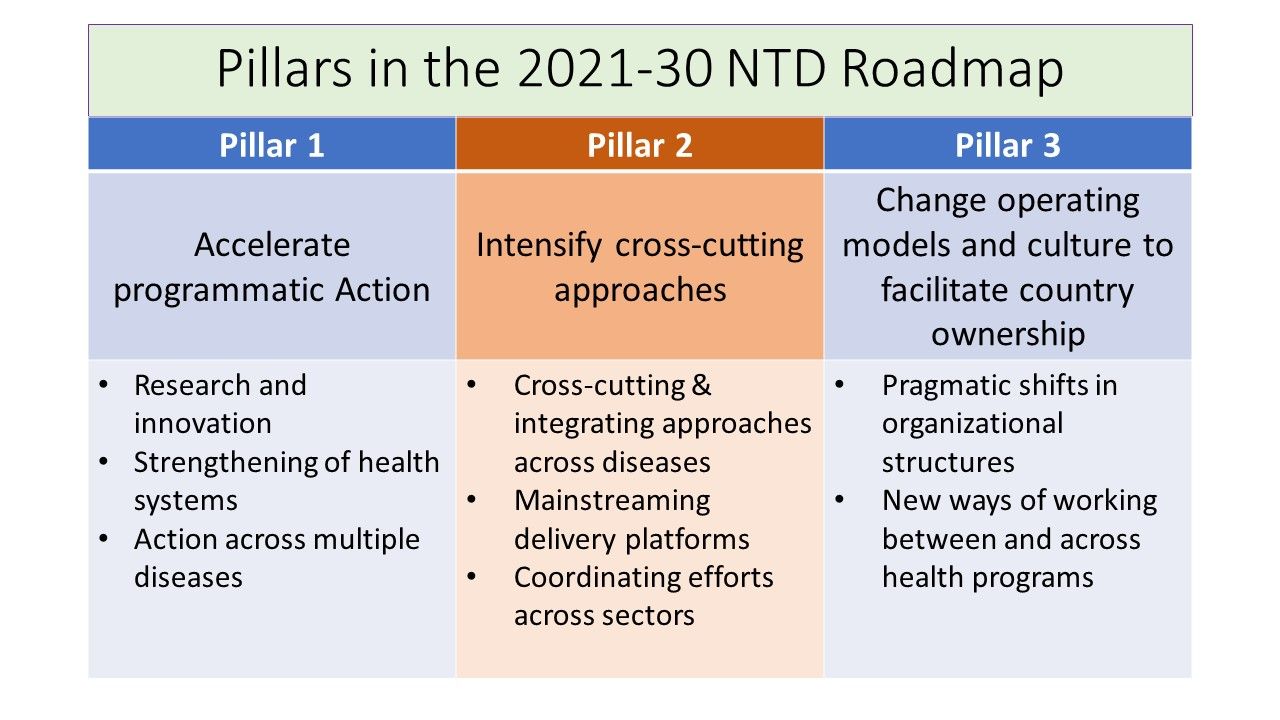
Finally, provisional agenda item 11.8 (A73/8) addresses a “Draft road map for neglected tropical diseases 2021–2030.” This builds on resolution WHA66.12 (2013) on WHO’s earlier road map for accelerating work to overcome the global impact of neglected tropical diseases (2012–2020). The proposed interventions build on important principles including:

  1. Tackling neglected tropical diseases through support of the vision of universal health coverage
  2. Adopting grassroots approaches that enable access to some of the world’s poorest, hard-to reach communities and people affected by complex emergencies
  3. Monitoring progress against neglected tropical diseases as a litmus test of progress towards the achievement of universal health coverage

The report notes that “40 countries, territories and areas have eliminated at least one neglected tropical disease,” most notably dracunculiasis (as mentioned above, lymphatic filariasis and trachoma. Although “substantive progress has been made since 2012, it is evident that not all of the 2020 targets will be met.” Hence, a new draft road map for neglected tropical diseases for 2021–2030 is required. The three pillars supporting the new roadmap are outlined in the attached figure.

It is good to know that the 73rd World Health Assembly will not be completely overshadowed by COVID-19 and politics. Efforts to sustain and improve NTD control and elimination must not be jeopardized.

Children &Measles &Mortality &Surveillance Bill Brieger | 30 Apr 2020

African Children and COVID-19

Until recently it was thought that the novel coronavirus, COVID-19, was less severe in children. Now as more cases can be studied, that prognosis is less likely to be true. The number of cases overall in Africa is still lower than the rest of the world, with 36,857 cases reported by the Africa CDC as of 29 April 2020, compared to over 3 million globally. One assumes out of this that the number of child cases would also be lower, but there is worry about other indirect effects of the pandemic on children.

Initial beliefs that the young would be less impacted by COVID-19 may have led to complacency. For example, the Atlantic reports that, “Africa will enjoy the advantage of youth. COVID-19 kills mostly the old, and Africans are relatively young, with a median age of 18.9. (The median age in the United States and China is 38.) That means, in effect, that about half of Africans who get COVID-19 will have a low risk of death.” The reality is turning out much different.

First from the medical standpoint, VOA reports that, “Doctors in Britain, Italy, Portugal and Spain are exploring a possible link between a severe inflammatory disease in children and the coronavirus. A growing number of children of various ages in several European countries have been admitted to hospitals with high fever and heart issues. Some also have suffered from gastrointestinal problems, such as vomiting and diarrhea.” There is not enough information disaggregated by age to tell us how coronavirus is affecting children in Africa.

Secondly, UNICEF tells us that, “in any crisis, the young and the most vulnerable suffer disproportionately,” as children suffer from “collateral damage.” Lockdowns reduce access to essential services such as routine immunization, nutritional supplementation and malaria treatment and prevention programs and thus increase morbidity and mortality among children.

Nature published on 7th April that measles has currently, “killed more than 6,500 children in the Democratic Republic of the Congo (DRC) and is still spreading through the country.” Unfortunately “23 countries have suspended measles vaccination campaigns as they cope with SARS-CoV-2.”

There are groups of children that are especially vulnerable. In Kenya. “Street children are having a rough time during the curfew. Food and water are a real problem as hotels and eating places where they would normally get food have closed down. Movement is restricted,” according to the Guardian. The article goes further to share the concern that, “the virus could drive homeless children back to families where they are at risk of abuse.” Abuse of children during stressful times goes affects many confined to homes with out-of-work parents, not just street children.

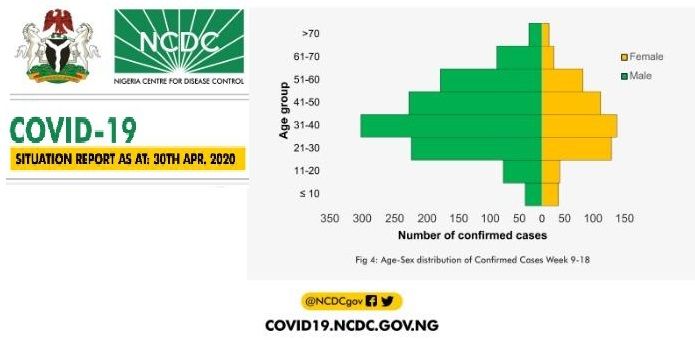
We cannot afford to lose more children to direct and collateral mortality from the COVID-19 pandemic as it spreads in Africa. We need to begin with better data to tell us about infection and effects on children. Nigeria has done some reporting on age.  We need to ensure that all countries collect data on children and COVID-19 and also maintain routine child survival services.

coronavirus &COVID-19 &Ebola &Elimination &iCCM &IPTi &IPTp &IRS &ITNs &Research Bill Brieger | 25 Apr 2020

Zero Malaria Starts after Lockdown?

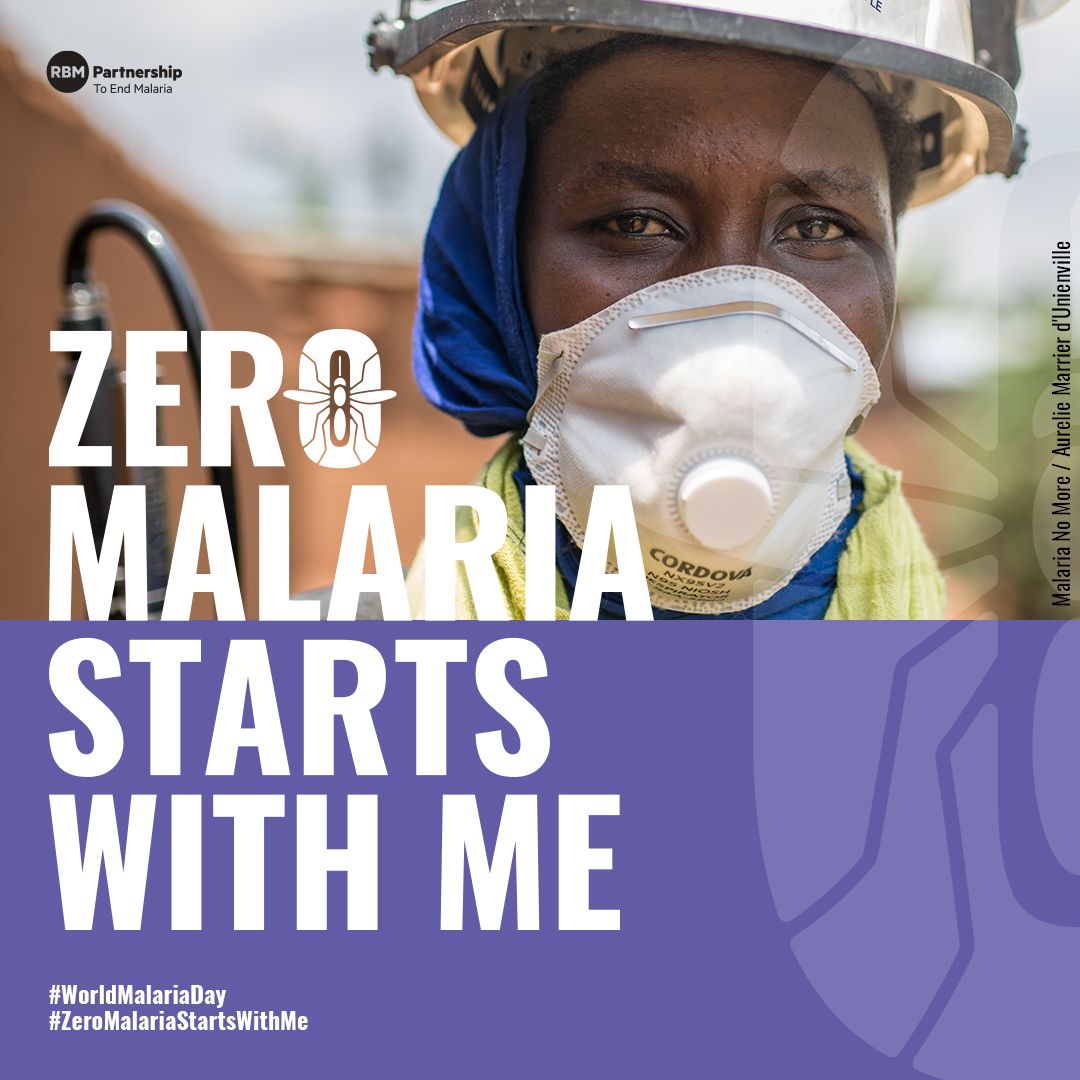
The novel 2019 coronavirus, also known as COVID-19 and SARS-COV2, is casting a heavy shadow over the 2020 World Malaria Day. People are trying to remain upbeat declaring the tagline “zero malaria starts with me,” but nothing can hide the fear that the current pandemic will both disrupt the current delivery of essential malaria preventive and treatment services, but will have longer term impacts on malaria funding and our capacity to learn new ways to reach malaria elimination goals. As we can see in the graphic to the right, accessible, lifesaving, community-based services may be especially hard hit.

Another ironic image is the indoor residual spray (IRS) team member with a face mask needed for protection from the insecticides being sprayed. When will such teams be able to go back into homes? When can household members actually pack out their belongings so that spraying can commence? When will such masks not be needed for intensive care COVID-19 case management instead?

WHO is urging “countries to move quickly to save lives from malaria in sub-Saharan Africa” because “New analysis supports the WHO call to minimize disruptions to malaria prevention and treatment services during the COVID-19 pandemic.” This will be difficult in high burden countries like Nigeria that are already on lockdown with over 1,000 coronavirus cases detected already. Modeling by WHO and partners has projected, “Severe disruptions to insecticide-treated net campaigns and in access to antimalarial medicines could lead to a doubling in the number of malaria deaths in sub-Saharan Africa this year compared to 2018.”

The Global Malaria Program offers guidance for tailoring malaria interventions to the present circumstances. Great concern is drawn from previous epidemic situations when observing that, “it is essential that other killer diseases, such as malaria, are not ignored. We know from the recent Ebola outbreak in west Africa that a sudden increased demand on fragile health services can lead to substantial increases in morbidity and mortality from other diseases, including malaria. The COVID-19 pandemic could be devastating on its own – but this devastation will be substantially amplified if the response undermines the provision of life-saving services for other diseases.”

Specifically, GMP recommends that national malaria programs should ensure the following:

  • a focal point for malaria is a member of the National COVID-19 Incident Management Team.
  • continued engagement with all relevant national COVID-19 stakeholders and partners.
  • continued access to and use of recommended insecticide-treated mosquito nets (ITNs)
  • continuation of planned targeted indoor residual spraying (IRS)
  • early care-seeking for fever and suspected malaria by the general population to prevent a spike in severe malaria
  • access to case management services in health facilities and communities with diagnostic confirmation through rapid diagnostic tests [RDTs]
  • treatment of confirmed malaria cases with approved protocols
  • continued delivery of planned preventive services normally provided to specific target populations (SMC, IPTi, IPTp)
  • the safety of all malaria personnel and their clients in the process of carrying out the above interventions

In editorial in the American Journal of Tropical Medicine and Hygiene by Yanow and Good address the damaging longer term impact of the present shutdown. “The impacts of research shutdowns will be felt long after the pandemic. Many scientists study diseases that do not share the same obvious urgency as COVID-19 and yet take a shocking toll on human life. For example, malaria infects more than 200 million people and takes the lives of nearly half a million people, mostly young children, each year.1 During laboratory closures and without clinical studies, there will be no progress toward treating and preventing malaria: no progress toward new drugs, vaccines, or diagnostics.”

The case for continuing malaria services to save hundreds of thousands of lives is not difficult to make. The actual implementation during lockdowns and quarantines is a management challenge. The importance of malaria testing to provide patients with appropriate care for the right disease is crucial. The question is whether in resource strapped endemic countries these decisions and management arrangements can be made in a timely fashion and for the long term whether the next generation of research can proceed with much needed new medicines and technologies.

Elimination &Surveillance &Vector Control Bill Brieger | 17 Apr 2020

A look at Botswana from WHO’s E-2020 country brief

Botswana is one of a handful of countries in Southern Africa that are nearing malaria elimination targets. The information below is extracted from WHO’s Elimination 2020 program site and shared verbatim.

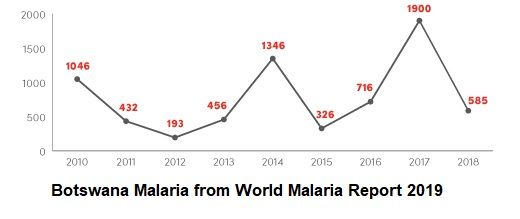
“Botswana has made impressive progress in reducing indigenous malaria transmission, from a reported 71 000 cases in 2000 to 533 in 2018. Despite significant variation from year to year – with a higher number of malaria cases in 2014, 2016 and 2017 – the country has continued to report an overall decline in both cases and deaths since 2000.

“Challenges faced by Botswana’s national malaria control programme include the perception, in some communities, that malaria is a low priority disease, which can lead to people not protecting themselves with insecticide-treated nets and other WHO-recommended prevention measures. Added to this, some residents do not accept vector control activities such as insecticide spraying inside homes. However, the government’s commitment to eliminate malaria remains strong.

“WHO lists the following Successes in Botswana and the accompanying graph confirms the overall drop, despite some increases:

  • 69% decrease in number of reported malaria cases following outbreaks in 2014, 2016 and 2017;
  • all districts using District Health Information Software 2 (DHIS2) for real-time malaria reporting
  • mapping of all malaria cases at household level and stratification at village level
  • adoption of the Community Acting Together to Eliminate Malaria (CATTEM) approach
    enhanced community monitoring in malarious districts by malaria surveillance agents”

Hopefully with geographical and epidemiological targeting and attention to early warnings about climate change, Botswana can be among the next group of countries achieving malaria elimination.

« Previous PageNext Page »